
Murf.AI has long been a favorite for creators who need studio-quality voiceovers without hiring a professional voice actor. But it is far from the only option on the market today. In this guide, we break down 15 of the strongest Murf.AI Alternatives available right now. Each entry covers what free trial options exist, current pricing plans, and a balanced look at the pros and cons so you can pick the tool that actually fits your workflow, whether you are a solo podcaster, a marketing team, or a developer building voice-powered apps.
1Speechify
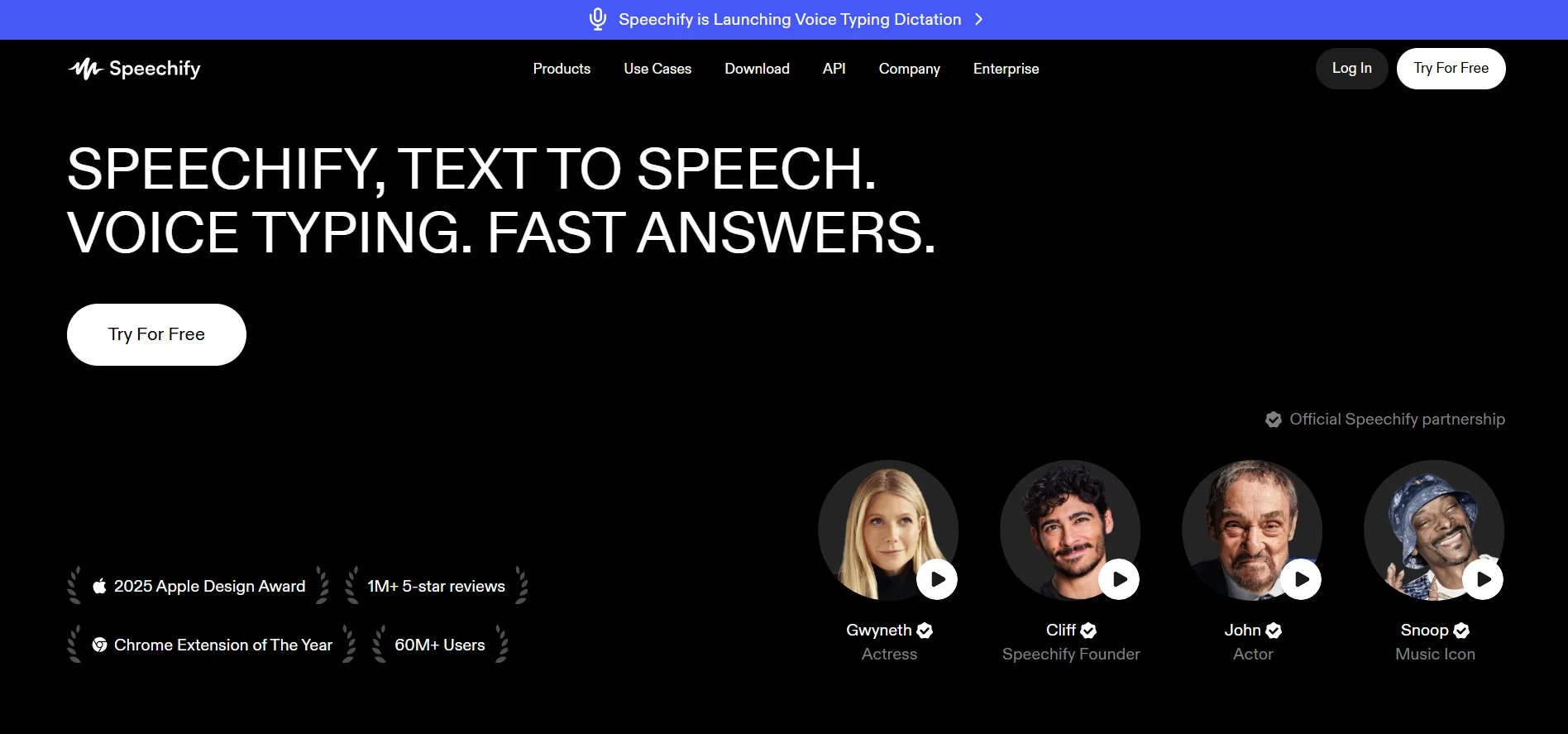
Speechify offers a free plan alongside a 7-day trial window for its Premium tier, letting new users test its voice library and reading speeds before paying. Pricing starts with a free listening tier, while Premium runs around $11.58 per month when billed annually (about $139 per year) or $29 monthly. Its separate Studio product for voiceover creation ranges from roughly $19 to $49 per month, and Enterprise or Team pricing is available on request for schools and larger organizations.
Originally built as a reading tool for students and people with dyslexia, Speechify has expanded into a full voiceover suite with over 50 studio-quality voices and instant voice cloning. It supports Chrome and Edge extensions, mobile apps, and OCR scanning for physical documents. Content creators can now produce podcast and video narration directly inside Speechify Studio without switching to a separate application, making it a genuinely dual-purpose platform for both listening and producing audio.
- Free Reader Plan $0/mo
- Premium (annual) ~$11.58/mo
- Studio Plans $19–$49/mo
- Teams / Enterprise Custom
Pros
- Free plan and trial to test before committing
- Strong OCR and document reading tools
- Wide device and browser support
Cons
- Reader and Studio are billed as separate products
- Annual plans auto-renew at full price
- Cancellation process can be confusing
2Pixbim Voice Clone AI
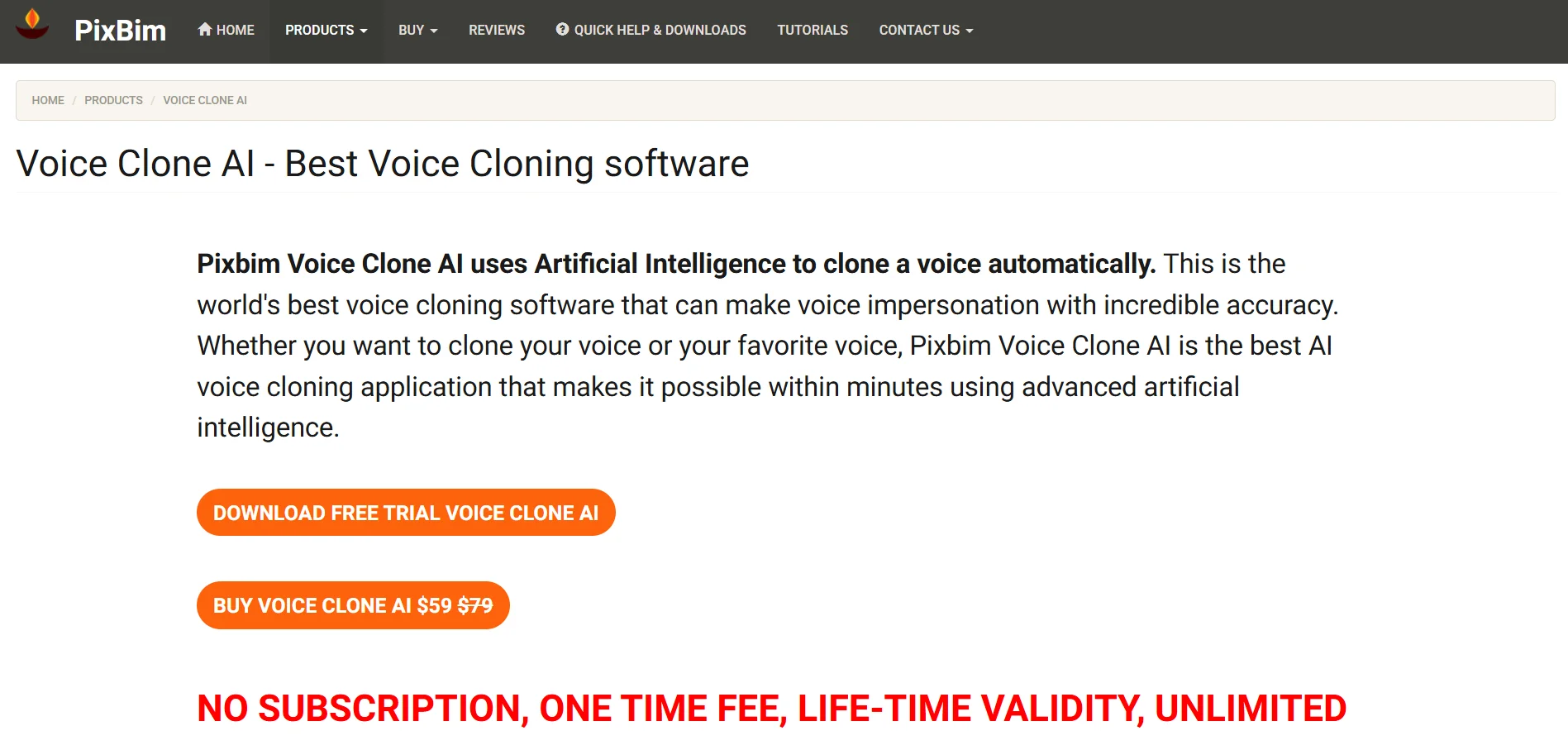
Pixbim offers a completely free trial download so users can test its offline voice cloning engine before purchasing. Unlike most competitors, it uses a one-time payment model instead of a monthly subscription. The current price sits at $59, discounted from a $79 list price, and that single payment unlocks lifetime access with no recurring fees, credit systems, or expiring licenses to worry about later.
Pixbim stands out because it runs entirely offline on your desktop, which means your voice samples never leave your machine, a major privacy advantage over cloud-based tools. It supports multi-speaker cloning, multiple languages, and works without an internet connection. However, the feature set is more limited than cloud competitors, making it best suited for solo creators who prioritize privacy and a simple, no-subscription workflow.
- Free Trial (no card required) $0
- Lifetime License $59 one-time
Pros
- One-time payment, no subscription
- 100% offline processing for privacy
- Unlimited voice cloning duration
Cons
- Voices can lack emotional depth
- Output quality depends heavily on input sample
- No cloud collaboration or API access
3Gradium

Gradium provides a free tier with roughly one hour of text-to-speech generation and limited concurrency, giving developers enough room to evaluate latency and voice quality before upgrading. Paid plans begin at the XS tier for around $13 per month, scaling up through S at $43, M at $340, and L at $1,615 monthly, with all tiers including voice cloning and streaming features at no extra cost.
Founded by former DeepMind and Meta researchers, Gradium focuses on real-time, low-latency voice agents rather than static narration. Its audio language model architecture is designed for conversational AI, customer service bots, and gaming applications where response speed matters as much as voice realism. The platform supports five languages and offers on-device deployment, positioning it as a strong pick for technical teams building voice-first products.
- Free Tier $0/mo
- XS Plan $13/mo
- S Plan $43/mo
- M Plan $340/mo
- L Plan $1,615/mo
Pros
- Ultra-low latency built for voice agents
- No feature gating across paid tiers
- On-premise deployment option
Cons
- Newer platform with a smaller voice library
- Pricing jumps steeply between mid and high tiers
- Limited language support compared to rivals
4Resemble.ai

Resemble.ai does not offer a traditional subscription trial, but its Flex plan starts at $0 with no minimum commitment, so you only pay once you actually generate audio. Text-to-speech is billed at $0.0005 per second, voice agents at $0.001 per second, and deepfake detection tools carry their own per-second rates. Enterprise customers can negotiate volume discounts of up to 80 percent for large-scale usage.
What sets Resemble.ai apart is its security-first positioning, including built-in deepfake detection and PerTh audio watermarking that most competitors simply do not offer. It is a strong choice for organizations needing authenticated, traceable voice content, such as media companies or regulated industries. The pay-per-second model rewards low-volume users but can become expensive quickly for teams generating large amounts of daily audio.
- Flex Plan (TTS) $0.0005/sec
- Voice Agents $0.001/sec
- Enterprise Custom, up to 80% off
Pros
- Built-in deepfake detection and watermarking
- Flexible pay-per-second pricing
- Credits never expire on the Flex plan
Cons
- No flat monthly plan for predictable budgeting
- Consumer subscription tiers were discontinued
- Costs can scale quickly at high volume
5Supertone
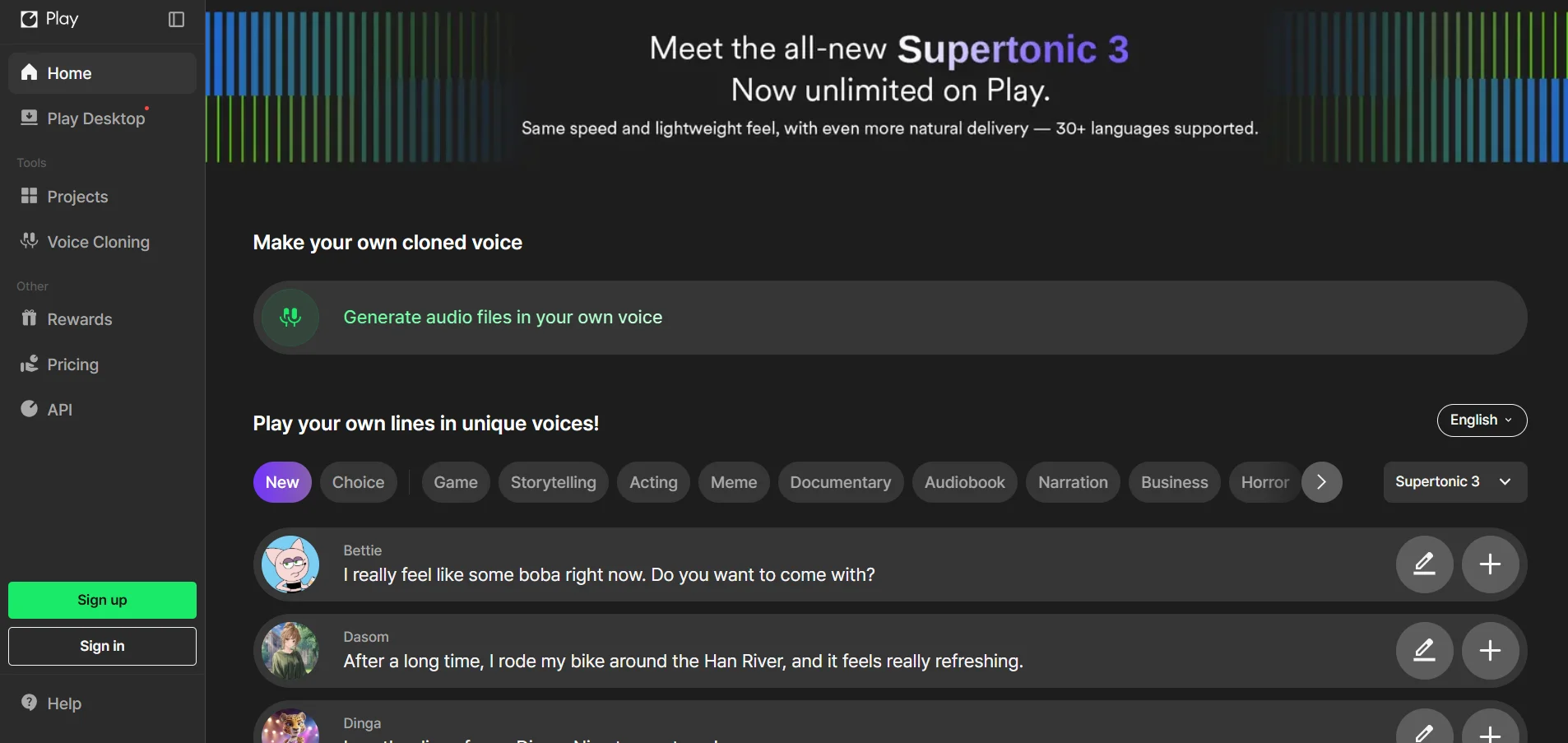
Supertone offers a free plan with limited credits, giving new users a taste of its real-time voice conversion before subscribing. The Starter tier begins at roughly $2.99 per month, moving up to a Creator plan around $14.99, and a Pro tier that ranges between $29.99 and $79.99 monthly depending on the specific product line, plus a custom Enterprise option for full custom voice creation.
Backed by CES award recognition and used by companies like Netflix and HYBE, Supertone specializes in hyperrealistic voice conversion and real-time voice changing through its Shift and Play products. It performs particularly well for Korean, Japanese, and English content, though support for other languages remains weaker. Creators focused on gaming, streaming, or dubbing will find its low-latency real-time conversion genuinely useful.
- Free Plan $0/mo
- Starter $2.99/mo
- Creator $14.99/mo
- Pro $29.99–$79.99/mo
- Enterprise Custom
Pros
- Excellent real-time voice conversion quality
- Trusted by major entertainment studios
- Affordable entry-level pricing
Cons
- Best language support limited to three languages
- No refunds on digital purchases
- Requires Supertone attribution on lower tiers
6Play (Play.ht)

Play.ht includes a free plan with a limited monthly character allowance, plus instant voice cloning trials, so users can sample its 900-plus voice library before paying. The Creator plan runs about $31 to $39 per month, while the Unlimited plan sits around $99 monthly with fair-use generation caps. An Enterprise tier with custom pricing is available for larger teams needing API access and dedicated support.
Play.ht is known for natural-sounding long-form narration, making it popular for audiobook producers and podcasters. It includes built-in podcast hosting and a developer-friendly API with WebSocket streaming support. While the free tier is generous for casual testing, heavy users often find themselves needing the Unlimited plan quickly since character limits on lower tiers are consumed fast during regular content production.
- Free Plan $0/mo
- Creator Plan ~$31–$39/mo
- Unlimited Plan ~$99/mo
- Enterprise Custom
Pros
- Large voice library across 140+ languages
- Built-in podcast hosting and distribution
- Strong support for long-form narration
Cons
- Free tier characters run out quickly
- Pricing structure varies across sources
- Interface can feel dated compared to newer rivals
7Noiz.ai

Noiz.ai offers a genuinely free-forever plan along with a discounted introductory rate near $1.90 for the first month on paid tiers. Standard pricing starts around $2.90 monthly for the Starter plan and $8.90 for Creator, with higher usage tiers offering up to 500,000 monthly credits for teams needing bulk generation, watermark-free exports, and priority processing speed.
Noiz.ai differentiates itself with emoji-driven emotional control, letting users adjust tone, pacing, and inflection just by placing emojis within their script. This makes it especially approachable for non-technical users creating heartfelt voice messages, holiday greetings, or storytelling content. It also supports multilingual dubbing and video translation, though it is less focused on broadcast-grade realism than premium competitors like ElevenLabs.
- Free-Forever Plan $0/mo
- Starter $2.90/mo
- Creator $8.90/mo
- Higher Tiers Up to 500K credits/mo
Pros
- Very affordable compared to premium tools
- Unique emoji-based emotion control
- Genuine free-forever tier available
Cons
- Newer platform with less proven track record
- Voice realism trails top-tier competitors
- Licensing terms for commercial use need verification
8ElevenLabs
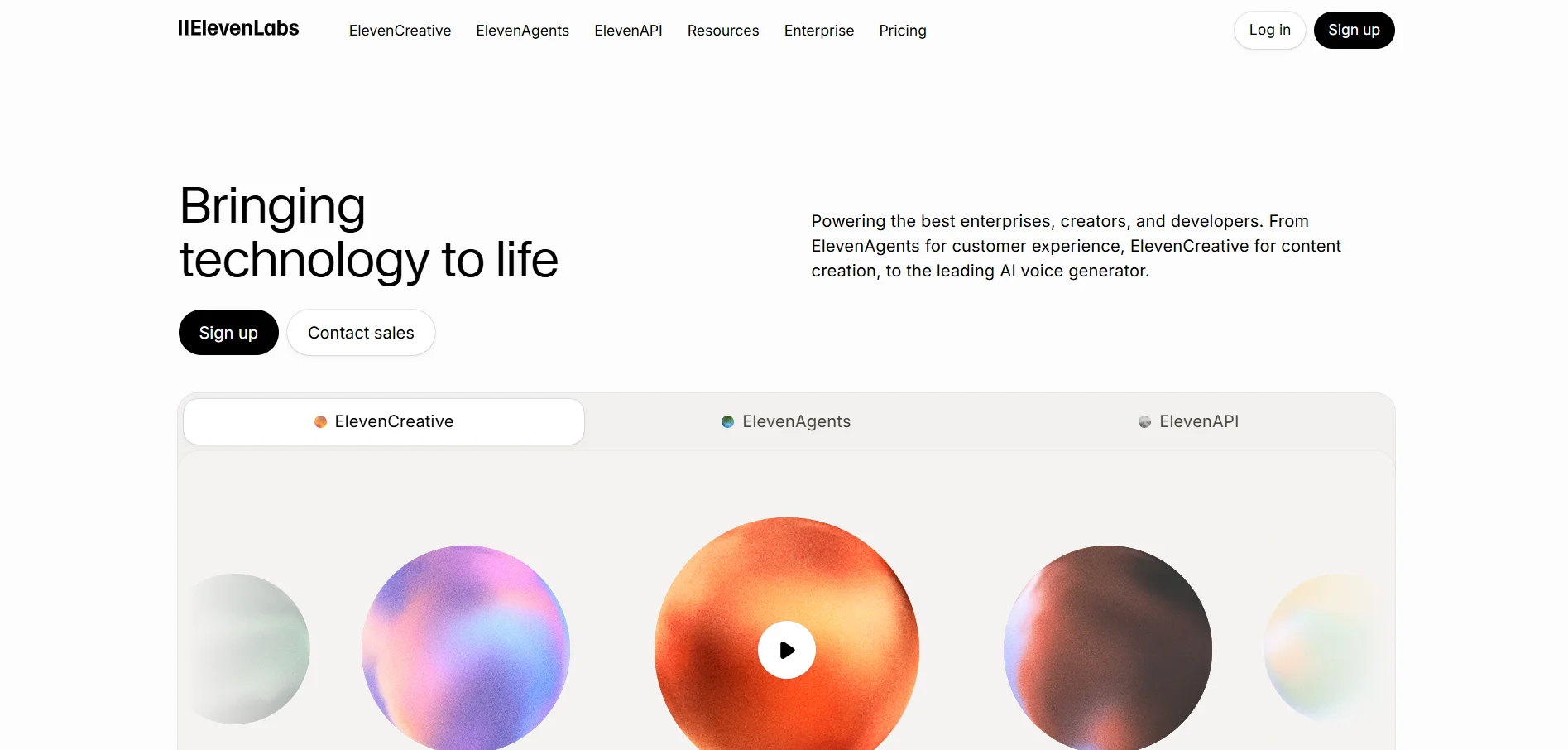
ElevenLabs offers a free plan with about 10,000 monthly credits, roughly ten minutes of generated audio, making it easy to test voice quality before subscribing. Paid tiers begin with Starter at around $5 per month, Creator at $22, Pro at $99, and Scale near $299 to $330, while Business runs close to $1,000 to $1,320 monthly. Enterprise pricing is negotiated directly through their sales team.
Widely regarded as the industry leader in voice naturalness, ElevenLabs powers everything from audiobook narration to conversational AI agents. Its credit system is based on characters rather than minutes, which can be confusing for new users trying to estimate monthly costs. Voice cloning, multilingual dubbing, and low-latency streaming models make it a favorite among professional podcasters and developers alike, despite sitting at the premium end of the pricing spectrum.
- Free Plan $0/mo
- Starter $5/mo
- Creator $22/mo
- Pro $99/mo
- Scale $299–$330/mo
- Business ~$1,000–$1,320/mo
Pros
- Widely regarded as the most natural-sounding voices
- Professional voice cloning and dubbing tools
- Robust API for developers
Cons
- Pricing is on the higher end of the market
- Character-based credit system can be confusing
- Overage fees add up for high-volume users
9Uberduck

Uberduck provides a free plan with about 300 monthly render credits, enough for casual experimentation with its 5,000-plus voice library, including celebrity-style and character voices. The Creator plan starts around $5 to $10 per month with commercial licensing included, while the Pro plan jumps to about $60 monthly with 25,000 credits and faster support response times. Enterprise pricing is available for heavier business use.
Uberduck built its reputation on playful features like AI-generated rap and singing, which remain fairly unique in the market. However, standard text-to-speech quality has fallen behind competitors like ElevenLabs in recent reviews, and its voice library has shrunk considerably due to licensing concerns. It remains a fun, low-cost option for musicians and meme creators, but less compelling for professional voiceover work.
- Free Plan (300 credits) $0/mo
- Creator Plan $5–$10/mo
- Pro Plan $60/mo
- Enterprise Custom
Pros
- Unique AI rap and singing generation
- Low entry price for casual creators
- Free plan requires no commercial commitment
Cons
- Standard TTS quality trails top competitors
- Voice library has shrunk due to licensing issues
- Server reliability complaints are common
10HeyGen

HeyGen offers a free plan allowing about three videos per month with a watermark, giving new users a real look at its avatar and voice technology before committing. The Creator plan costs around $29 monthly, Pro runs about $99, and Business starts near $149 plus $20 per additional seat. Enterprise pricing is quoted individually for large organizations needing custom security and support.
While best known for AI avatar video generation, HeyGen bundles high-quality voice synthesis and instant translation across more than 175 languages directly into its video workflow. It is a strong pick for teams producing training videos, marketing content, or localized campaigns at scale. The credit-based system for premium avatar features can consume allowances quickly, so heavier users should budget carefully before choosing a plan.
- Free Plan $0/mo
- Creator Plan $29/mo
- Pro Plan $99/mo
- Business Plan $149/mo + $20/seat
- Enterprise Custom
Pros
- Combines AI voice with avatar video generation
- Supports 175+ languages for translation
- Intuitive interface for non-technical users
Cons
- Credit system burns through fast on premium avatars
- Business tier requires a minimum of two seats
- API usage billed separately from web plans
11Podcastle
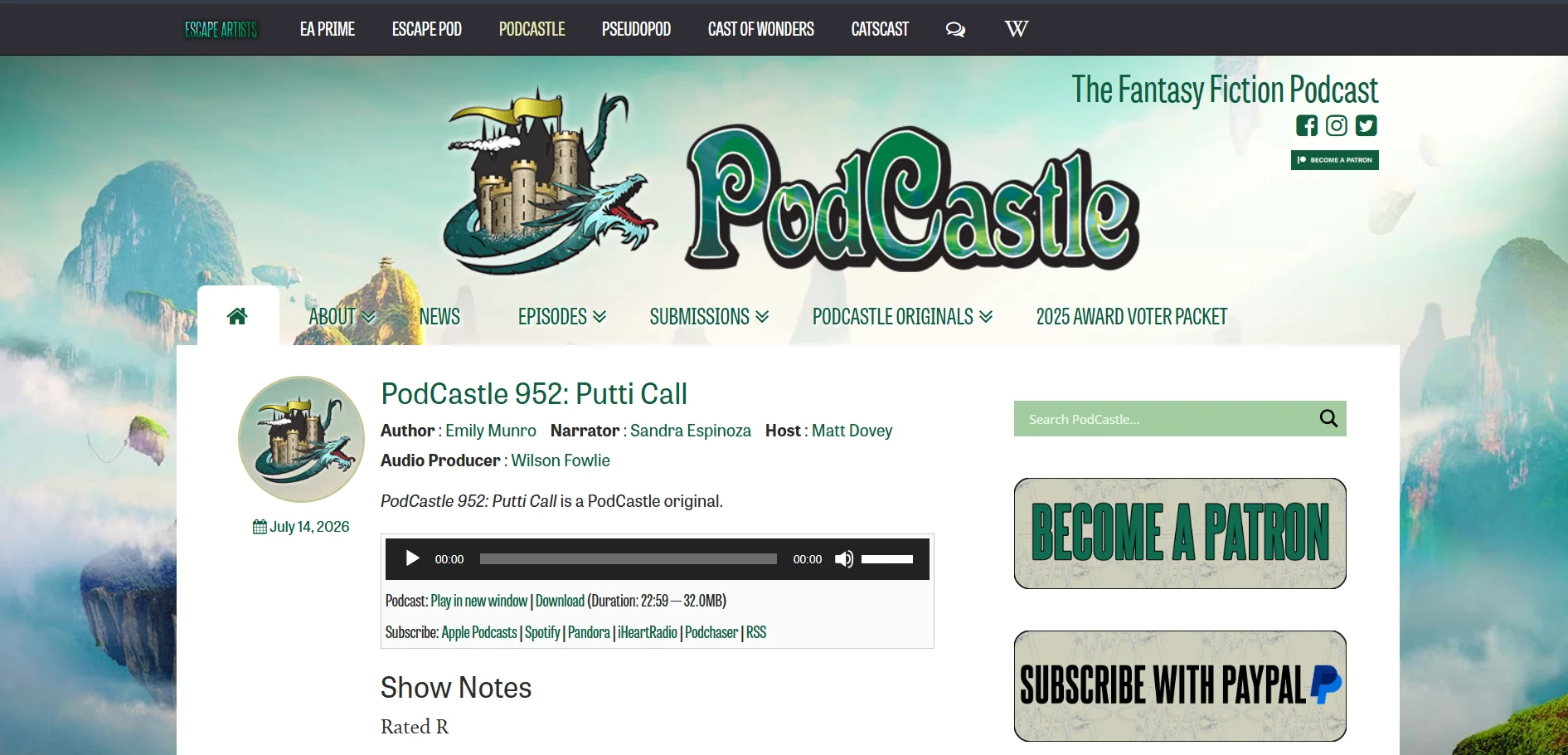
Podcastle, now also branded as Async, offers a genuinely free plan with unlimited audio recording plus a 7-day free trial on paid tiers, letting users test its Revoice cloning feature before subscribing. The Storyteller plan costs about $11.99 monthly when billed annually, while the Pro plan runs around $23.99 monthly, unlocking higher-quality exports and expanded transcription hours.
Podcastle positions itself as an all-in-one podcast studio, combining recording, AI editing, and text-to-speech voice generation in a single browser-based platform. Its voice skins let creators generate lifelike voiceovers directly alongside their recorded episodes, which is convenient for solo podcasters. Video and transcription caps on the free plan are lifetime rather than monthly, so heavy users will hit limits faster than expected.
- Free Plan $0/mo
- Storyteller Plan ~$11.99/mo
- Pro Plan ~$23.99/mo
Pros
- All-in-one recording, editing, and voice tool
- Unlimited audio on the free tier
- Affordable paid plans versus competitors
Cons
- Free plan video and transcription caps are lifetime, not monthly
- Voice cloning (Revoice) requires the Pro plan
- Limited customization for podcast websites
12Minimax (MiniMax Audio)

MiniMax Audio provides a free tier with 10,000 monthly credits and three free voice cloning slots, giving users a genuine trial before upgrading. Paid plans start with Starter at $5 monthly, Standard at $30, Pro at $99, Scale at $249, and Business at $999, each unlocking progressively larger credit pools alongside faster processing and priority support for growing content teams.
MiniMax has gained attention for undercutting ElevenLabs on API pricing by a wide margin while still delivering competitive voice quality. It supports over 300 voices across 40-plus languages and allows synthesis of up to 200,000 characters in a single request, ideal for long-form audiobook or documentation projects. Its aggressive pricing makes it particularly attractive for developers building high-volume voice applications on a budget.
- Free Plan (10K credits) $0/mo
- Starter $5/mo
- Standard $30/mo
- Pro $99/mo
- Scale $249/mo
- Business $999/mo
Pros
- Highly competitive API pricing
- Supports very long single-request synthesis
- Generous free credits for testing
Cons
- Brand still less established than major rivals
- Credits expire at the end of each billing cycle
- Documentation can be less polished than competitors
13WellSaid Labs
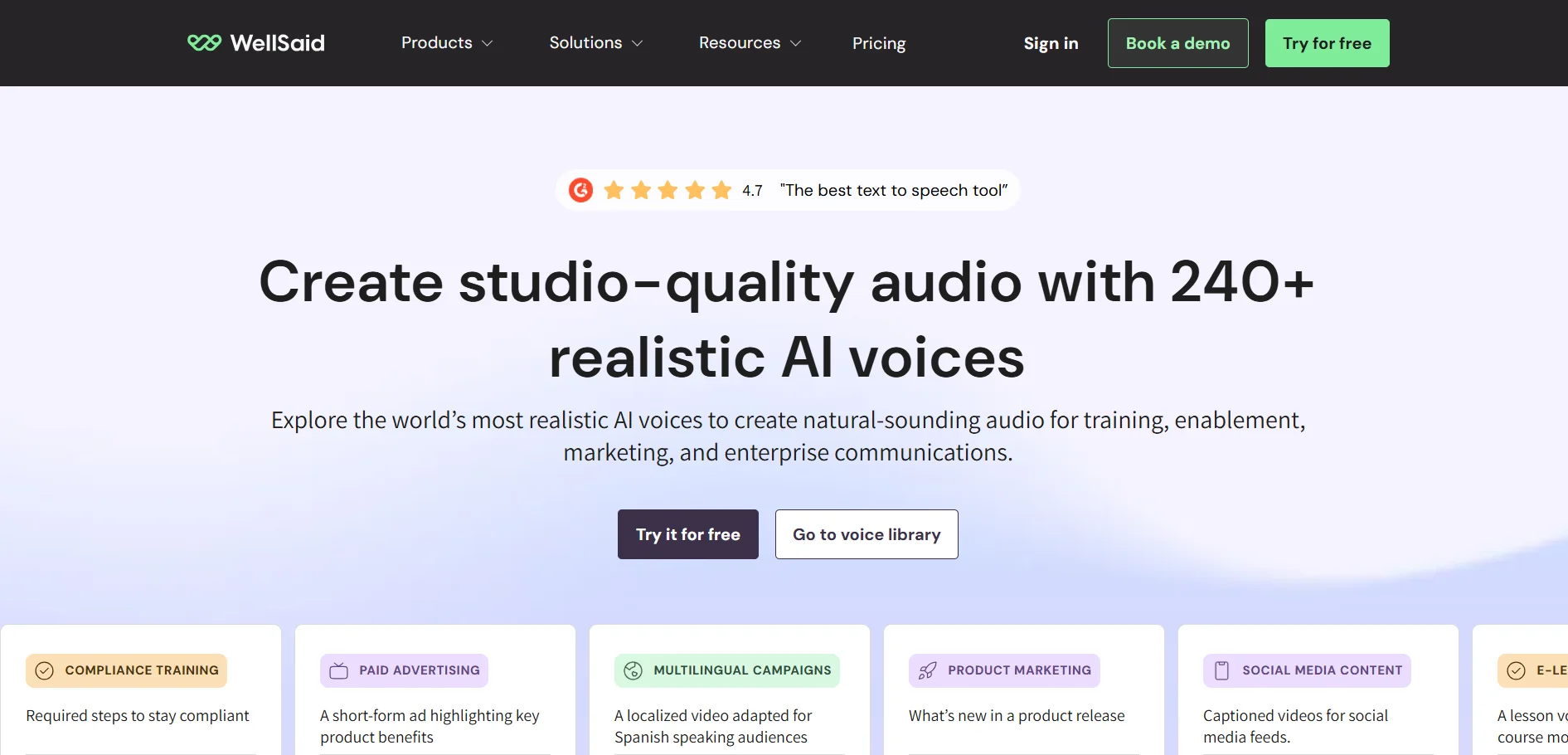
WellSaid Labs offers a 7-day free trial with full access to Studio and its English voice library, though downloads are disabled during the trial period. The Maker or Creative plan starts around $49 to $99 monthly depending on the billing cycle, while the Business or Team tier runs roughly $160 to $199 monthly per creator. Enterprise pricing is custom-quoted based on seat count and security requirements.
WellSaid Labs focuses heavily on enterprise-grade, brand-safe synthetic voices, making it popular with corporate learning and development teams producing training content. Commercial usage rights only unlock on the Creative tier and above, so the entry-level Maker plan is best suited for internal, non-commercial projects. Its per-creator pricing model means costs scale directly with team size rather than usage volume.
- Maker / Creative ~$49–$99/mo
- Business / Team ~$160–$199/mo
- Enterprise Custom
Pros
- Enterprise-grade, brand-safe voice quality
- Strong fit for corporate training content
- Full-feature 7-day trial before purchase
Cons
- Commercial rights excluded from the entry-level plan
- Pricing is per-creator, which adds up for teams
- Smaller voice library than mass-market competitors
14Cartesia
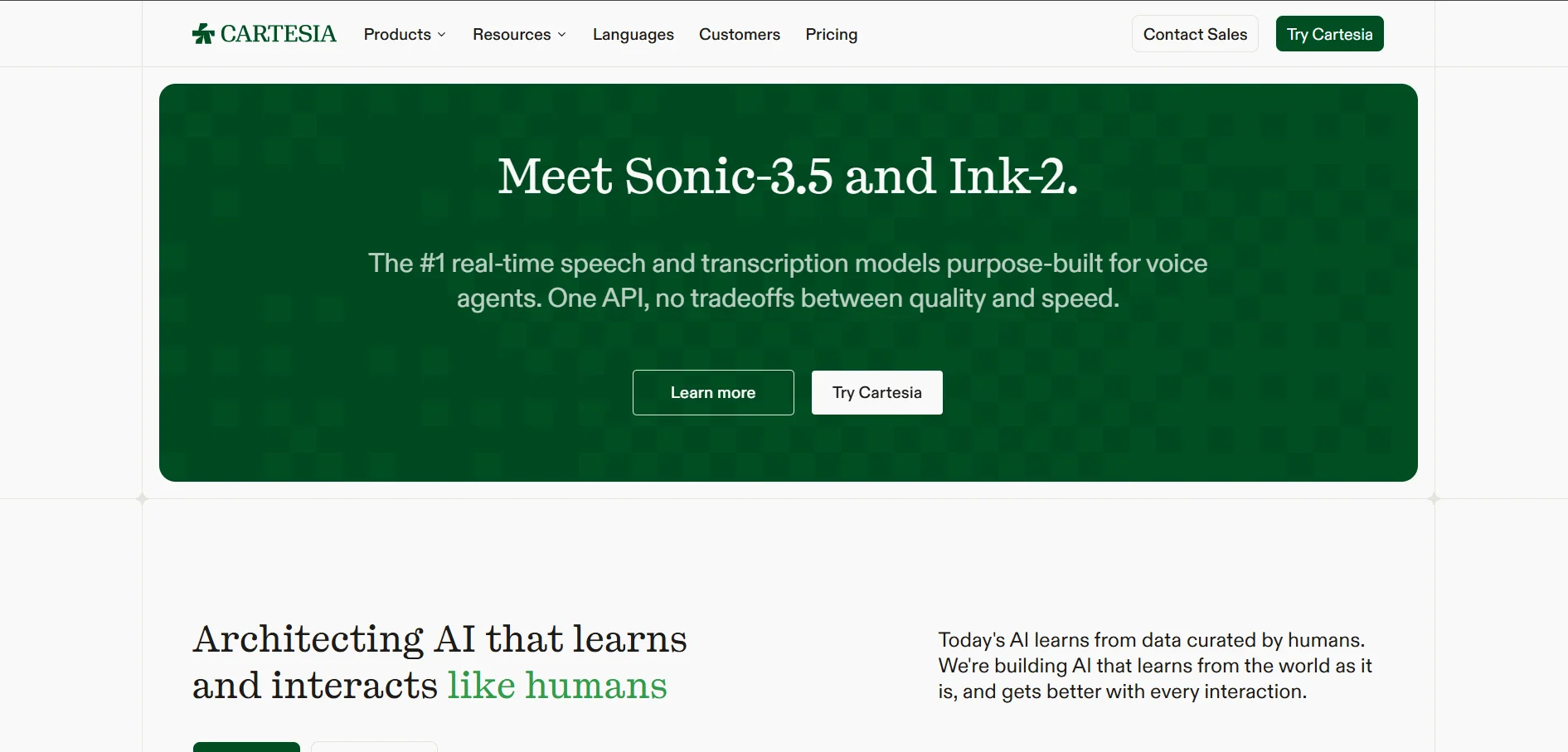
Cartesia offers a genuine free tier with about 20,000 credits and no credit card required, ideal for developers testing its low-latency Sonic model. Paid plans include Pro around $5 to $49 monthly, Startup near $39 to $49, and Scale between $239 and $299, all with a 20 percent discount available on annual billing. Enterprise plans are custom-priced for regulated industries needing dedicated infrastructure.
Cartesia is built specifically for real-time voice agents, boasting response latency as low as 40 milliseconds, which matters enormously for phone-based customer service bots. Its credit system charges per character for text-to-speech and per minute for telephony connections, which can get complex to forecast at scale. Developers building conversational AI products consistently praise its speed, even though it costs more than simpler TTS APIs.
- Free Plan (20K credits) $0/mo
- Pro Plan $5–$49/mo
- Startup Plan $39–$49/mo
- Scale Plan $239–$299/mo
- Enterprise Custom
Pros
- Industry-leading 40ms response latency
- No credit card required for the free tier
- 20% discount on annual billing
Cons
- Credit and billing structure can be complex
- More expensive than basic TTS APIs
- Concurrency limits on lower tiers restrict scale
15Voice.ai
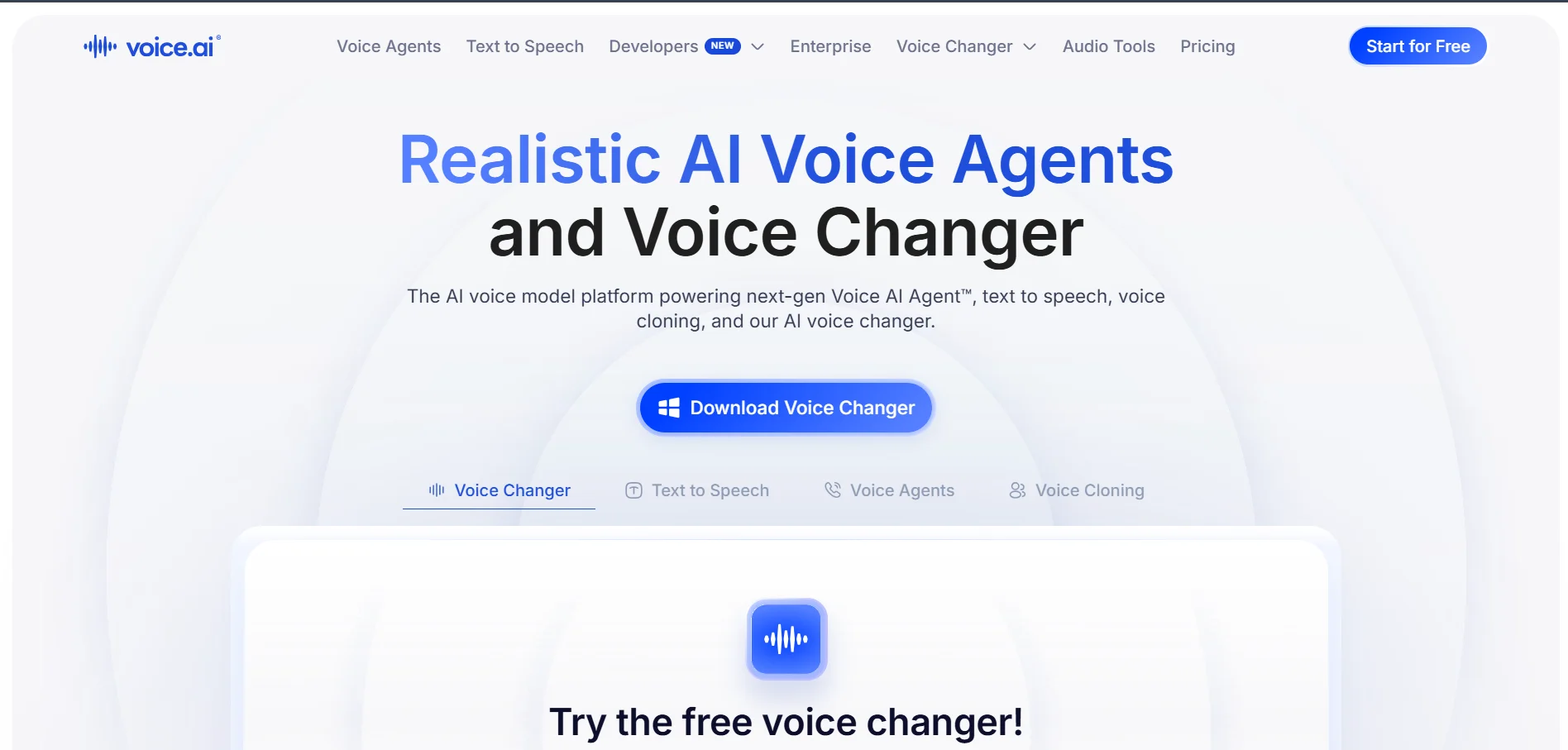
Voice.ai includes a free tier offering about 5,000 monthly credits, roughly five minutes of text-to-speech generation, enough for light testing of its real-time voice changing tools. Paid plans start as low as $5 monthly and scale up to around $880 for high-volume enterprise usage, with most individual creators landing in the $12 to $50 monthly range depending on features needed.
Voice.ai is best known for real-time voice changing used in gaming, streaming, and Discord communities, alongside newer text-to-speech and voice agent features. It appeals to a more casual, entertainment-focused audience compared to professional narration tools like Murf or ElevenLabs. Setup can feel more technical than no-code competitors, so non-technical users may find the onboarding curve steeper than expected.
- Free Plan (5K credits) $0/mo
- Paid Plans $5–$880/mo
Pros
- Popular for real-time voice changing in gaming
- Wide pricing range fits many budgets
- Active community around streaming use cases
Cons
- Setup is more technical than no-code rivals
- Free tier credits are quite limited
- Less focused on professional voiceover quality
Quick Comparison Table
| Alternative | Description |
|---|---|
| Speechify | Reading and voiceover suite combining text-to-speech listening with a separate Studio tool for content creators. |
| Pixbim Voice Clone AI | Offline, one-time-purchase voice cloning software focused on privacy and simplicity. |
| Gradium | Developer-focused audio language model built for ultra-low-latency, real-time voice agents. |
| Resemble.ai | Pay-per-second voice cloning platform with built-in deepfake detection and watermarking. |
| Supertone | Real-time voice conversion and TTS platform trusted by major entertainment studios. |
| Play (Play.ht) | Long-form narration and podcast platform with a large multilingual voice library. |
| Noiz.ai | Budget-friendly TTS and dubbing tool with unique emoji-driven emotional control. |
| ElevenLabs | Industry-leading voice realism with cloning, dubbing, and conversational AI tools. |
| Uberduck | Playful voice generator known for AI rap, singing, and character voices. |
| HeyGen | AI avatar video platform with integrated voice synthesis and multilingual translation. |
| Podcastle | All-in-one podcast recording, editing, and AI voice generation studio. |
| Minimax (MiniMax Audio) | Cost-efficient API-first voice platform supporting very long single-request synthesis. |
| WellSaid Labs | Enterprise-grade, brand-safe voice platform aimed at corporate training content. |
| Cartesia | Ultra-fast voice AI infrastructure built for real-time conversational voice agents. |
| Voice.ai | Real-time voice changing tool popular with gamers and streaming communities. |
Conclusion
There is no single Murf.AI alternative, since the right choice depends entirely on what you are building. Creators who want polished narration and reading tools may prefer Speechify or Play.ht, while developers building conversational voice agents will likely lean toward Cartesia or Gradium for their speed. Teams needing enterprise-grade brand safety should look at WellSaid Labs, and anyone chasing the most realistic voice cloning available today will probably still land on ElevenLabs.
Before committing to any paid plan, take advantage of the free trials and free tiers listed above. Testing actual voice output, latency, and credit consumption against your specific content needs is the only reliable way to know whether a platform will hold up once you move from casual experimentation to regular production use.


