

Minimax has earned a loyal following for AI-generated video, voice, and multimedia content, but it isn’t the only option in a market that is evolving weekly. Depending on whether you need voice cloning, avatar video, subtitle automation, or full podcast production, another platform may fit your workflow, budget, or feature list better. This guide walks through 22 credible Minimax Alternatives, covering what each tool does best, what a free trial gets you, and how their pricing plans stack up.
BookFab
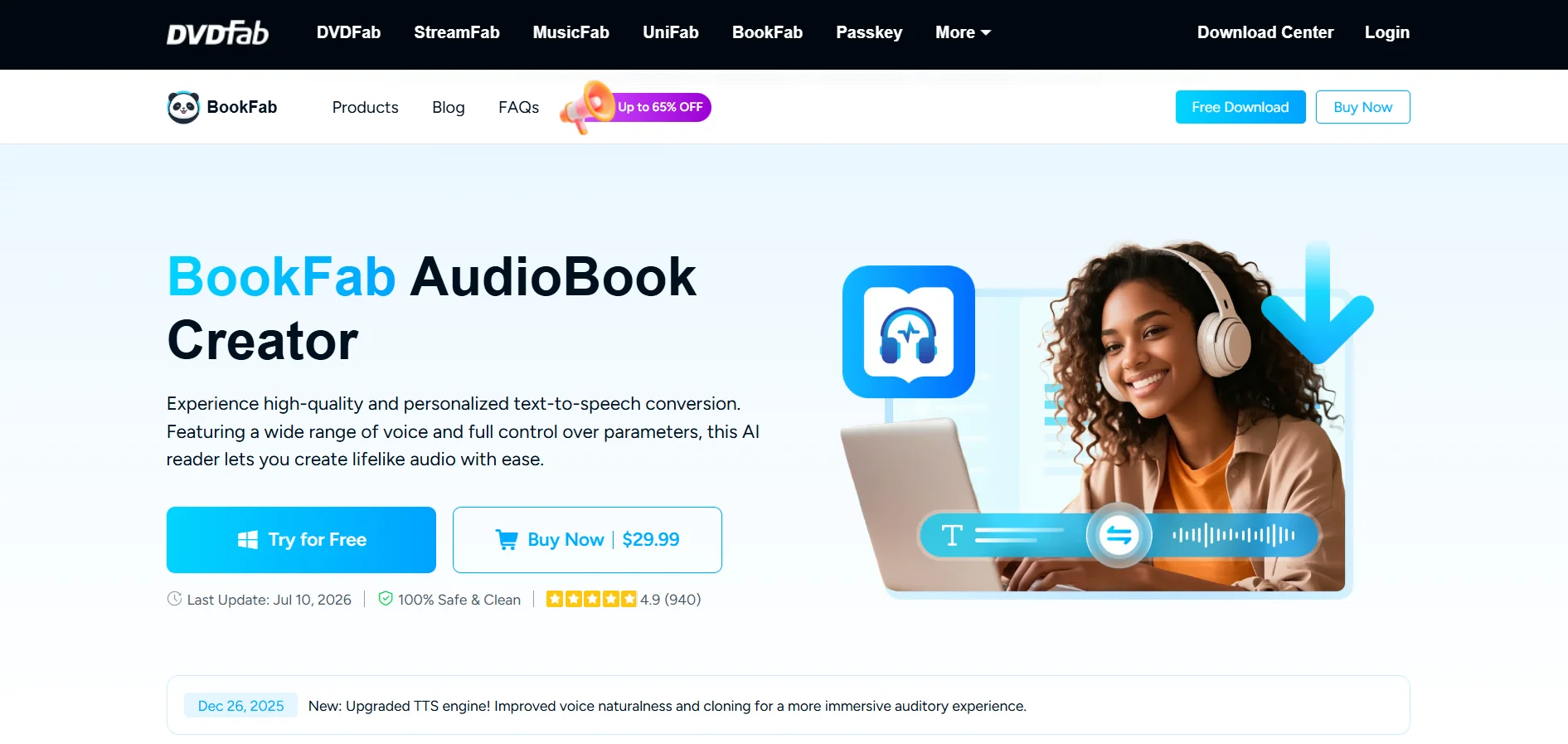
BookFab AudioBook Creator, from DVDFab, focuses squarely on converting text and EPUB files into narrated audiobooks using AI voice synthesis. It’s a specialized Minimax alternative for authors, educators, and publishers who specifically need audiobook production rather than video or social content tools.
The software offers 20 AI voices each in English and Japanese, with adjustable prosody, expressivity, and pronunciation correction for polished narration. Output supports MP3, OPUS, and M4B formats, though language coverage is notably narrower than most competitors, which typically support dozens of languages.
Pros
- Purpose-built for audiobook creation
- Lifetime license option available
- Fine-grained prosody and pronunciation control
Cons
- Only English and Japanese supported
- Desktop software, Windows only
- No native voice cloning yet
Cartesia
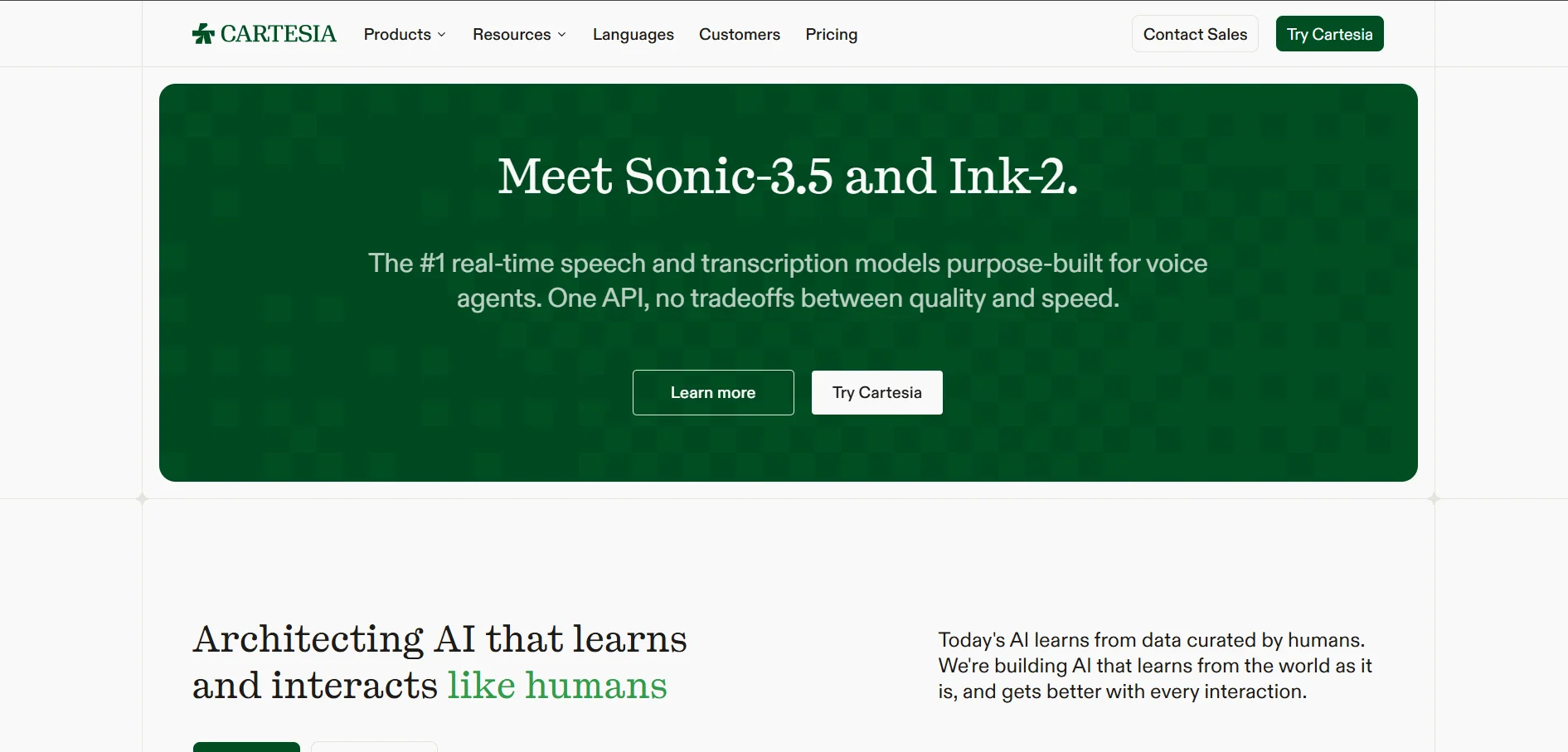
Cartesia is a real-time voice AI platform built around its Sonic text-to-speech, Ink speech-to-text, and Line voice-agent models, making it a strong Minimax alternative for developers building low-latency conversational products. It’s known for extremely fast time-to-first-audio, ideal for voice agents.
Pricing runs on a credit system billed at roughly one credit per character, plus separate telephony charges for voice agent minutes. It supports instant voice cloning from the Pro tier upward, along with cross-lingual switching across 40-plus languages, though concurrency limits scale strictly with plan tier.
Pros
- Ultra-low latency, ideal for agents
- Instant voice cloning from Pro tier
- Supports 40+ languages
Cons
- Credit and telephony costs stack up
- Free tier blocks commercial use
- Concurrency capped tightly by plan
ElevenLabs
ElevenLabs is widely regarded as the industry leader in AI voice synthesis, offering text-to-speech, professional voice cloning, dubbing, and conversational agents. It’s a natural Minimax alternative for podcasters, audiobook narrators, and developers who prioritize the most natural-sounding voice output available.
Its credit system ties usage to characters processed, with Flash and Turbo models processing at half the credit cost of the standard Multilingual v2 model. Commercial rights and professional voice cloning begin at the Creator tier, while Scale and Business add team seats, higher concurrency, and lower per-minute overage rates.
Pros
- Best-in-class voice naturalness
- Professional voice cloning available
- Flexible Flash/Turbo model options
Cons
- Pricing on the higher end of the market
- Credit system can be confusing
- Steep jump from Pro to Scale tier
Fliki

Fliki turns scripts into narrated videos using a large library of AI voices and stock visuals, making it a strong text-to-video alternative to Minimax. Its script-based editor is beginner-friendly, letting marketers and educators generate polished videos without cameras, microphones, or editing software experience required at all.
Beyond narration, Fliki supports over 2,000 voices across 80-plus languages, along with avatars and auto-captioning. It’s best suited to creators publishing regular YouTube, TikTok, or course content rather than cinematic productions, since visuals lean heavily on stock media instead of custom AI-generated scenes.
Pros
- Free forever plan to test voices
- 2,000+ voices in 80+ languages
- Simple script-to-video workflow
Cons
- Relies on stock footage, not AI scenes
- Watermark on free exports
- Pricing rises quickly at higher tiers
Gradium

Gradium is a developer-focused voice AI platform built by former DeepMind and Meta researchers, offering ultra-low-latency text-to-speech, speech-to-text, live translation, and voice cloning through an API. It’s a strong Minimax alternative for teams building voice agents rather than casual content creators.
Gradium emphasizes real-time performance for conversational AI, with an on-device TTS model and a unified streaming API stack. Pricing scales by credit consumption, so costs grow with usage volume; smaller teams testing prototypes will find the free and XS tiers sufficient for initial builds.
Pros
- Ultra-low latency for real-time voice
- Built by respected voice AI researchers
- Free tier for API testing
Cons
- Developer-oriented, not for non-technical users
- Costs scale quickly with usage
- Newer platform still expanding language support
HeyGen

HeyGen is one of the most recognizable AI avatar video platforms, and a natural Minimax alternative for anyone producing talking-head content, localized training videos, or sales outreach clips. Its avatar realism and lip-sync accuracy consistently rank highly among reviewers and enterprise buyers alike.
HeyGen runs on a credit system, so premium Avatar IV videos consume credits faster than standard clips, meaning heavy users may need higher tiers than the sticker price suggests. It supports 175-plus languages, custom avatars, and 4K exports on Business and Enterprise plans.
Pros
- Highly realistic AI avatars
- 175+ languages for localization
- Strong enterprise security options
Cons
- Credit system can burn through fast
- 4K locked to higher tiers
- Business plan requires minimum seats
iSpeech

iSpeech is a browser-based text-to-speech platform offering 21-plus expressive neural voices, positioning it as a simple, affordable Minimax alternative for voiceovers, e-learning, and accessibility tools. Its no-install workflow appeals to users who want quick narration without a steep learning curve.
Paid tiers unlock more voices and generation capacity without recurring monthly billing, since iSpeech frequently sells discounted lifetime-style plans. Developers can instead use its ASR/TTS API for pay-per-use integration, though iSpeech’s language and feature depth trail newer AI voice specialists.
Pros
- Simple browser-based interface
- Affordable one-time plan pricing
- Free voice for script proofreading
Cons
- Fewer voices than newer competitors
- Limited advanced emotion controls
- Less brand recognition for enterprise use
KikiVoice
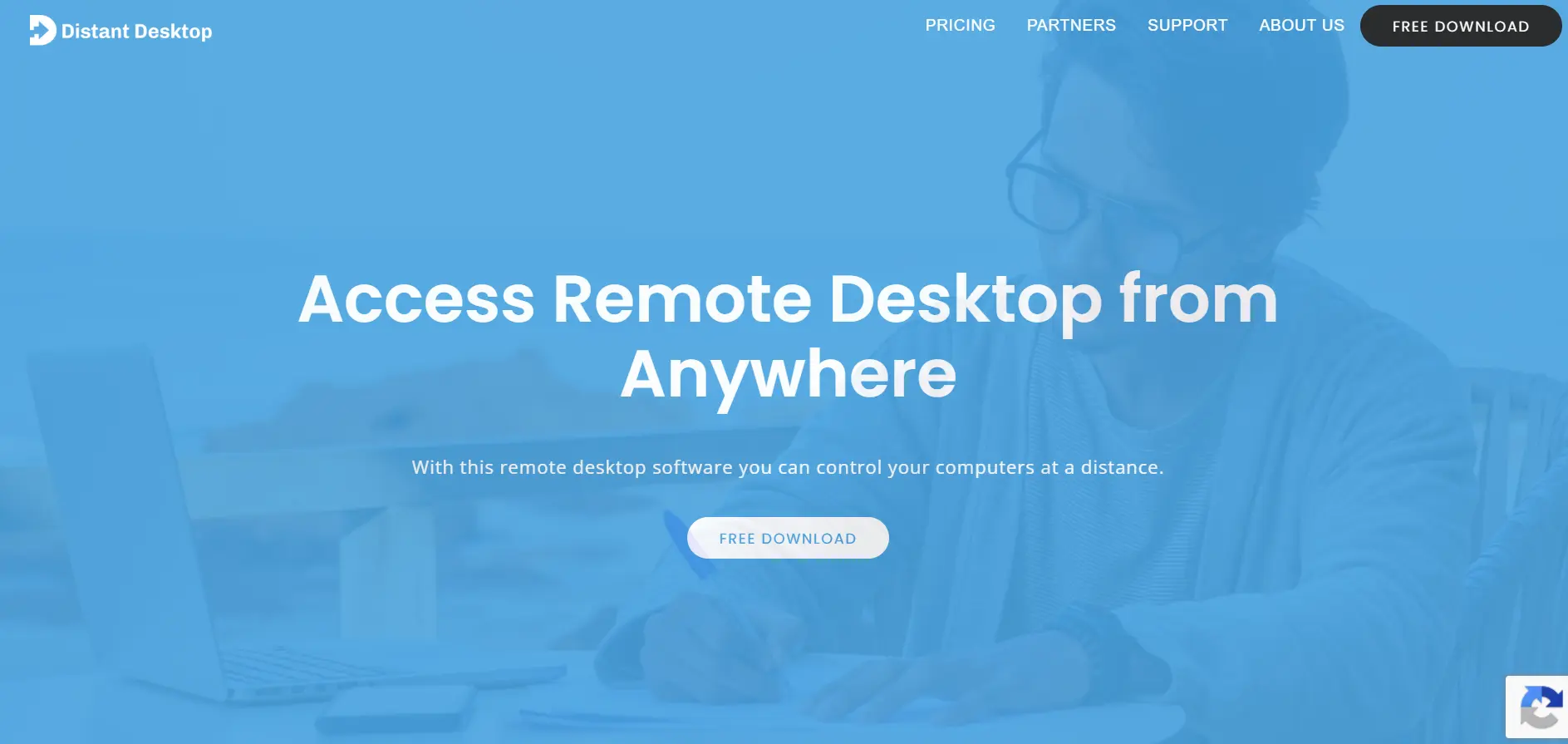
KikiVoice is a lightweight, browser-based voice cloning tool that produces a usable clone from just a few seconds of audio, with no registration barrier. It’s a fast Minimax alternative for creators who want quick narration or dubbing without navigating a full subscription or onboarding flow.
The platform offers three specialized models: Kiki Core for speed, Kiki Pro for emotional nuance, and Kiki Multilingual covering 75-plus languages. It suits podcasters, dubbers, and short-form video creators needing fast multilingual voiceovers, though it lacks the enterprise controls larger competitors offer.
Pros
- No sign-up needed to start
- Clones a voice in under 3 minutes
- 75+ languages supported
Cons
- Limited enterprise or team features
- Daily generation caps on free tier
- Newer platform with less track record
Lovo.ai

Lovo.ai (Genny) combines text-to-speech, voice cloning, an AI script writer, and a built-in video editor, positioning it as an all-in-one Minimax alternative for voice-heavy content. Its 2026 update added directable Pro V2 voices, letting users control emotion and accent through natural-language style tags.
With 500-plus voices across 100 languages and 30-plus emotions, Lovo suits e-learning creators, marketers, and podcasters needing expressive narration. Voice cloning is available on every paid plan using just one minute of sample audio, though free-trial output excludes commercial usage rights.
Pros
- 500+ voices, 100+ languages
- Directable emotion and accent control
- Bundled video editor and AI writer
Cons
- Mixed reviews on customer support
- Commercial rights excluded from trial
- Pro+ tier is pricey for solo user
Noiz.ai

Noiz.ai focuses on emotionally expressive voice generation, letting users control tone through simple emoji-based markers rather than complex settings. It’s a budget-friendly Minimax alternative for creators who want playful, expressive narration for greetings, storytelling, or short-form character voices.
Beyond text-to-speech, Noiz includes video summarization and multilingual dubbing across 41 languages, aiming to bridge language barriers for global audiences. Its low starting price makes it accessible for hobbyists, though long-term feature depth and enterprise documentation remain thinner than more established platforms.
Pros
- Very low-cost entry pricing
- Simple emoji-driven emotion control
- Includes dubbing in 41 languages
Cons
- Smaller feature set than rivals
- Limited enterprise documentation
- Newer platform with less user feedback
Pixbim
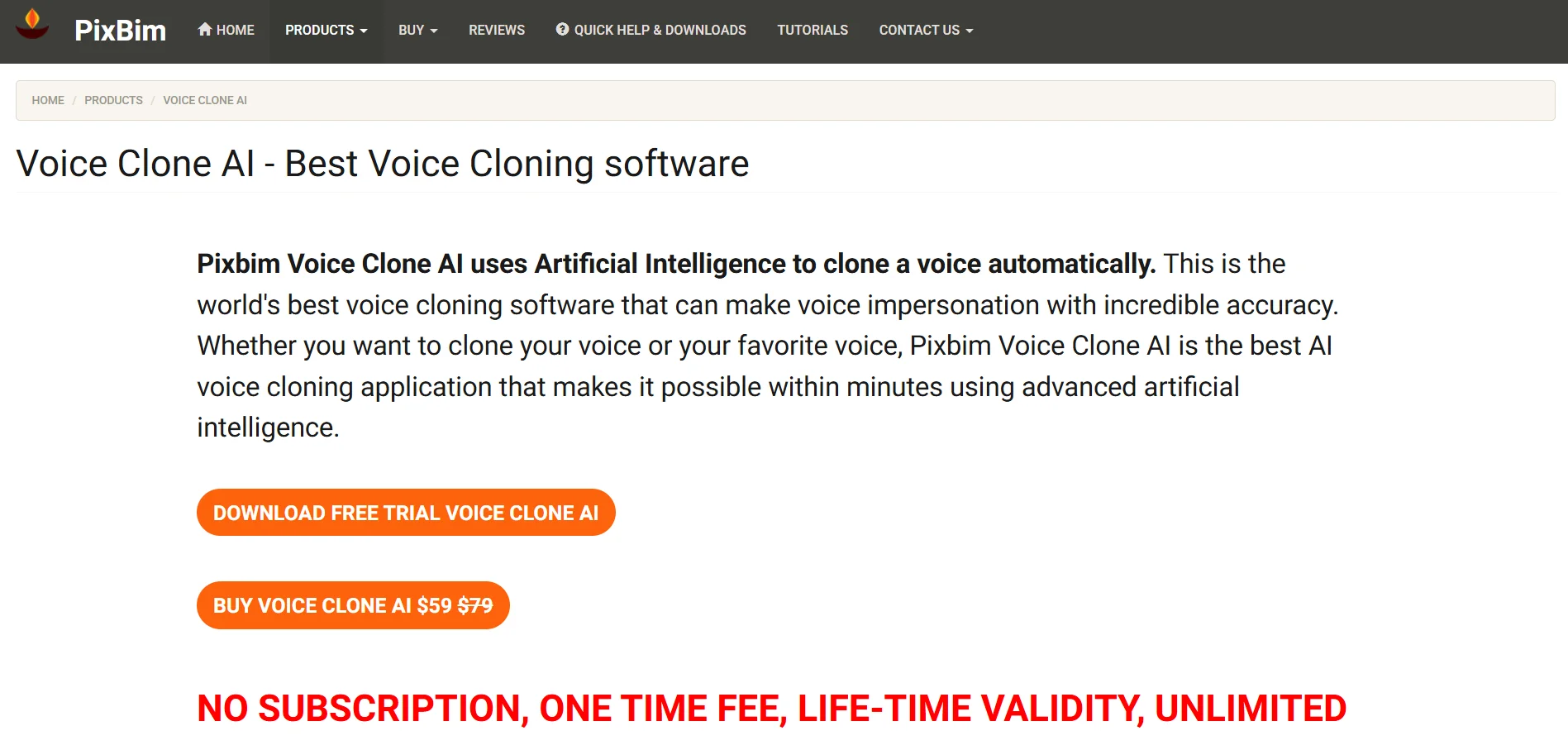
Pixbim takes a different approach from most Minimax alternatives by offering desktop AI tools for photo colorization, video upscaling, animation, and watermark removal through one-time lifetime licenses rather than subscriptions. This appeals to users tired of recurring monthly software costs for occasional editing tasks.
Because Pixbim runs locally on Windows, it processes footage without uploading files to the cloud, which benefits privacy-conscious users. The trade-off is platform limitation—no native macOS or Linux support—and processing speed depends heavily on your GPU rather than cloud compute power.
Pros
- One-time payment, no subscription
- Offline processing protects privacy
- Good for niche restoration tasks
Cons
- Windows-only support
- Needs a strong Nvidia GPU for speed
- Limited customization for pros
PlayHT

PlayHT offers 900-plus AI voices across 140-plus languages, along with voice cloning and conversational voice agent tools, making it a versatile Minimax alternative for both content creators and developers. Its pronunciation and phonetics library helps fine-tune tricky words for professional-sounding narration.
The Unlimited plan removes character caps entirely and adds high-fidelity cloning plus full commercial usage rights, appealing to agencies producing high volumes of audio. Its free tier is workable for testing but requires attribution to PlayHT and excludes commercial use.
Pros
- 900+ voices in 140+ languages
- Unlimited plan removes character caps
- Built-in pronunciation library
Cons
- Free tier requires attribution
- No commercial rights on free plan
- Pricing has shifted often across sources
Podcastle
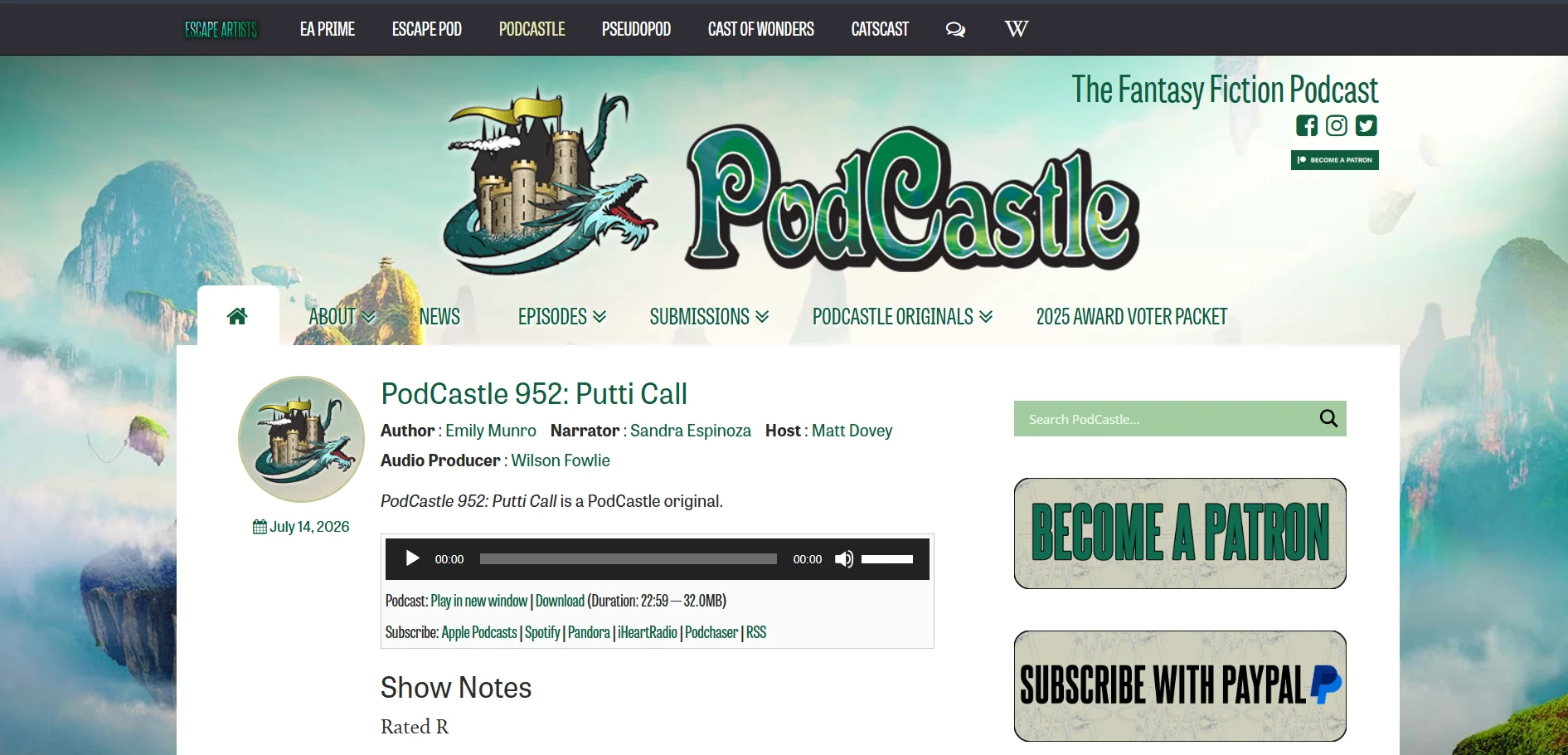
Podcastle (recently rebranded to Async) is an all-in-one podcast recording, editing, and AI voice platform, offering a practical Minimax alternative for creators focused on audio-first content. It records separate multi-track audio for up to ten remote guests directly in the browser.
Its Magic Dust noise removal and Revoice voice-cloning features are standout tools for polishing raw recordings quickly. The free plan’s video and transcription limits are lifetime caps rather than monthly allowances, so regular video podcasters will likely need the Storyteller or Pro tier fairly soon.
Pros
- Unlimited audio on the free plan
- Multi-track remote recording for guests
- AI noise removal and voice cloning
Cons
- Free video/transcription caps are lifetime, not monthly
- Revoice requires the Pro plan
- Limited live broadcasting options
Resemble.ai

Resemble.ai is a voice cloning and synthesis platform built for security-conscious deployments, adding deepfake detection and audio watermarking alongside standard text-to-speech. It’s a strong Minimax alternative for enterprises that need to verify and protect synthetic audio content, not just generate it.
Since retiring its consumer subscription tiers in 2025, Resemble now runs entirely on consumption-based Flex pricing, billing per second across TTS, voice agents, and detection services. This suits variable workloads well, though credits and per-second costs require more careful budgeting than flat monthly plans.
Pros
- Built-in deepfake detection and watermarking
- Pay-per-use pricing with no minimums
- Strong fit for security-first deployments
Cons
- No flat monthly plans anymore
- Costs harder to predict at scale
- Positioning leans heavily enterprise
Speechify
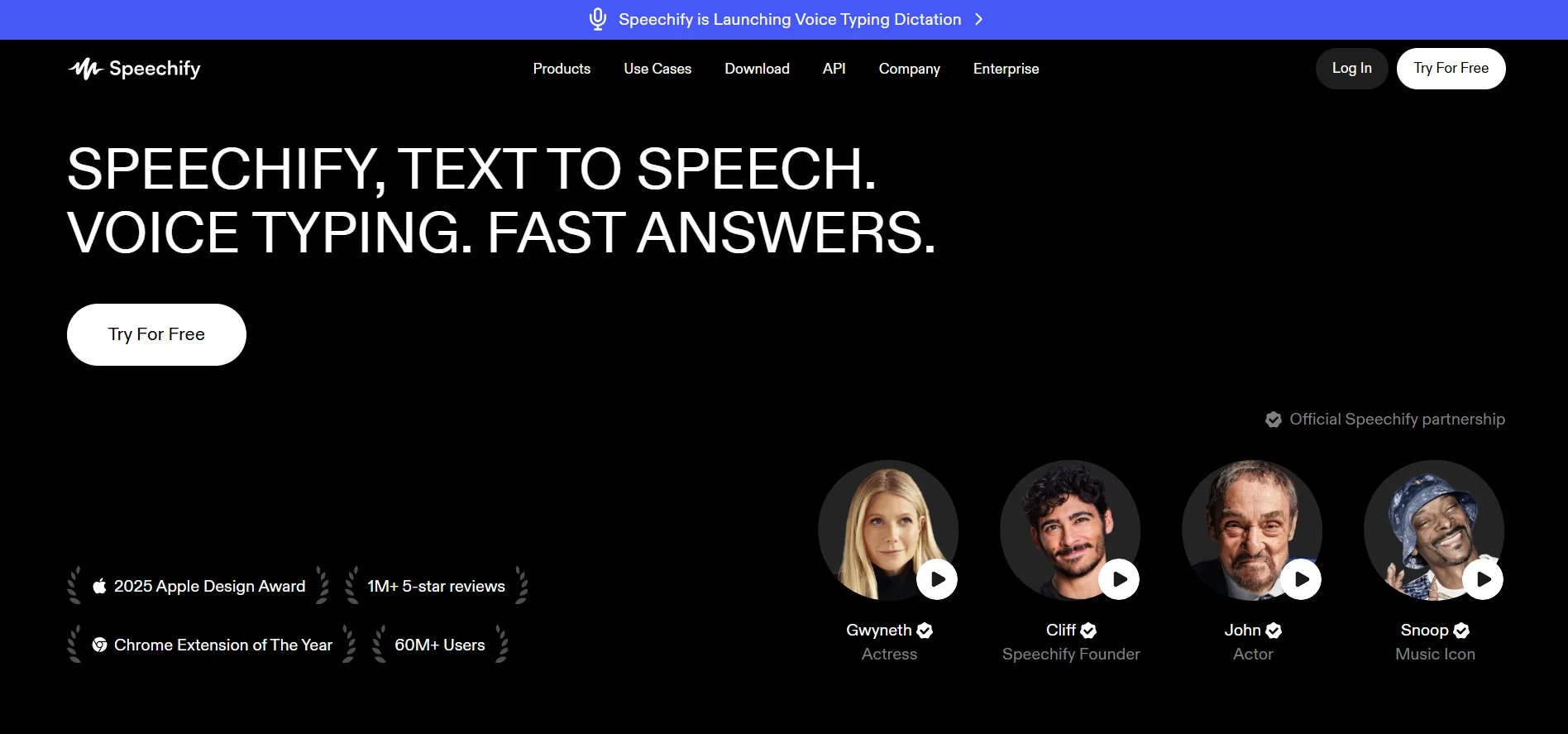
Speechify is best known as a text-to-speech reading app for students and professionals, but its Studio product extends into voiceover creation and voice cloning, making it a flexible Minimax alternative for both reading assistance and content production use cases.
Speechify Premium unlocks 200-plus voices and speeds up to 4.5x for personal reading, while Studio plans target podcasters and video creators needing commercial-use voiceovers. Used by over 20 million people, it’s especially popular among users with dyslexia, ADHD, or visual impairments needing audio conversion.
Pros
- 200+ natural-sounding voices
- Reading speeds up to 4.5x
- Accessible for dyslexia/ADHD users
Cons
- Premium and Studio are separate subscriptions
- Monthly billing costs notably more
- Word limits apply on some plans
Supertone Play
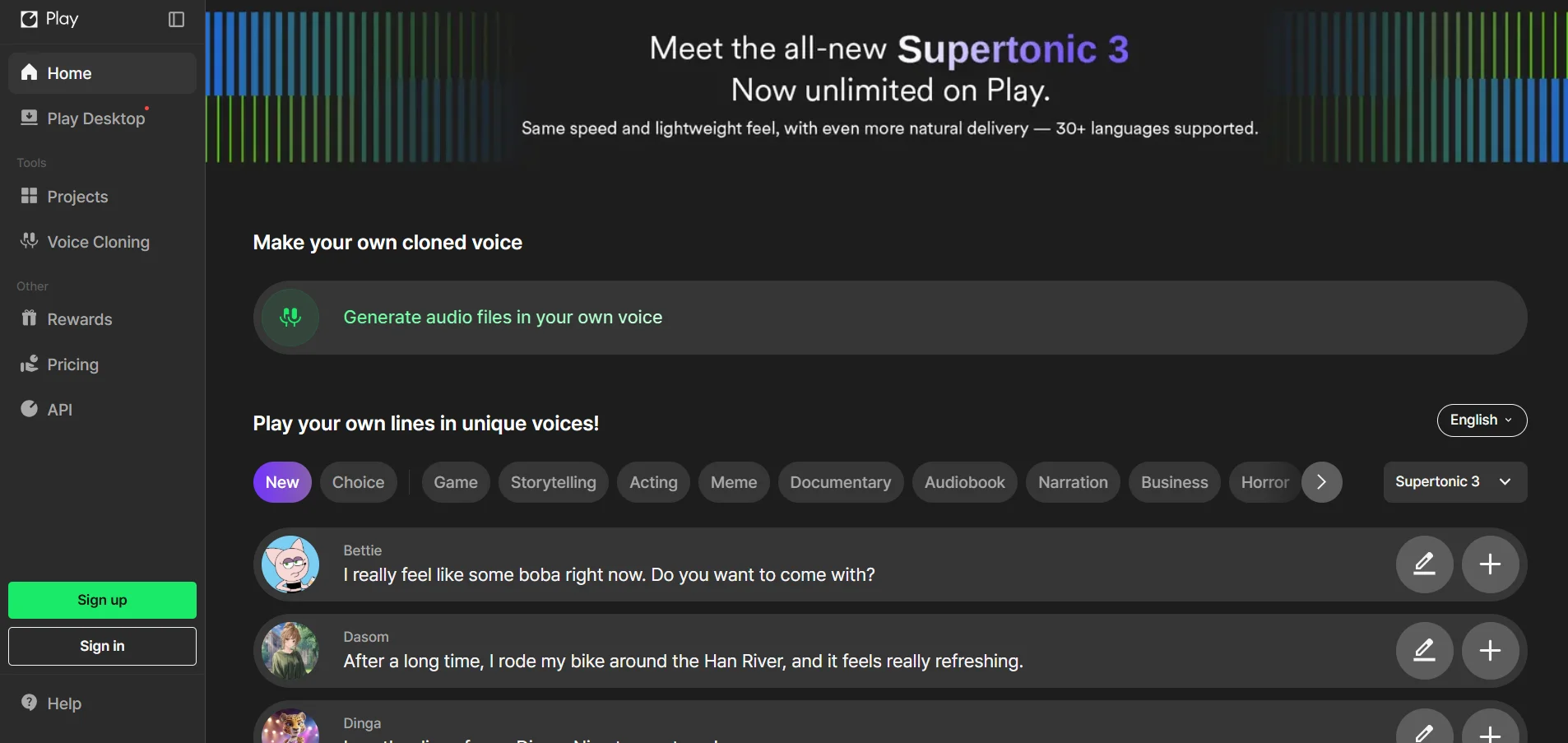
Supertone Play is a hyperrealistic text-to-speech and singing voice synthesis platform from Supertone Inc. (acquired by HYBE), offering expressive, emotionally nuanced voices with fine pitch, variance, and speed controls. It’s a niche Minimax alternative for creators wanting expressive character or singing voices.
Its three-knob interface keeps voice customization simple, while cross-lingual cloning lets a trained voice speak English, Japanese, and Korean fluently. Coverage currently favors Asian languages more strongly than English, and detailed self-serve pricing is less transparent than competitors’ published tables.
Pros
- Hyperrealistic, emotionally expressive voices
- Free voice cloning to start
- Strong cross-lingual voice consistency
Cons
- Pricing details less transparent
- Stronger for Asian languages than English
- No refunds once purchased
Uberduck

Uberduck is a playful AI voiceover platform with over 5,000 expressive voices, popular for meme content, AI-generated raps, and Discord voice integrations. It’s a fun, budget-conscious Minimax alternative for creators making short-form social content rather than polished corporate narration.
Beyond text-to-speech, Uberduck supports custom voice clone training and developer APIs for building audio apps quickly. Its casual, community-driven positioning means output quality can feel less refined than premium competitors, but its low starting price and novelty voices remain a draw for hobbyists.
Pros
- 5,000+ expressive voices
- Fun rap-generation and meme features
- Low-cost entry plans
Cons
- UI can feel gimmicky for pro use
- Lower output quality than premium rivals
- English support stronger than other languages
VEED
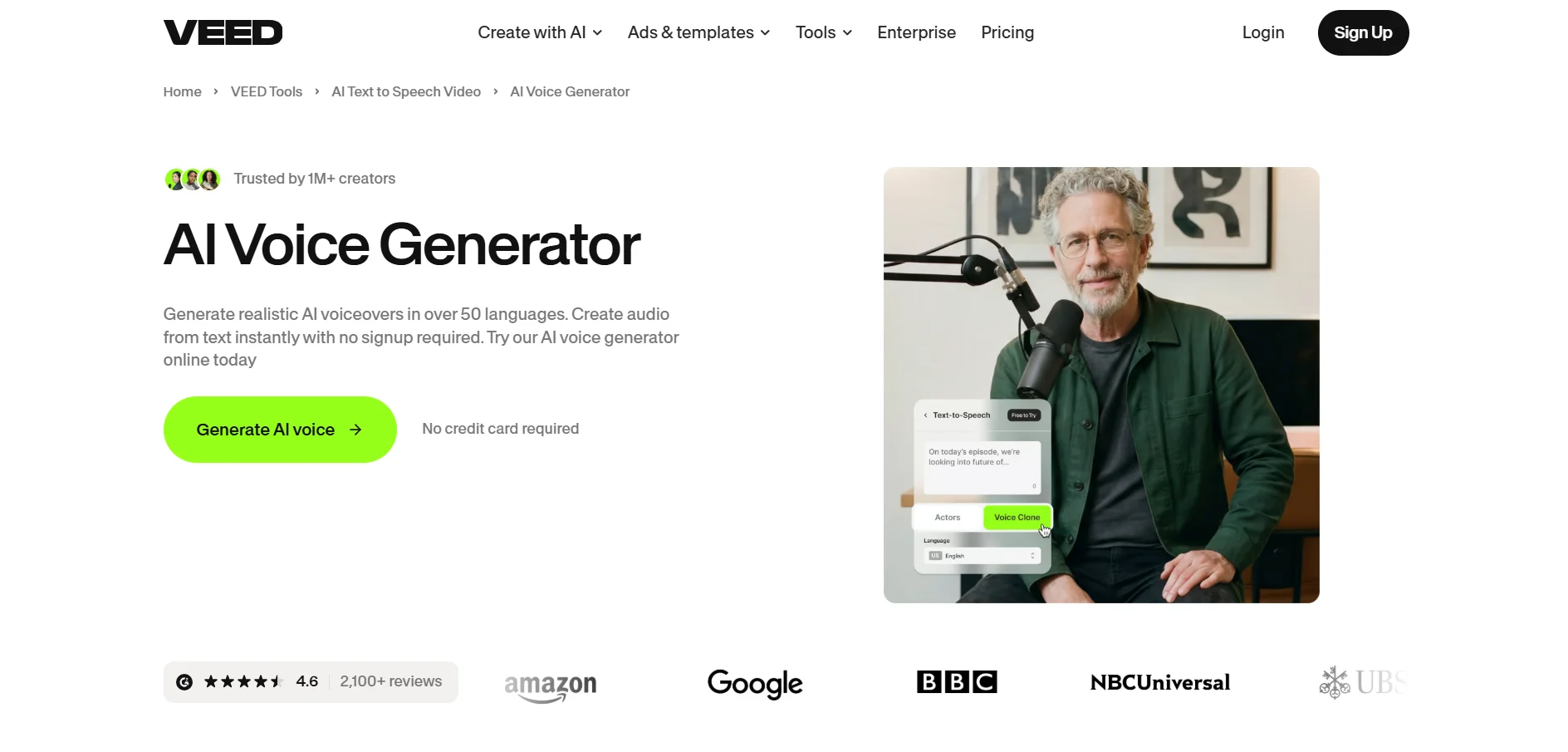
VEED is a browser-based video editor with AI subtitles, background removal, AI avatars, and translation tools, making it a well-rounded Minimax alternative for social and marketing video production. Over 4 million creators and businesses use it to skip traditional desktop editing software entirely.
Paid plans remove watermarks, unlock unlimited subtitle minutes, and add brand kits plus AI voice hours at higher tiers. G2 reviewers frequently note that VEED pays for itself by replacing freelance editors, though several of the most valued AI tools sit behind paid tiers only.
Pros
- Fully browser-based, no install needed
- Strong AI subtitle accuracy
- Replaces multiple editing tools in one
Cons
- Free plan watermarks every export
- Best AI tools locked to paid tiers
- Pricing revised fairly often
Voice.ai
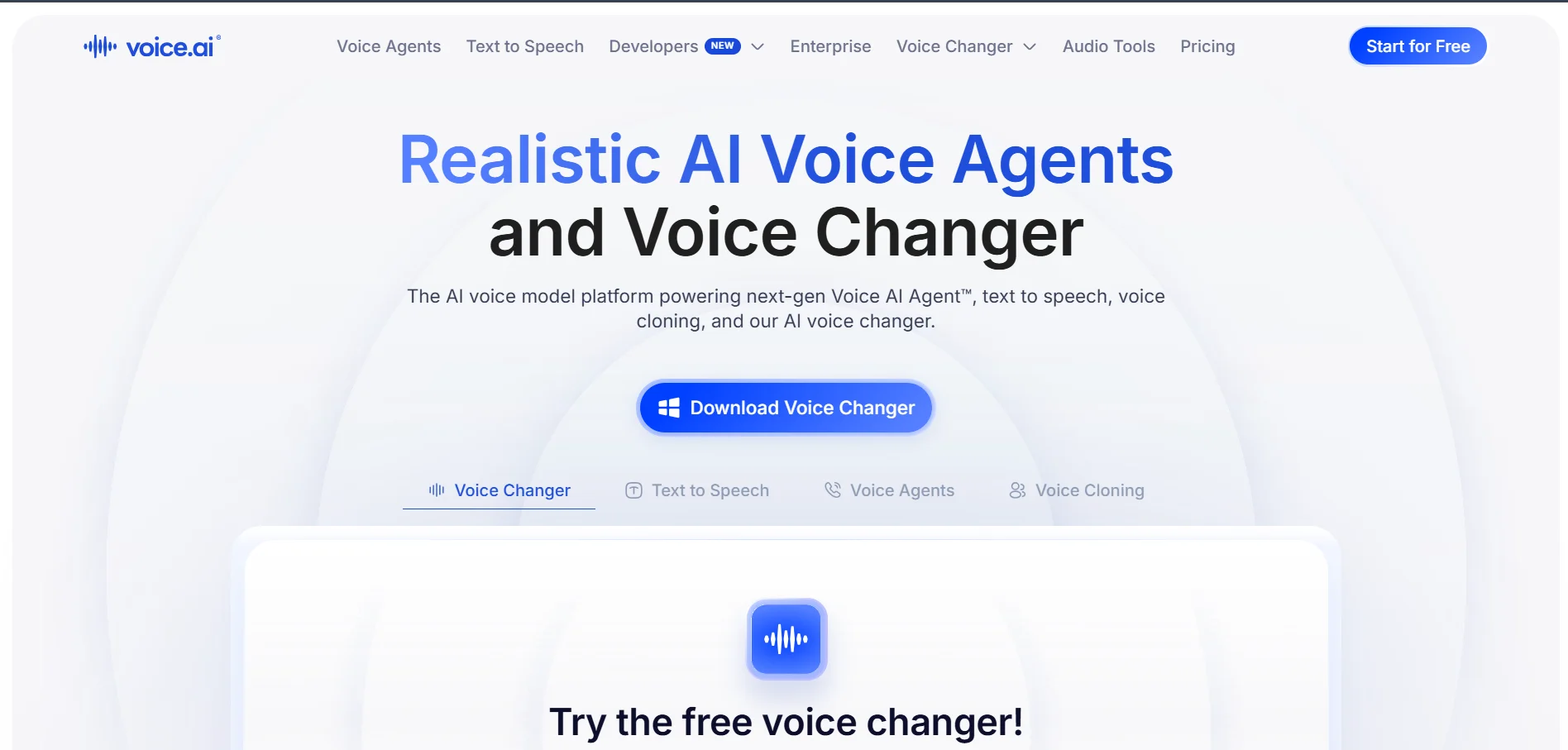
Voice.ai combines real-time voice changing with text-to-speech and voice cloning, popular among streamers, gamers, and Discord communities for on-the-fly voice transformation. It’s a lighter-weight Minimax alternative for entertainment and live-streaming use cases rather than studio-grade production.
Its credit system converts into minutes depending on the feature used, which requires some mental math to budget accurately. The Core plan at $99/month offers the best per-minute value for regular users, while the free tier is fine for casual, low-volume experimentation.
Pros
- Real-time voice changing for live use
- Popular Discord and streaming integrations
- Flexible credit-based plans
Cons
- Credit-to-minute conversion can be confusing
- Less suited to studio-grade production
- Higher tiers get expensive quickly
WellSaid Labs
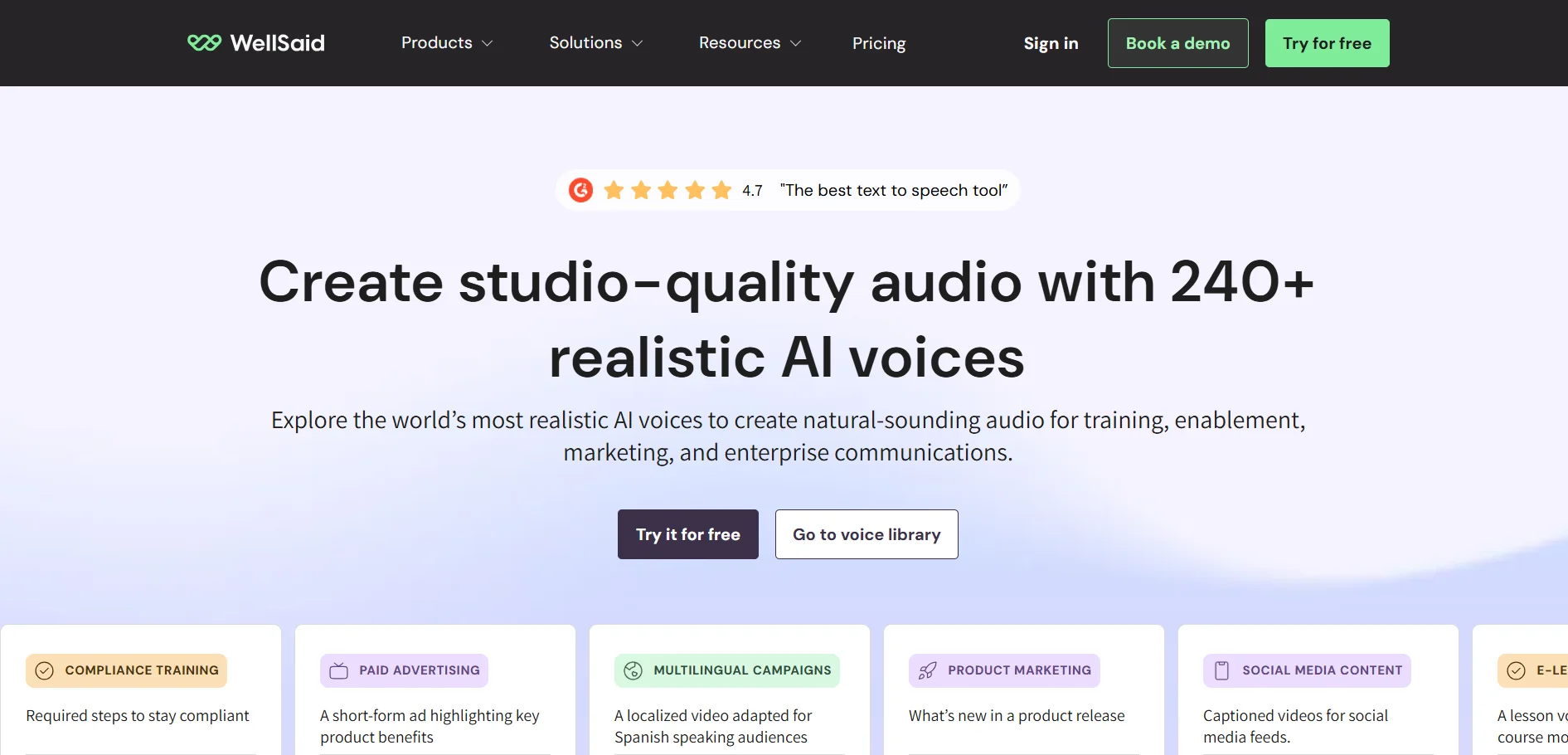
WellSaid Labs specializes in studio-quality, enterprise-grade voice synthesis, making it a professional Minimax alternative for corporate training, e-learning, and brand voice work. Its voice avatars are known for natural prosody and consistency, which large organizations value for long-form narration projects.
Unlike consumer-first competitors, WellSaid charges per active “creator” seat rather than per listener, and commercial usage rights are excluded from the entry Maker tier. Enterprise buyers can commission fully custom brand voices, though that service typically adds a substantial cost to annual contracts.
Pros
- Studio-quality, natural-sounding voices
- Strong fit for enterprise e-learning
- Custom brand voice options available
Cons
- Pricier than consumer TTS tools
- Commercial rights excluded from entry tier
- Custom voice development costs extra
Comparison Table
| Alternative | Description |
|---|---|
| BookFab | Desktop AI audiobook creator converting text and EPUB files into narrated MP3 or M4B audio. |
| Cartesia | Real-time voice AI platform with Sonic TTS, Ink STT, and Line voice agents for low-latency apps. |
| ElevenLabs | Industry-leading AI voice synthesis platform for text-to-speech, cloning, and conversational agents. |
| Fliki | Script-to-video generator with AI voiceovers and stock visuals for social and marketing content. |
| Gradium | Developer-focused, ultra-low-latency voice AI API for real-time conversational agents and applications. |
| HeyGen | AI avatar video platform for talking-head content, training videos, and localized sales outreach. |
| iSpeech | Browser-based text-to-speech platform with affordable, no-subscription plan pricing options. |
| KikiVoice | Free, no-signup AI voice cloning tool supporting 75+ languages for quick narration and dubbing. |
| Lovo.ai | All-in-one voice cloning, text-to-speech, and video editor platform with directable, emotional AI voices. |
| MiniMax | Multimodal AI suite offering low-cost text-to-speech, voice cloning, music, and agentic tools. |
| Murf.AI | Browser-based voiceover studio with timeline editing, 200+ voices, and design-tool integrations. |
| Noiz.ai | Budget-friendly, emoji-controlled expressive text-to-speech tool with multilingual dubbing support. |
| Pixbim | Windows desktop AI tools for video upscaling, colorization, and watermark removal, sold as lifetime licenses. |
| PlayHT | AI voice generator with 900+ voices, cloning, and conversational voice agent capabilities. |
| Podcastle | All-in-one podcast recording, editing, and AI voice cloning platform for audio creators. |
| Resemble.ai | Voice cloning and synthesis platform with built-in deepfake detection and audio watermarking. |
| Speechify | Text-to-speech reading app and voiceover studio popular for accessibility and content creation. |
| Supertone Play | Hyperrealistic text-to-speech and singing voice synthesis platform with expressive voice controls. |
| Uberduck | Playful AI voiceover platform with 5,000+ voices for memes, raps, and Discord integrations. |
| VEED | Browser-based video editor with AI subtitles, avatars, translation, and background removal tools. |
| Voice.ai | Real-time voice changer and text-to-speech tool popular among streamers and Discord communities. |
| WellSaid Labs | Enterprise-grade voice synthesis platform known for natural prosody in corporate and e-learning narration. |
Conclusion
There is no single best Minimax alternative for everyone the right choice depends on whether your priority is avatar video, voice cloning, podcast production, or audiobook creation. Tools like HeyGen and VEED suit video-first creators, while ElevenLabs, Murf.AI, and WellSaid Labs cater to voice-heavy workflows across different budgets.
For developers, Cartesia and Gradium offer real-time API flexibility, while budget-conscious creators may prefer KikiVoice, Noiz.ai, or Uberduck’s low-cost entry points. Whichever platform you choose, take advantage of the free trials listed above to test voice quality, output limits, and workflow fit before committing to a paid plan.


