
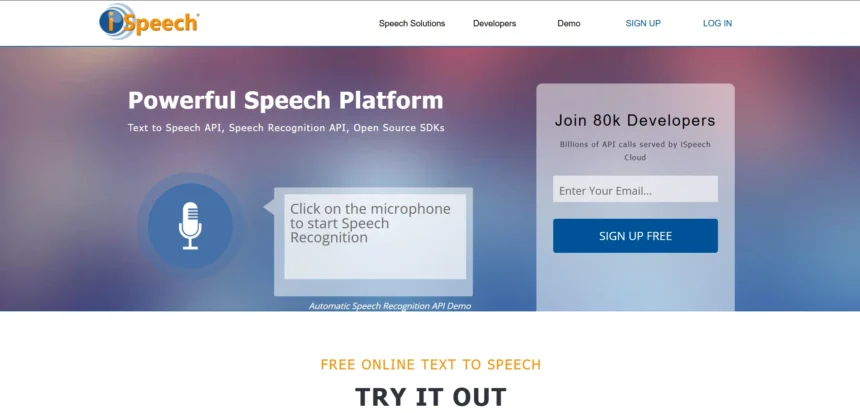
iSpeech has long been a familiar name in text-to-speech, offering basic voice generation and IVR solutions. However, the AI voice landscape has evolved rapidly, and today’s creators, developers, and businesses expect more natural intonation, emotional expression, voice cloning, and multilingual support. Whether you are producing YouTube videos, podcasts, audiobooks, or conversational voice agents, the tools below offer more modern features, better voice quality, and flexible pricing than iSpeech. In this article, we break down 13 of the best iSpeech Alternatives available today.
1. Fliki

Fliki offers a 14-day-style free plan (no card required) so you can test its script-based voice and video editor before paying. Pricing: Free $0Basic $28/moStandard $66/moPremium $99/mo (annual billing cuts these roughly in half) Enterprise pricing is custom and quoted directly by their sales team upon request from larger teams.
Fliki turns scripts, blog posts, or ideas into narrated videos using 2,000+ AI voices across 80+ languages. It bundles stock footage, music, and AI avatars into one editor, making it popular with marketers and course creators. Higher tiers unlock ultra-realistic voices, voice cloning, and watermark-free 1080p exports for commercial use.
Pros
- Huge voice and language library
- Script-to-video workflow
- Generous free tier
Cons
- Only stock footage, no AI visuals
- Premium voices gated behind Standard tier
2. Lovo.ai

Lovo.ai (Genny) provides a 14-day free trial of its Pro-level features, including 20 minutes of voice generation and limited downloads before you commit. Pricing: Basic ~$24/moPro ~$48/moPro+ ~$149/moEnterprise: Custom Annual billing typically saves users around 20% compared to paying monthly on any paid tier.
Lovo specializes in emotionally expressive voices across 100+ languages, paired with a built-in video editor and AI script writer. Its newer Pro V2 voices let you direct emotion and accent using natural-language brackets. Voice cloning is available from just one minute of sample audio on every paid plan.
Pros
- 500+ voices, 100+ languages
- Directable emotional voices
- Built-in video editor
Cons
- No permanent free plan
- Pro+ jump is pricey for solo users
3. Podcastle
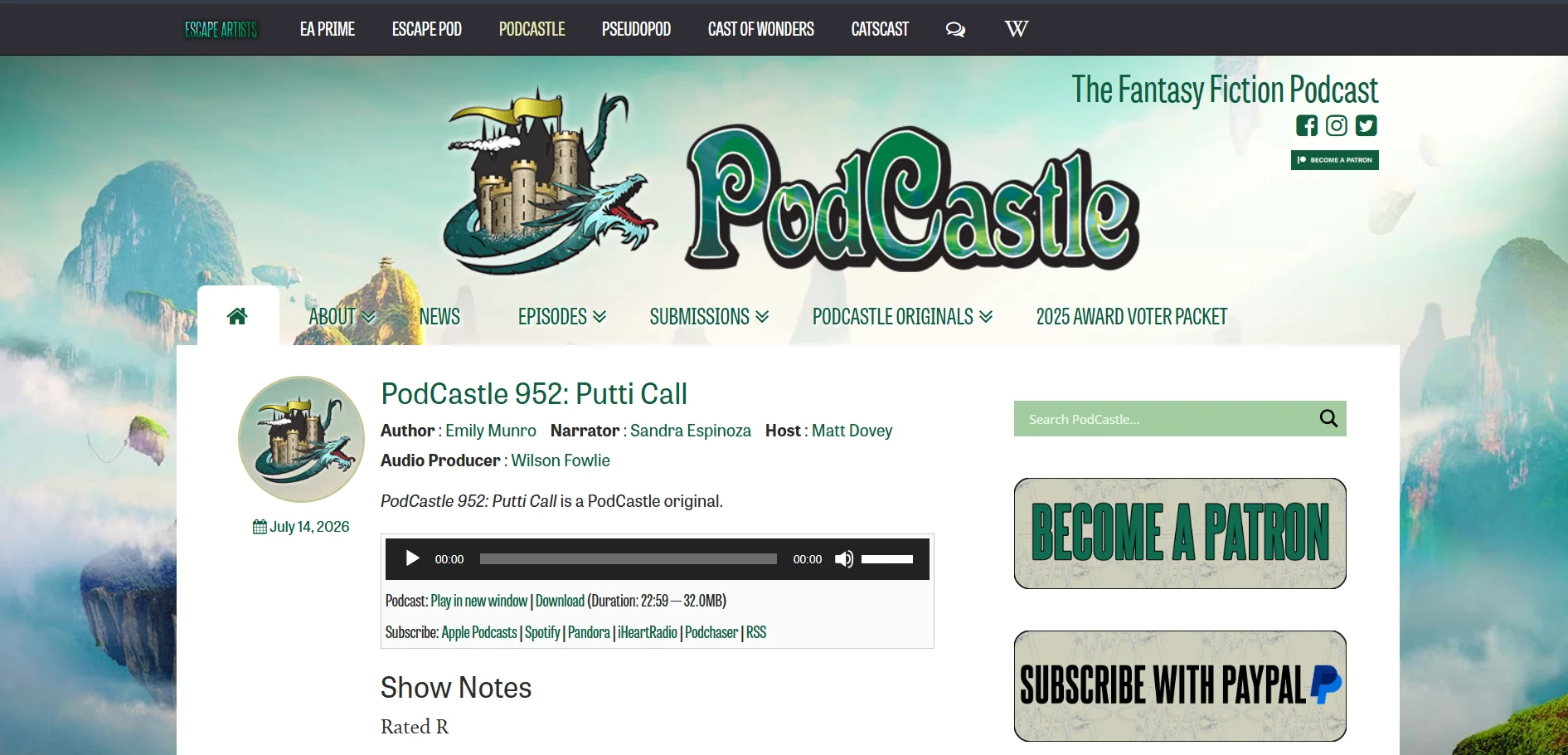
Podcastle (rebranded as Async) offers a genuinely free-forever plan plus a short trial window on premium features like Revoice cloning. Pricing: Free $0Storyteller ~$12/moPro ~$24/moBusiness ~$40/mo Pricing is billed annually for the lower rates shown, with monthly billing costing noticeably more per tier.
Podcastle combines remote multi-track recording, AI-powered editing, and text-to-speech voice skins in one browser-based studio. The free plan covers unlimited audio recording, though video and transcription minutes are capped for life rather than monthly. Revoice, its standout voice-cloning feature, is locked behind the Pro plan.
Pros
- All-in-one recording plus TTS
- Free unlimited audio recording
- Affordable entry tier
Cons
- Free video/transcription caps are lifetime, not monthly
- Voice cloning needs Pro plan
4. Resemble.ai

Resemble.ai does not offer a traditional free trial, but its Flex plan starts at $0 with no minimum commitment, letting you pay only for what you generate. Pricing: Flex: $0 to start~$0.0005/sec TTSEnterprise: Custom (up to 80% volume discount) Add-ons like team seats and voice-clone slots are billed separately on top of consumption charges.
Resemble.ai focuses on voice cloning, real-time streaming synthesis, and security features like deepfake detection and audio watermarking. It appeals to enterprises building voice-enabled products who need per-second billing rather than flat subscriptions. The lack of monthly allocations makes costs highly usage-dependent for high-volume teams.
Pros
- Pay-as-you-go, no forced tier
- Deepfake detection and watermarking
- Real-time streaming TTS
Cons
- No flat free plan
- Costs scale unpredictably at volume
5. Murf.AI
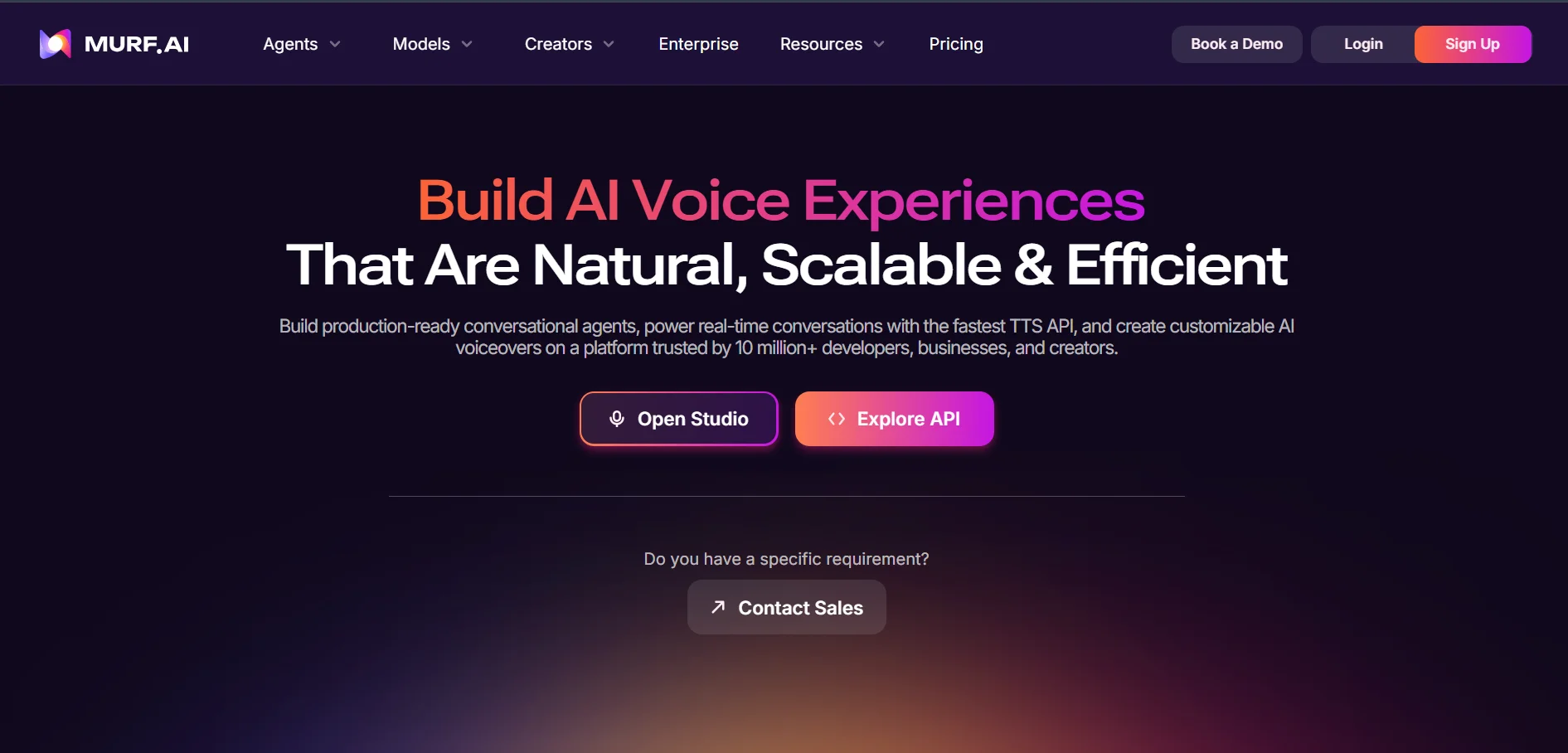
Murf gives new users a permanent free plan with 10 minutes of voice generation to explore the editor, though downloads and commercial rights are excluded. Pricing: Free $0Creator ~$19-29/moBusiness ~$66-99/moEnterprise: Custom Annual billing brings the Creator and Business tiers down substantially compared to month-to-month rates.
Murf is built around a browser-based voiceover studio with timeline editing, pronunciation controls, and dubbing in 25+ languages. All paid tiers unlock 200+ voices, commercial rights, and integrations with Canva and Google Slides. A separate pay-as-you-go API is available for developers at per-character rates.
Pros
- Intuitive studio editor
- 200+ voices, 30+ languages
- Canva and PowerPoint integration
Cons
- Free plan blocks downloads
- Voice cloning limited to Enterprise
6. VEED
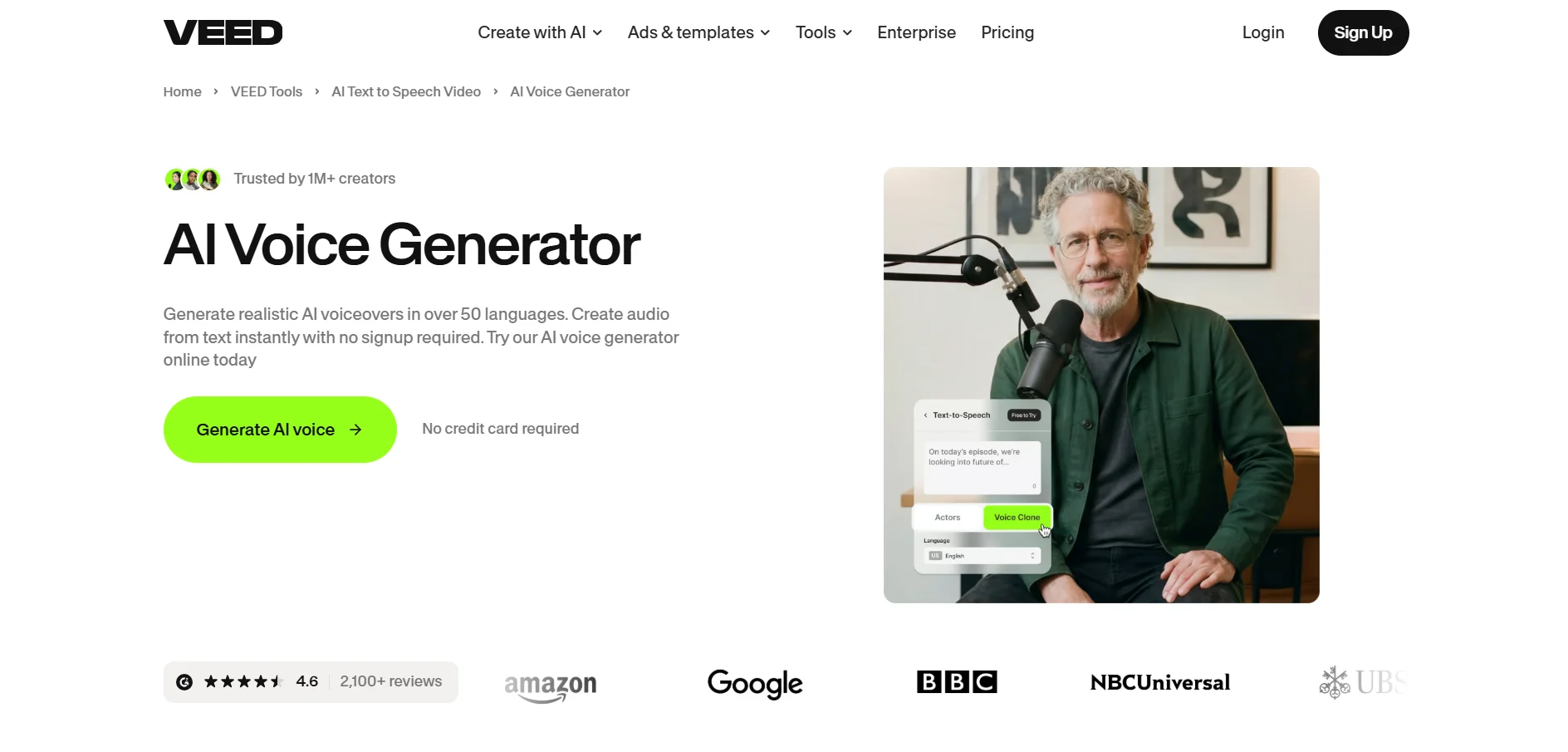
VEED has a permanently free plan with watermarked exports, plus a trial window on AI credits so you can test avatars and subtitles before upgrading. Pricing: Free $0Basic/Lite ~$12-24/moPro ~$25-55/moBusiness ~$70/mo/user VEED regularly advertises annual-billing discounts of up to 50% off the listed monthly rates.
VEED is primarily a browser-based video editor with automatic subtitles, AI avatars, and translation tools rather than a dedicated TTS platform. It does not generate AI narration from text directly, so users typically pair it with a voiceover source. AI features consume credits separately from the base subscription cost.
Pros
- Accurate auto-subtitles
- Team collaboration tools
- Free plan available indefinitely
Cons
- No native AI voiceover generation
- AI credits can run out quickly
7. Pixbim
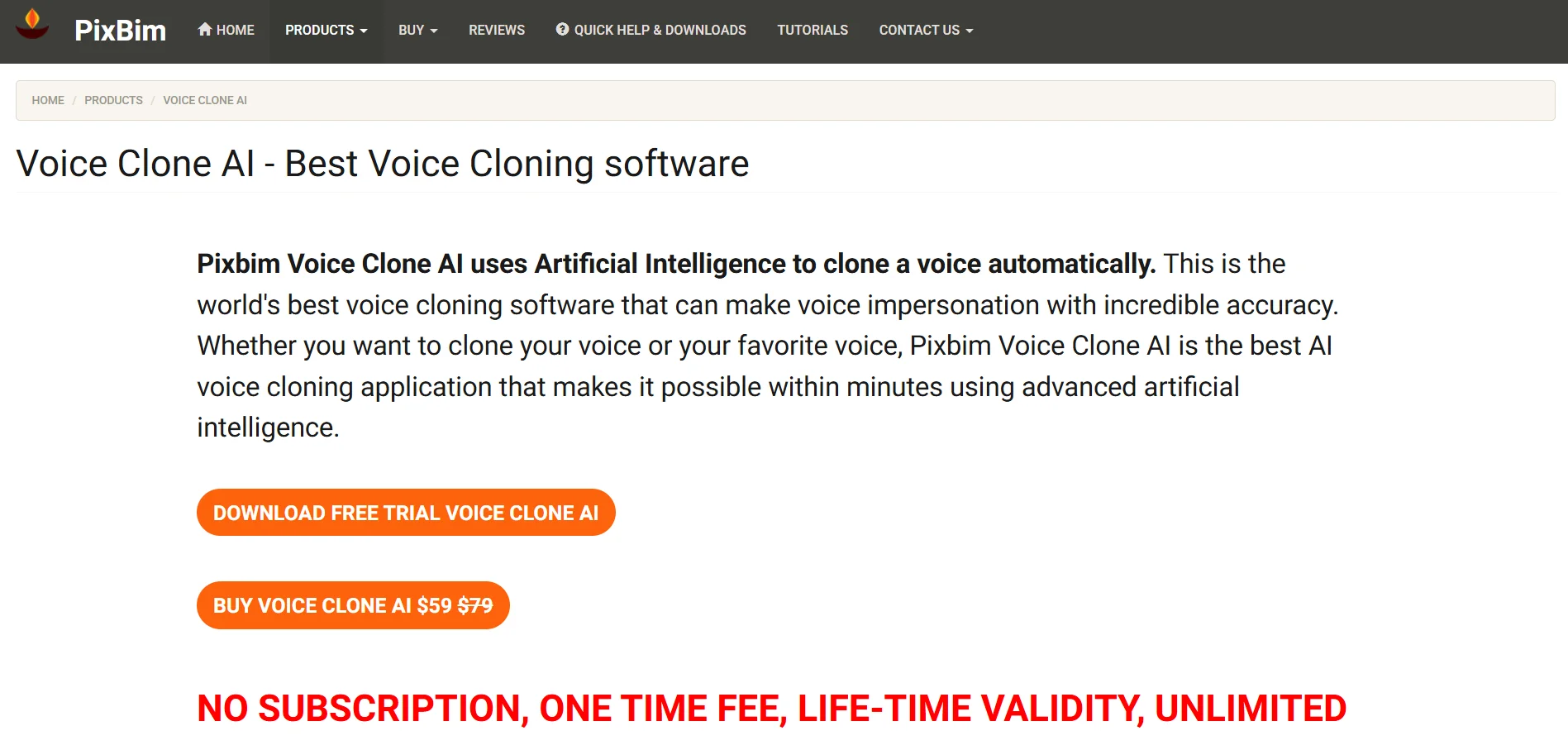
Pixbim offers a 7-day free trial across its AI tools, including lip sync, video upscaling, and voice-driven animation, before requiring purchase. Pricing: One-time license ~$79Buy Once, Use Forever Unlike most alternatives on this list, Pixbim sells lifetime desktop licenses with free upgrades rather than recurring monthly subscriptions.
Pixbim is a suite of standalone AI desktop tools rather than a single browser platform, covering lip-sync animation, photo colorization, and video upscaling. It runs locally on Windows machines, which appeals to users wanting offline privacy and no recurring fees. GPU acceleration is recommended, and macOS/Linux support remains limited.
Pros
- One-time payment, no subscription
- Runs locally for privacy
- Multiple niche AI tools
Cons
- Windows-only support
- Needs a capable GPU for speed
8. ElevenLabs
ElevenLabs offers a genuine free plan with 10,000 monthly credits, roughly ten minutes of speech, letting you sample voice quality before subscribing. Pricing: Free $0Starter ~$5/moCreator ~$22/moPro ~$99/moScale ~$299/moBusiness ~$990+/mo Annual plans include roughly two months free compared to paying monthly across every tier.
ElevenLabs is widely regarded as the industry leader in realistic AI speech, offering professional voice cloning, multilingual synthesis, and low-latency conversational agents. Its credit system ties usage to characters processed rather than a flat minute cap, which makes budgeting predictable once you understand the conversion rate. Commercial rights begin at the Starter tier.
Pros
- Industry-leading voice realism
- Professional voice cloning
- Flexible credit system
Cons
- Premium pricing at higher tiers
- Free tier has no commercial rights
9. HeyGen

HeyGen’s free plan allows about 3 watermarked videos per month, giving new users a real trial of its avatar and lip-sync technology at no cost. Pricing: Free $0Creator ~$29/moPro ~$99/moBusiness ~$149/mo + $20/seatEnterprise: Custom Annual billing on Creator and Pro tiers can lower the effective monthly rate noticeably.
HeyGen is best known for realistic AI avatars and video translation across 175+ languages, powered by a Premium Credit system tied to video length and avatar type. Creator suits solo creators needing unlimited videos, while Business adds 4K exports, custom avatars, and multi-seat collaboration. Credits, not just plan tier, ultimately drive total monthly spend.
Pros
- Highly realistic AI avatars
- 175+ language translation
- Strong for training and marketing videos
Cons
- Credit system can be confusing
- Advanced avatars burn credits fast
10. Supertone Play
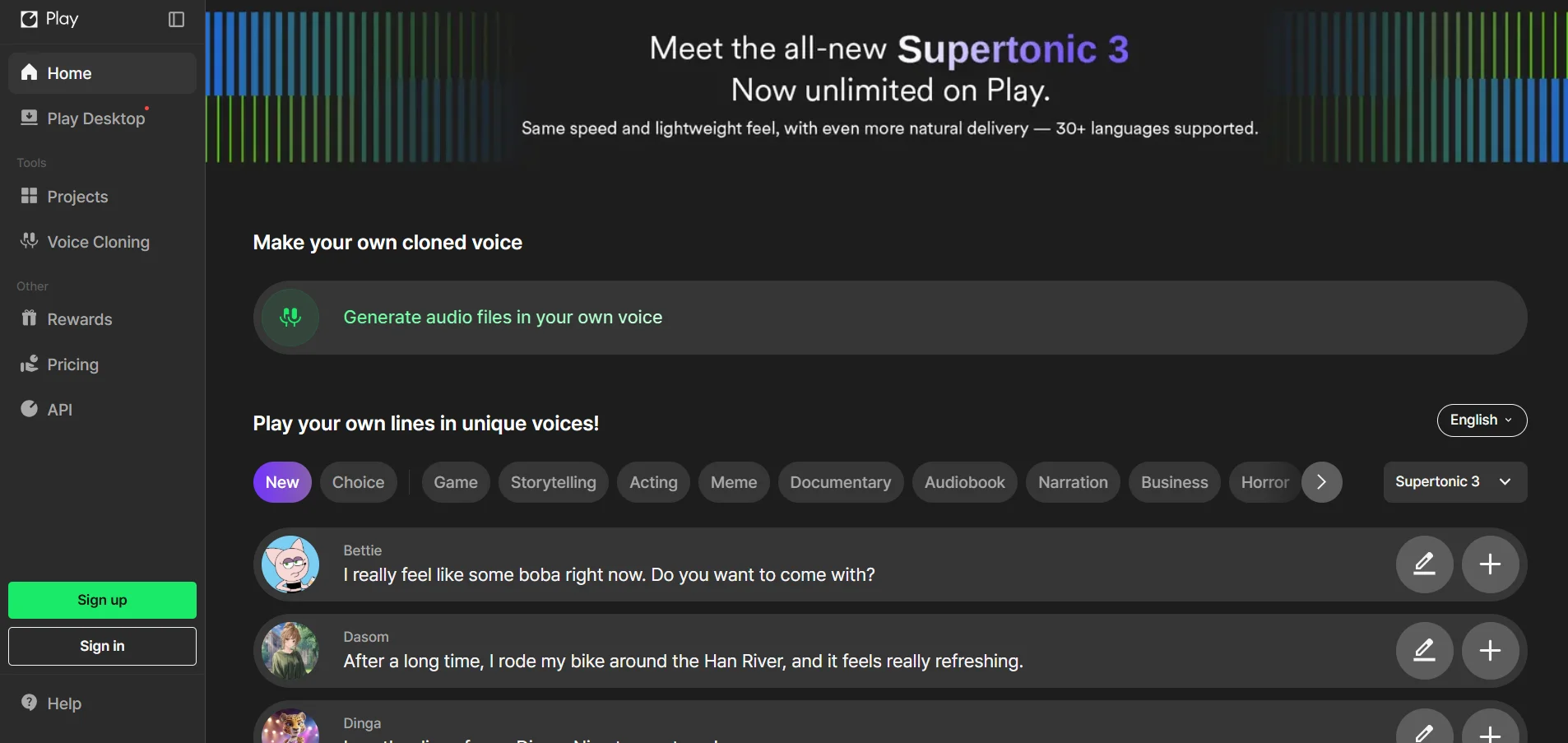
Supertone occasionally runs limited-time promotions offering free unlimited access to voice cloning and its premium voice library for new users. Pricing: Starter ~$9.99/moCreator ~$19.99/moPro ~$79.99/moEnterprise: Custom Paying annually from the Creator tier or above gives an additional 10% discount on the listed monthly rate.
Supertone Play generates expressive, multilingual speech in Korean, Japanese, and English with a credit-based system tied to usage minutes. Higher tiers unlock more voice clones and higher credit allowances, up to 30 cloned voices on Pro. Custom voice creation for branded characters requires stepping up to the Enterprise plan.
Pros
- Rich emotional expressiveness
- Fast instant voice cloning
- No overage charges, credits simply refill
Cons
- Limited to three core languages
- Reported compatibility issues with some DAWs
11. Gradium

Gradium’s free tier includes 45,000 monthly credits, roughly an hour of TTS or four hours of speech-to-text, with no credit card required to start. Pricing: Free $0XS ~$13/moM ~$340/moL ~$1,615/moEnterprise: Custom Seed-funded startups can also apply for a program offering over $2,000 in free credits and six months of full API access.
Gradium is a developer-focused voice AI platform emphasizing ultra-low latency, semantic voice activity detection, and flexible deployment across cloud, private cloud, and on-premises environments. All paid plans include voice cloning and streaming without additional feature gating. It’s positioned as a direct alternative to ElevenLabs for real-time conversational applications.
Pros
- Ultra-low latency streaming
- Flexible deployment options
- No feature gating across paid tiers
Cons
- Higher tiers get expensive fast
- Best suited to developers, not casual creators
12. Noiz.ai

Noiz.ai provides a free-forever plan with launch credits, letting anyone test its emoji-driven emotional voice controls without a subscription. Pricing: Free $0Starter ~$2.90/moCreator ~$8.90/mo Its introductory pricing has occasionally dropped as low as $1.90 for a first month, making it one of the most budget-friendly options on this list.
Noiz.ai stands out for emotionally adaptive voices controlled through simple emoji inputs, plus dubbing and video summarization in 41 languages. It’s aimed at creators who want expressive, less mechanical-sounding speech without a steep learning curve. Long-term pricing details beyond entry tiers remain thinly documented on its official site.
Pros
- Very low-cost entry plans
- Simple emoji-based emotion control
- Free-forever tier
Cons
- Pricing details beyond entry tiers unclear
- Smaller language coverage than rivals
13. Uberduck

Uberduck’s free plan gives access to 4,000+ voices with limited monthly clips and non-commercial use, functioning as an open-ended trial. Pricing: Free $0Starter ~$4/moCreator ~$5-10/moPro ~$30/mo Paying annually unlocks roughly 20% savings, and some annual starter plans drop to about $2/month.
Uberduck is a quirky voice synthesis platform known for celebrity-style and character voices, AI-generated raps, and custom voice cloning for creators. Commercial licensing, API access, and higher render credits unlock progressively at the Creator tier and above. Voice cloning quality is generally considered less consistent than category leaders like ElevenLabs.
Pros
- Fun character and celebrity-style voices
- Affordable entry-level pricing
- REST API for developers
Cons
- Cloning quality trails top competitors
- Free tier restricted to non-commercial use
| Alternative | Description |
|---|---|
| Fliki | Script-to-video platform with 2,000+ AI voices, stock media, and avatar-driven narration. |
| Lovo.ai | Emotionally expressive TTS and video editor with directable Pro V2 voices in 100+ languages. |
| Podcastle | All-in-one podcast recording, AI editing, and voice-cloning studio, now branded Async. |
| Resemble.ai | Enterprise-grade voice cloning platform with per-second billing and deepfake detection. |
| Murf.AI | Browser-based voiceover studio with 200+ voices and dubbing in 25+ languages. |
| VEED | Online video editor with auto-subtitles, AI avatars, and translation tools. |
| Pixbim | Suite of one-time-purchase desktop AI tools for lip-sync, upscaling, and colorization. |
| ElevenLabs | Leading realistic AI voice generator with cloning and low-latency conversational agents. |
| HeyGen | AI avatar video generator with lip-sync translation across 175+ languages. |
| Supertone Play | Expressive multilingual TTS specializing in Korean, Japanese, and English voices. |
| Gradium | Developer-focused, low-latency voice AI API with flexible deployment options. |
| Noiz.ai | Budget-friendly emotional TTS platform controlled through emoji-based inputs. |
| Uberduck | Creative voice synthesis platform for character voices, raps, and voice cloning. |
Conclusion
There is no single iSpeech alternative the right pick depends on your budget, use case, and required features. Creators who need realistic narration and cloning should look toward ElevenLabs or Lovo.ai, while video-first teams may prefer HeyGen or VEED. Developers building voice agents will find Gradium and Resemble.ai more suitable, and budget-conscious users can start with Noiz.ai or Uberduck.
Whichever platform you choose, most offer free plans or trials, so it’s worth testing two or three before committing to a paid subscription. Pricing and features change frequently in this fast-moving space, so always double-check the official website for the latest plans before making a final decision.


