

Lovo.ai has long been a popular pick for AI voiceovers and text-to-speech video creation, but it’s far from the only option on the market. Whether you need hyperrealistic voice cloning, real-time voice changing, avatar-driven video, or a budget-friendly one-time purchase tool, there’s a platform built for your workflow. Below, we break down 14 strong Lovo.ai Alternatives, covering their free trials, official pricing plans, standout strengths, and a few trade-offs worth knowing before you sign up.
1. HeyGen

Creator: $29/mo
Pro: $49/mo
Business: $149/mo + $20/seat
Enterprise: Custom
HeyGen offers a free plan requiring no credit card, letting you generate up to three videos monthly before upgrading. Paid tiers start with Creator at $29/month for unlimited videos, Pro at $49/month with more credits, and Business at $149/month plus $20 per additional seat. Enterprise plans add custom pricing, API access, and SSO for larger teams.
As a Lovo.ai alternative, HeyGen shines with realistic talking avatars, multilingual dubbing across 40+ languages, and instant script-to-video generation. Creators, marketers, and educators use it to produce polished explainer videos without cameras or studios. Its avatar library and voice cloning make it strong for camera-free video production at scale, though credit use can climb fast.
Pros
- Realistic AI avatars
- 40+ language dubbing support
- Fast script-to-video workflow
- Developer API access
Cons
- Credit system can confuse
- Extra seats add cost fast
- Custom avatars need higher tier
2. MiniMax Audio

Starter: $5/mo
Standard: $30/mo
Pro/Scale: $99–$249/mo
Business: $999/mo
MiniMax Audio provides a free tier with 10,000 monthly credits to test its voice engine before committing. Paid plans begin at Starter for $5/month, scaling through Standard at $30/month, Pro at $99/month, Scale at $249/month, and Business at $999/month, each unlocking higher credit allotments and multilingual voice cloning features for growing teams.
MiniMax Audio delivers hyperrealistic, low-latency multilingual speech synthesis and instant voice cloning through a developer-friendly API. It appeals to podcast producers, game studios, and businesses building voice-enabled products who need scalable pricing tied to usage. Compared with Lovo.ai, MiniMax leans more toward API-first developers than drag-and-drop studio editing.
Pros
- Competitive per-credit pricing
- Strong multilingual voice cloning
- Developer-friendly API
- Scales to enterprise volume
Cons
- Less beginner-friendly interface
- Credits expire each cycle
- Fewer built-in editing tools
3. Speechify
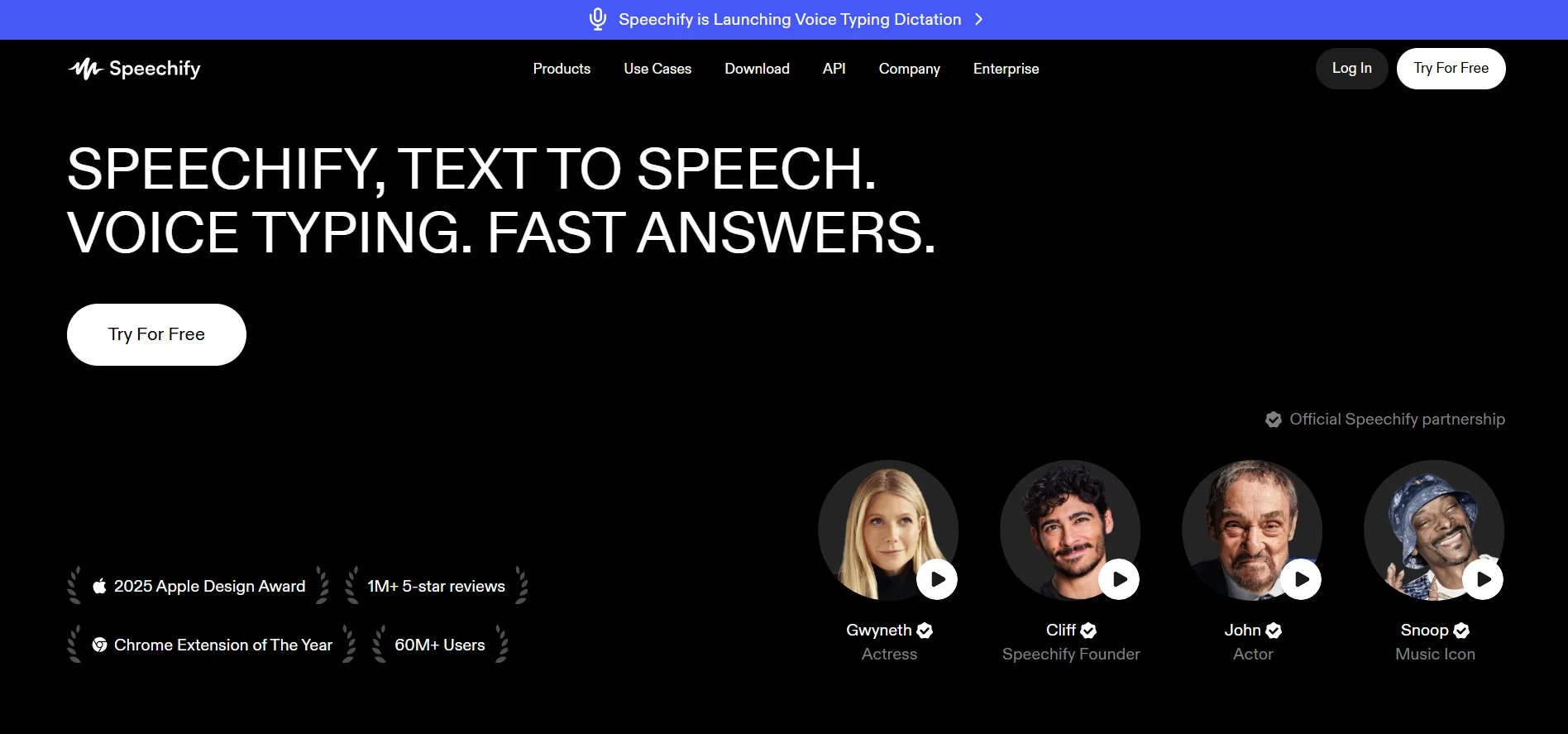
Premium: $11.58–$29/mo
Studio Starter: $19/mo
Studio Creator: $49/mo
Enterprise/Student: Custom
Speechify offers a free version with limited voices before nudging users toward Premium, priced at $29/month or roughly $11.58/month billed annually near $139/year. Its Studio product for voiceover creation starts at $19/month for Starter and $49/month for Creator, while Enterprise and Student plans require a custom quote.
Speechify is best known as a text-to-speech reading app, but its Studio arm competes directly with Lovo.ai for voiceover and dubbing work. With 200+ voices, listening speeds up to 4.5x, and multilingual dubbing, it suits students, podcasters, and marketers who want reading assistance and voiceover production in one ecosystem.
Pros
- Dual-purpose reading and voiceover tool
- Fast listening speeds up to 4.5x
- Large voice library
- Education discounts available
Cons
- Premium and Studio billed separately
- Monthly pricing higher than annual
- Some features locked behind Studio
4. Pixbim Voice Clone AI
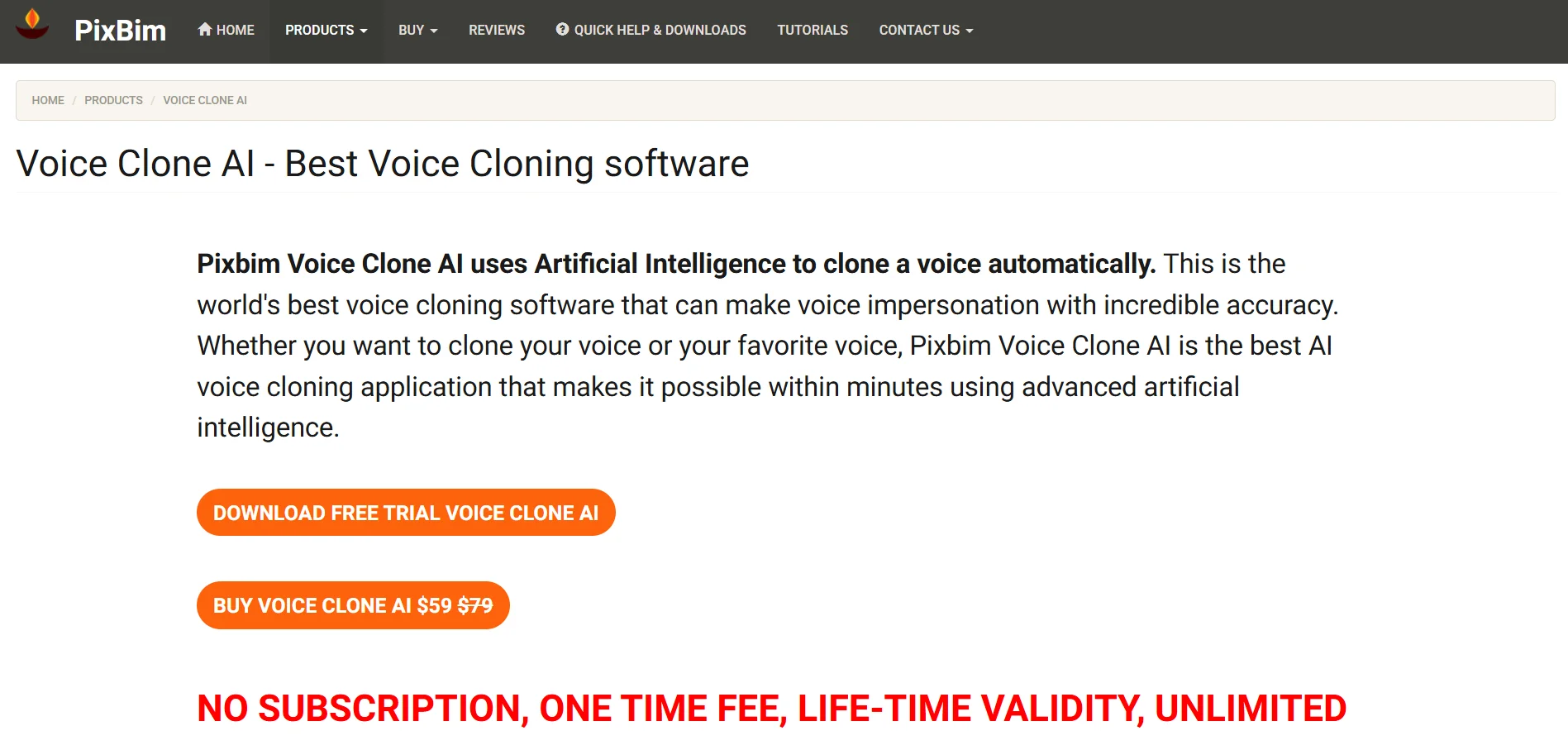
One-time: $59 (was $79)
No subscription required
Pixbim offers a free trial to test its voice cloning engine before purchasing. Unlike subscription-based competitors, it uses a one-time payment model priced at $59, discounted from a $79 list price, granting lifetime access with no recurring monthly or annual fees required at any point.
Pixbim Voice Clone AI runs offline on your desktop, processing and storing all audio locally for complete privacy. It supports multi-speaker cloning and unlimited generation duration from a single audio sample, appealing to creators who prefer a one-time purchase over Lovo.ai’s subscription model and want full control of their data.
Pros
- One-time payment, no subscription
- Works fully offline for privacy
- Unlimited voice cloning duration
- Multi-speaker support
Cons
- Desktop-only, no cloud collaboration
- Fewer voices than cloud rivals
- Less frequent feature updates
5. Gradium

XS: $13/mo
S: $43/mo
M: $340/mo
L: $1,615/mo
Gradium provides a free tier with roughly one hour of text-to-speech and three concurrent requests for testing. Paid API plans scale from XS at $13/month, through S at $43/month and M at $340/month, up to L at $1,615/month, each expanding character limits and concurrency for production use.
Backed by over $100 million in funding and researchers from DeepMind and Meta, Gradium focuses on ultra-low-latency audio language models for voice agents and real-time translation. It’s a developer-first alternative to Lovo.ai, better suited to teams building conversational AI products than a simple browser-based video editor.
Pros
- Ultra-low latency for real-time use
- Strong voice cloning accuracy
- Backed by well-funded research team
- On-premise deployment available
Cons
- Developer/API focused, steeper learning curve
- No drag-and-drop studio editor
- Higher tiers get expensive fast
6. KikiVoice

Paid: ~$10–$15/mo
Enterprise: Custom
KikiVoice requires no sign-up and offers unlimited free access to its core voice cloning and text-to-speech tools. Commercial and higher-volume use unlocks paid plans starting around $10 to $15 per month, with Enterprise pricing available on request for organizations needing bulk processing and priority support.
KikiVoice clones a voice from just a few seconds of audio and supports 75+ languages across three specialized models: Core, Pro, and Multilingual. It’s a lightweight, no-friction alternative to Lovo.ai for creators wanting instant browser-based cloning without accounts, though it lacks the fuller video and avatar suite Lovo.ai provides.
Pros
- No sign-up, instant browser access
- Clones voices from short samples
- 75+ languages supported
- Generous free tier
Cons
- Limited video/avatar features
- Paid tier details less transparent
- Newer platform, smaller track record
7. Murf.AI
Creator: $19–$29/mo
Business: $66–$99/mo
Enterprise: Custom
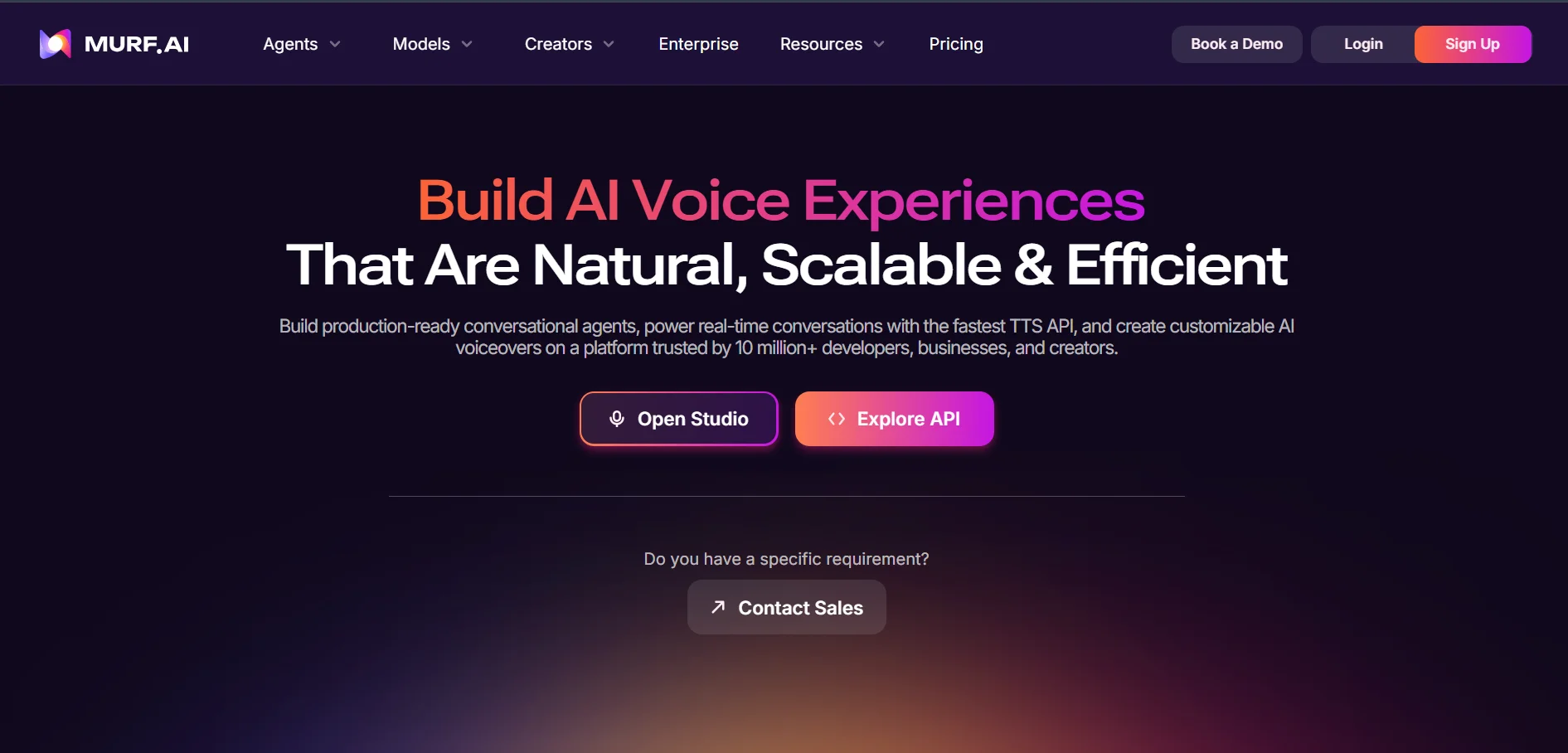
Murf.AI‘s free plan gives 10 minutes of voice generation to explore the platform. Paid tiers include Creator at $19/month billed annually (or $29 monthly) and Business at $66/month annually (or $99 monthly), while Enterprise offers custom pricing with unlimited generation and compliance certifications for larger organizations.
Murf AI pairs a browser-based voiceover editor with 200+ voices across 20+ languages, video dubbing, and integrations with Canva, PowerPoint, and Google Slides. It’s a natural Lovo.ai competitor for e-learning creators and marketers wanting timeline-based editing and pronunciation control alongside professional voice generation for presentations and courses.
Pros
- Canva and PowerPoint integrations
- Timeline-based voice editor
- Commercial rights on paid tiers
- Broad language support
Cons
- Free plan very limited (10 min)
- No voice cloning below Enterprise
- Annual billing needed for best rates
8. Resemble.ai

Pay-as-you-go: $0.0005/sec
Enterprise: Custom, up to 80% off
Resemble.ai dropped fixed subscriptions for a Flex pay-as-you-go model starting at $0, charging $0.0005 per second of generated speech with no minimum commitment and credits that never expire. Enterprise plans add up to 80% volume discounts, dedicated infrastructure, and custom SLAs for security-focused organizations.
Resemble AI stands out with built-in deepfake detection and PerTh audio watermarking alongside its core voice cloning and TTS engine, appealing to security-conscious teams. Compared with Lovo.ai, it targets developers and enterprises needing authentication tools and consumption-based billing rather than a flat-rate content creation studio.
Pros
- Pay-per-second, no wasted subscription
- Deepfake detection and watermarking
- Credits never expire
- Real-time streaming TTS
Cons
- No flat monthly plan for budgeting
- Consumption billing can be unpredictable
- Less suited to casual creators
9. ElevenLabs
Starter/Creator: $6–$22/mo
Pro/Scale: $99–$299/mo
Business: $990/mo
Enterprise: Custom
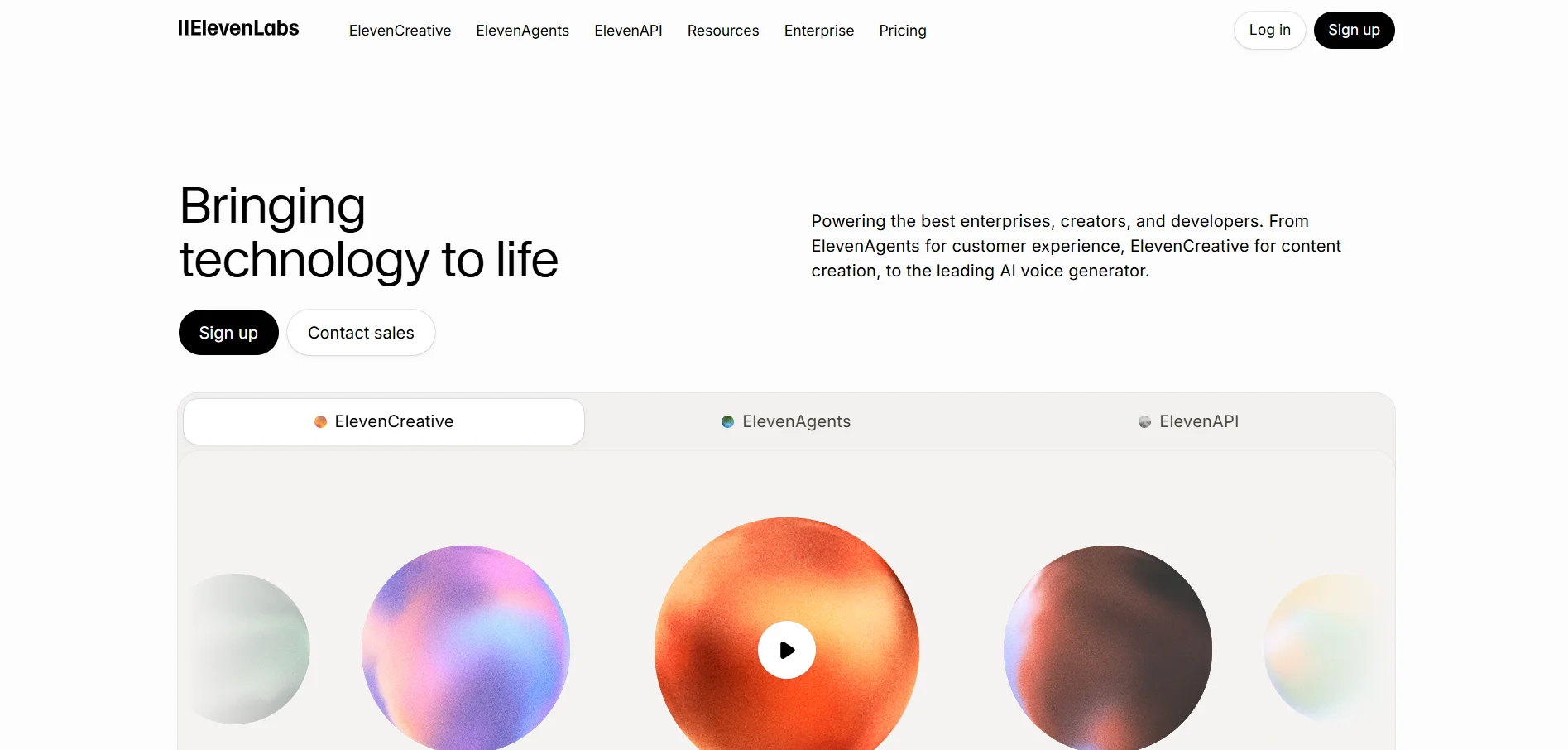
ElevenLabs‘ free plan includes 10,000 credits monthly for testing. Paid tiers span Starter at $6/month, Creator at $22/month, Pro at $99/month, Scale at $299/month, and Business at $990/month, each raising credit allowances, voice cloning quality, and seats, with Enterprise pricing negotiated for large-scale deployments.
ElevenLabs is widely regarded as the realism leader in AI voice generation, offering professional voice cloning, multilingual dubbing, and conversational AI agents. As a Lovo.ai alternative, it appeals to podcasters, audiobook narrators, and developers who prioritize natural-sounding output and API flexibility over an all-in-one avatar video studio.
Pros
- Industry-leading voice realism
- Flexible credit-based API pricing
- Strong developer documentation
- Rollover credits on paid plans
Cons
- Costs rise quickly at scale
- No native video avatar studio
- Free tier lacks commercial rights
10. Cartesia
Pro: $5/mo
Startup: $39/mo
Scale: $239–$299/mo
Enterprise: Custom
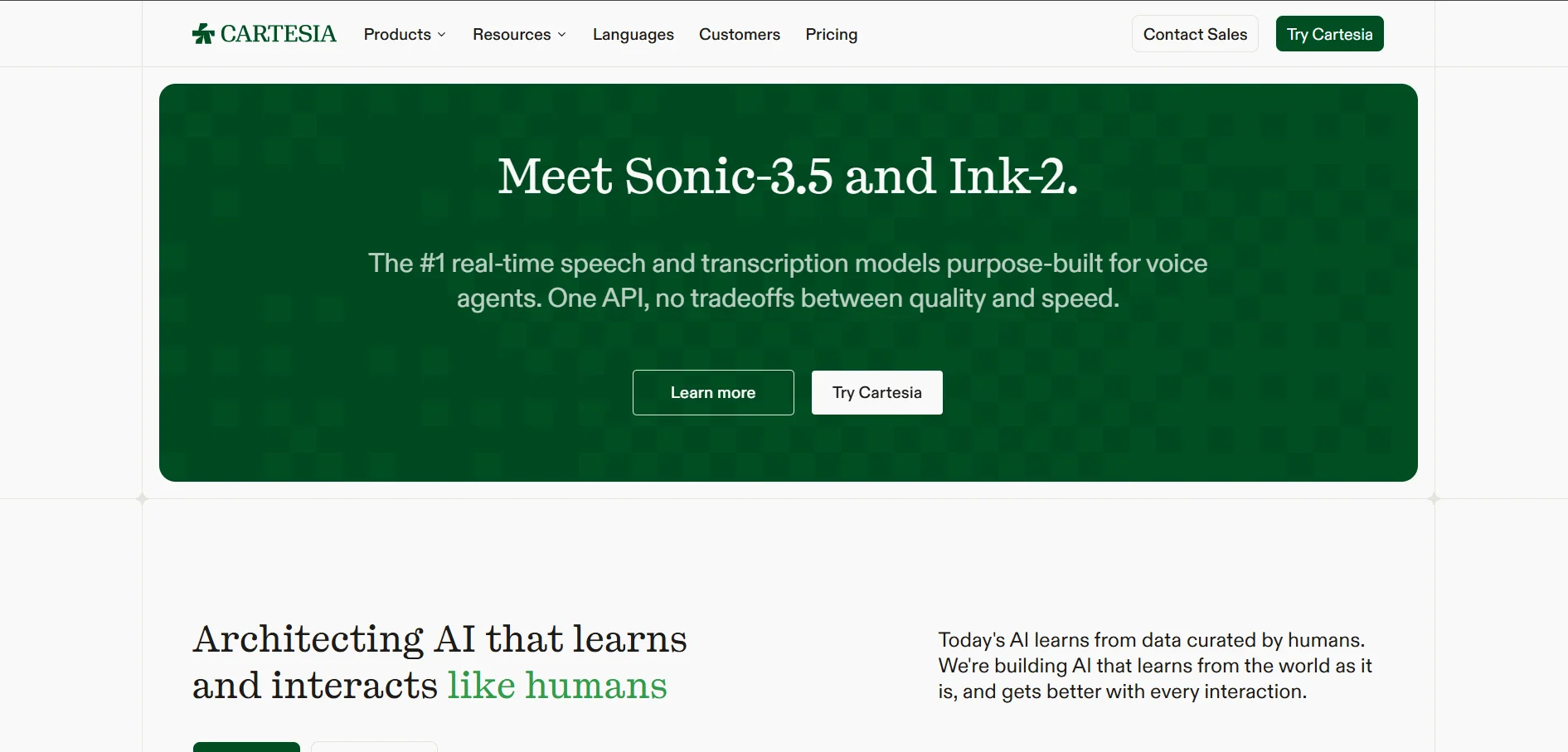
Cartesia‘s free tier includes 10,000 credits with one concurrent request for evaluation. Paid options start at Pro for around $5/month, Startup at $39/month, and Scale at $239 to $299/month with 8 million credits, while Enterprise unlocks custom SLAs, HIPAA compliance, and dedicated infrastructure for regulated industries.
Cartesia is built for real-time voice agents, combining its Sonic text-to-speech model with Ink speech-to-text and Line conversational tooling at roughly 40 milliseconds of latency. It’s a strong Lovo.ai alternative for teams building live voice assistants or telephony products rather than pre-recorded marketing or training videos.
Pros
- Extremely low latency (~40ms)
- Bundled TTS, STT, and agent tools
- Scalable credit-based pricing
- Instant and pro voice cloning
Cons
- Telephony fees add extra cost
- No SSO or HIPAA below Enterprise
- Geared toward developers, not editors
11. VEED
Lite/Basic: $12–$24/mo
Pro: $21–$55/mo
Studio/Business: $35–$70/mo
Enterprise: Custom
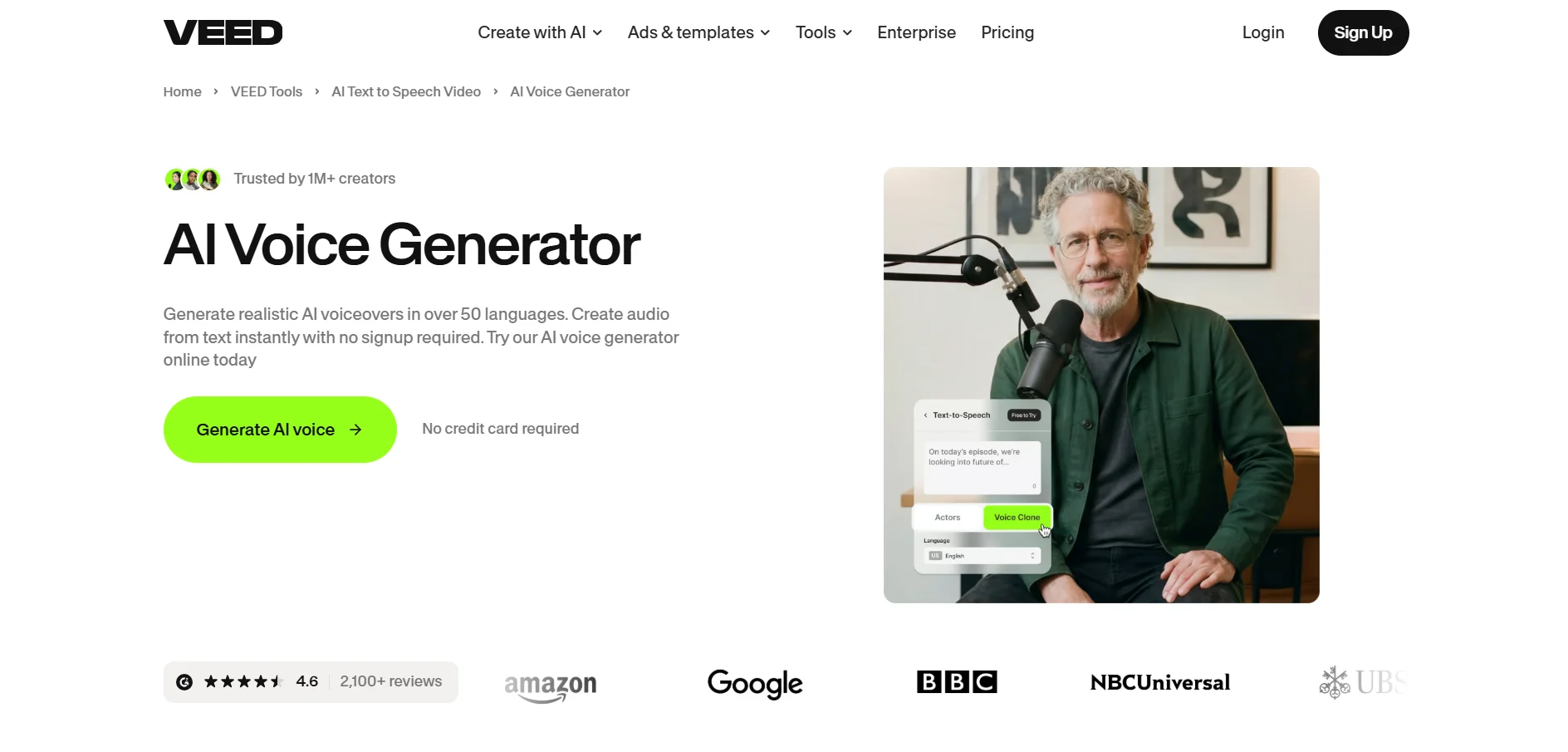
VEED‘s free plan includes watermarked 720p exports for casual testing. Paid tiers include Lite/Basic at $12 to $24/month, Pro at $21 to $55/month, and Studio/Business at $35 to $70/month per seat, while Enterprise offers custom pricing with SSO, custom AI avatars, and centralized team management.
VEED combines browser-based video editing with AI subtitles, avatars, and translation tools, making it a direct rival to Lovo.ai for teams producing social and marketing videos. Its collaborative workspace and template library suit agencies and content teams, though AI credit consumption can outpace expectations on lower-tier plans.
Pros
- All-in-one video and captioning editor
- Team collaboration features
- AI avatar and translation tools
- Frequent promotional discounts
Cons
- AI credits don’t roll over
- Storage caps on lower tiers
- No native text-to-voiceover on Free
12. Voice.ai
Launch: ~$12/mo intro
Higher tiers: up to $880/mo
Enterprise: Custom
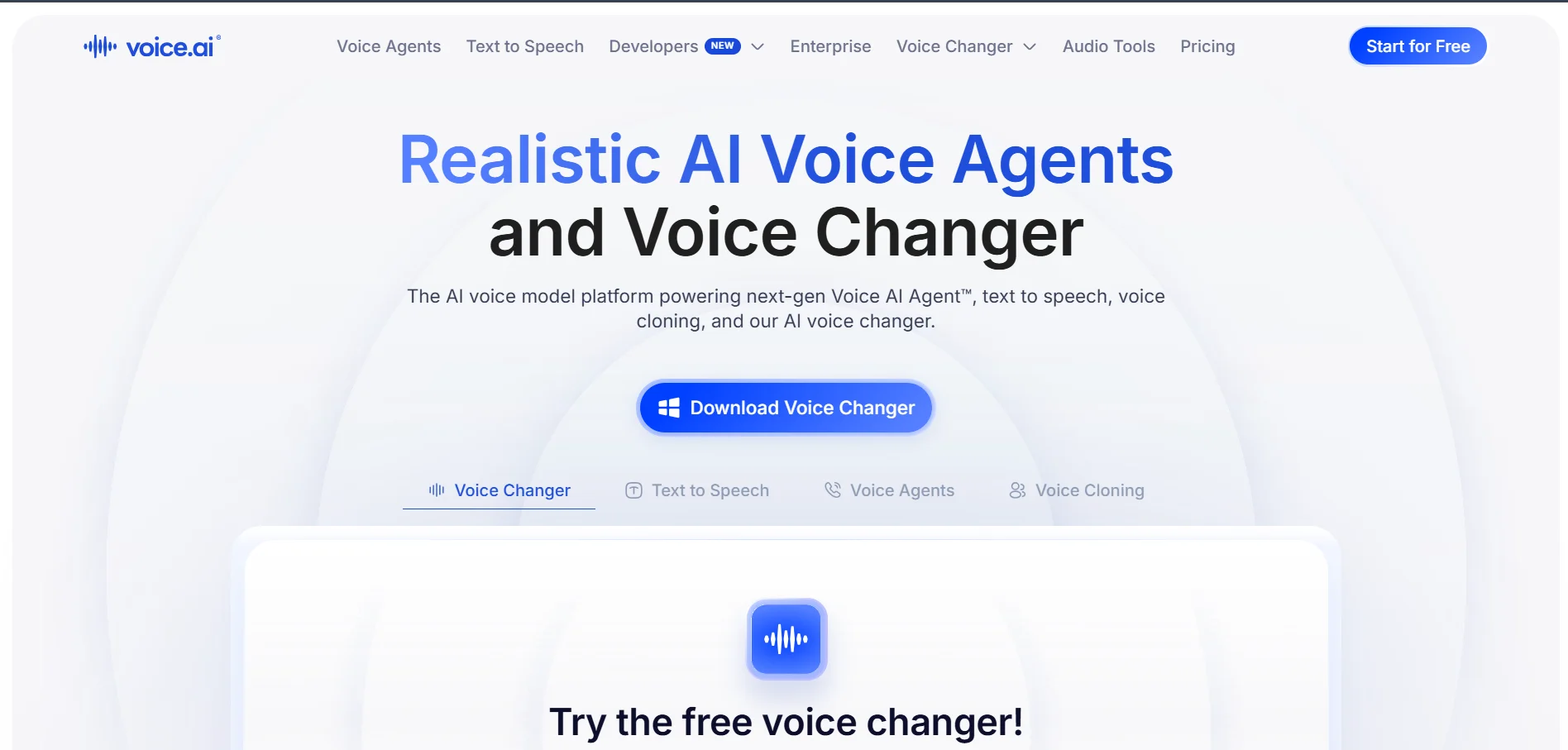
Voice.ai‘s free plan grants around 5,000 monthly credits, roughly five minutes of generation, for initial testing. Paid plans range from an introductory Launch tier near $12/month up to around $880/month for high-volume usage, with usage-based overage billing and custom Enterprise options for larger deployments.
Voice.ai focuses on real-time voice changing and cloning for streamers, gamers, and content creators alongside standard text-to-speech generation. As a Lovo.ai alternative, it’s better suited to live voice transformation during calls or streams than studio-style video production, and its credit system requires converting minutes into abstract units.
Pros
- Real-time voice changing for streaming
- Flexible credit-based tiers
- Usage-based overage options
- Active creator community
Cons
- Credit-to-minute math can confuse
- Free tier very limited
- Standard pricing beyond intro rate unclear
13. Supertone (Play)
Starter: $2.99/mo
Creator: $14.99/mo
Pro: $29.99–$79.99/mo
Enterprise: Custom
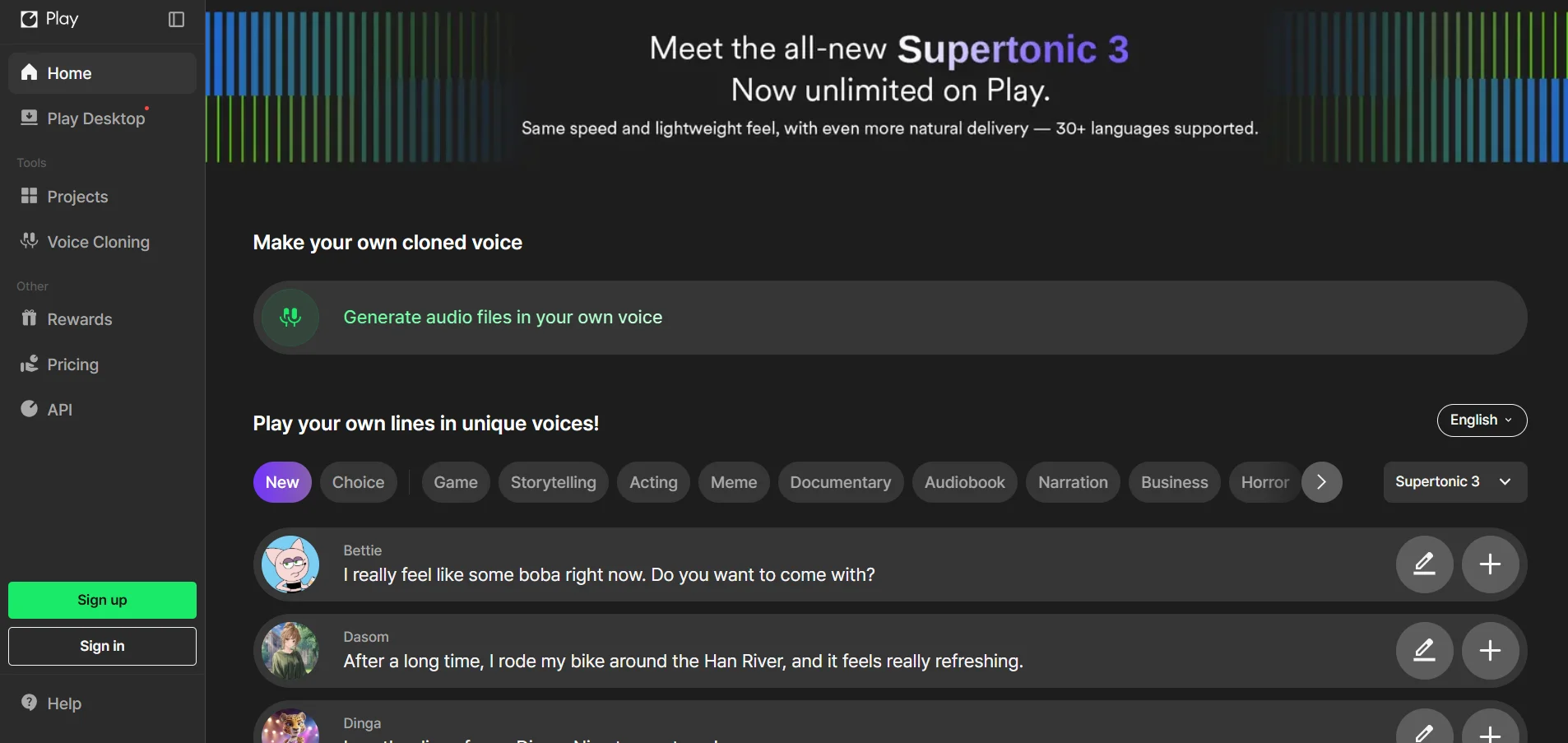
Supertone Play‘s free plan includes about 3,000 credits, roughly five minutes of voice generation. Paid tiers start at Starter for $2.99/month, Creator at $14.99/month, and Pro ranging from $29.99 to $79.99/month, unlocking more cloned voices and credits, while Enterprise plans require contacting sales for custom quotes.
Supertone Play delivers expressive, emotionally nuanced multilingual voice cloning with real-time language switching for the same character voice. It’s a budget-friendly Lovo.ai alternative for indie creators and game developers who need affordable, high-quality synthetic speech without committing to expensive enterprise-grade platforms right away.
Pros
- Very affordable entry-level pricing
- Emotionally expressive voice output
- Real-time multilingual character voices
- Free tier available
Cons
- Lower tiers cap voice cloning slots
- Attribution required on cheaper plans
- Smaller voice library than rivals
14. Play (Play.ht)

Professional: $39/mo
Premium/Unlimited: $99/mo
Enterprise: Custom
PlayHT‘s free plan provides 12,500 characters monthly with instant voice cloning access. Paid plans include Professional at $39/month, Premium (Unlimited) at $99/month, and a custom Enterprise tier adding team seats, high-fidelity cloning, SOC2 compliance, SSO, and a dedicated account manager for larger organizations.
Play.ht offers 800+ ultra-realistic voices across 120+ languages, plus a pronunciation library and website embedding for WordPress and Shopify. It rivals Lovo.ai for podcasters and marketers needing straightforward text-to-speech with commercial rights, though its free tier requires attribution and restricts commercial publishing until you upgrade.
Pros
- Large voice and language library
- Website/CMS embedding support
- Unlimited plan available
- Enterprise compliance certifications
Cons
- Free tier blocks commercial use
- Mid-tier lacks full voice cloning
- Pricing history has fluctuated over time
Quick Comparison Table
| Alternative | Description |
|---|---|
| HeyGen | AI avatar video generator with multilingual dubbing and script-to-video creation. |
| MiniMax Audio | Developer-focused API for hyperrealistic, low-latency multilingual speech and voice cloning. |
| Speechify | Text-to-speech reading app with a Studio arm for voiceover and dubbing production. |
| Pixbim Voice Clone AI | Offline, one-time-purchase desktop tool for private voice cloning. |
| Gradium | Ultra-low-latency audio language model API for real-time voice agents and translation. |
| KikiVoice | No-sign-up, browser-based voice cloning and TTS with 75+ language support. |
| Murf.AI | Studio-style voiceover editor with integrations for Canva, PowerPoint, and Slides. |
| Resemble.ai | Pay-per-second voice cloning platform with deepfake detection and watermarking. |
| ElevenLabs | Industry-leading realistic voice cloning, dubbing, and conversational AI agents. |
| Cartesia | Real-time TTS, STT, and voice agent platform built for ultra-low latency. |
| VEED | Browser-based video editor with AI subtitles, avatars, and translation tools. |
| Voice.ai | Real-time voice changing and cloning app popular with streamers and gamers. |
| Supertone (Play) | Affordable, emotionally expressive multilingual voice cloning for indie creators. |
| Play (Play.ht) | Text-to-speech platform with a large voice library and CMS embedding tools. |
Conclusion
Lovo.ai has plenty of capable competitors, and the right pick depends on your workflow. If you want polished avatar videos, HeyGen and VEED lead the way. For raw voice realism and API flexibility, ElevenLabs, Cartesia, and MiniMax Audio stand out. Budget-conscious creators will appreciate Supertone, KikiVoice, and Pixbim’s one-time pricing, while Murf.AI, Speechify, and Play.ht suit e-learning and podcast production. Developers building real-time voice agents should look closely at Gradium, Cartesia, and Resemble.ai. Whichever tool you choose, start with the free trial or free tier to test voice quality, language coverage, and workflow fit before committing to a paid plan.


