
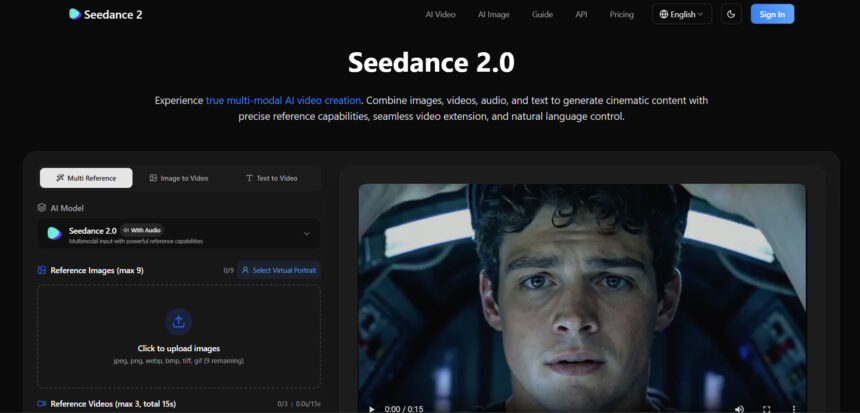
Seedance 2.0 has become one of the most talked-about AI video generators, but it isn’t the only option worth exploring in 2026. Whether you need cinematic text-to-video generation, AI avatars, talking photos, or full production suites, the market now offers dozens of capable alternatives. Below, we cover 16 of the strongest Seedance 2.0 alternatives, breaking down their free trials, pricing plans, strengths, and weaknesses so you can pick the right tool for your workflow and budget.
1. Manus AI Video
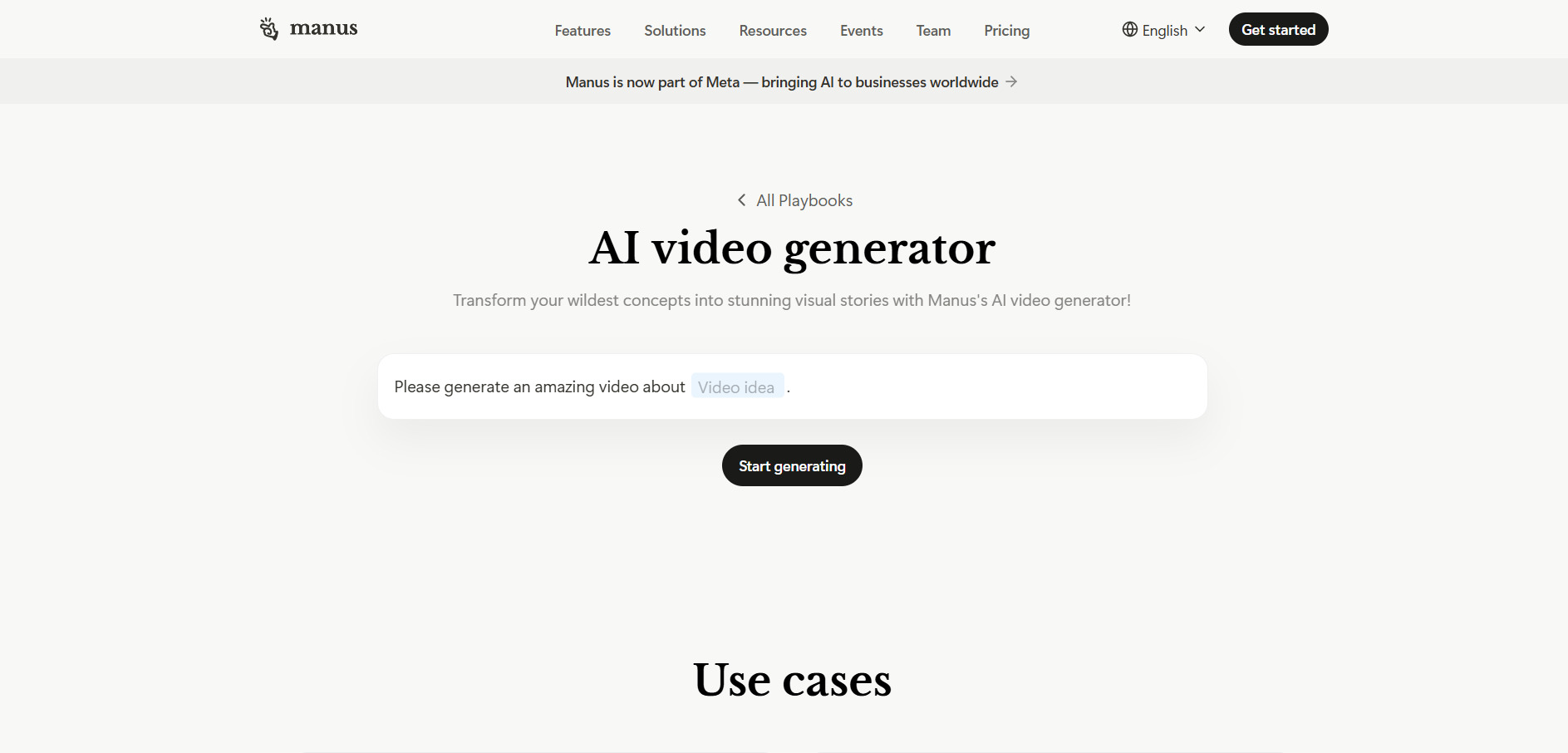
Manus AI Video offers a genuinely usable Free plan with 300 daily refresh credits, making it easy to try before paying. Paid tiers start at $20/month (Pro, 4,000 credits) and scale to $40/month (8,000 credits) and $200/month (40,000 credits), with a Team plan from $20/seat/month and 17% off annual billing.
Manus is a general-purpose autonomous AI agent rather than a dedicated video tool, but it can research, build web apps, and generate slides and multimedia content from a single prompt. Its credit-based system means costs scale with task complexity, which suits users who want an all-in-one assistant instead of a narrow video generator.
- Generous free tier with daily refreshing credits
- Handles research, coding, and content generation beyond video
- Annual billing saves 17% across all paid tiers
- Credits can be consumed quickly by complex tasks
- Not a dedicated or specialized video generation tool
- No pre-task cost estimate before running a job
2. Creatify AI
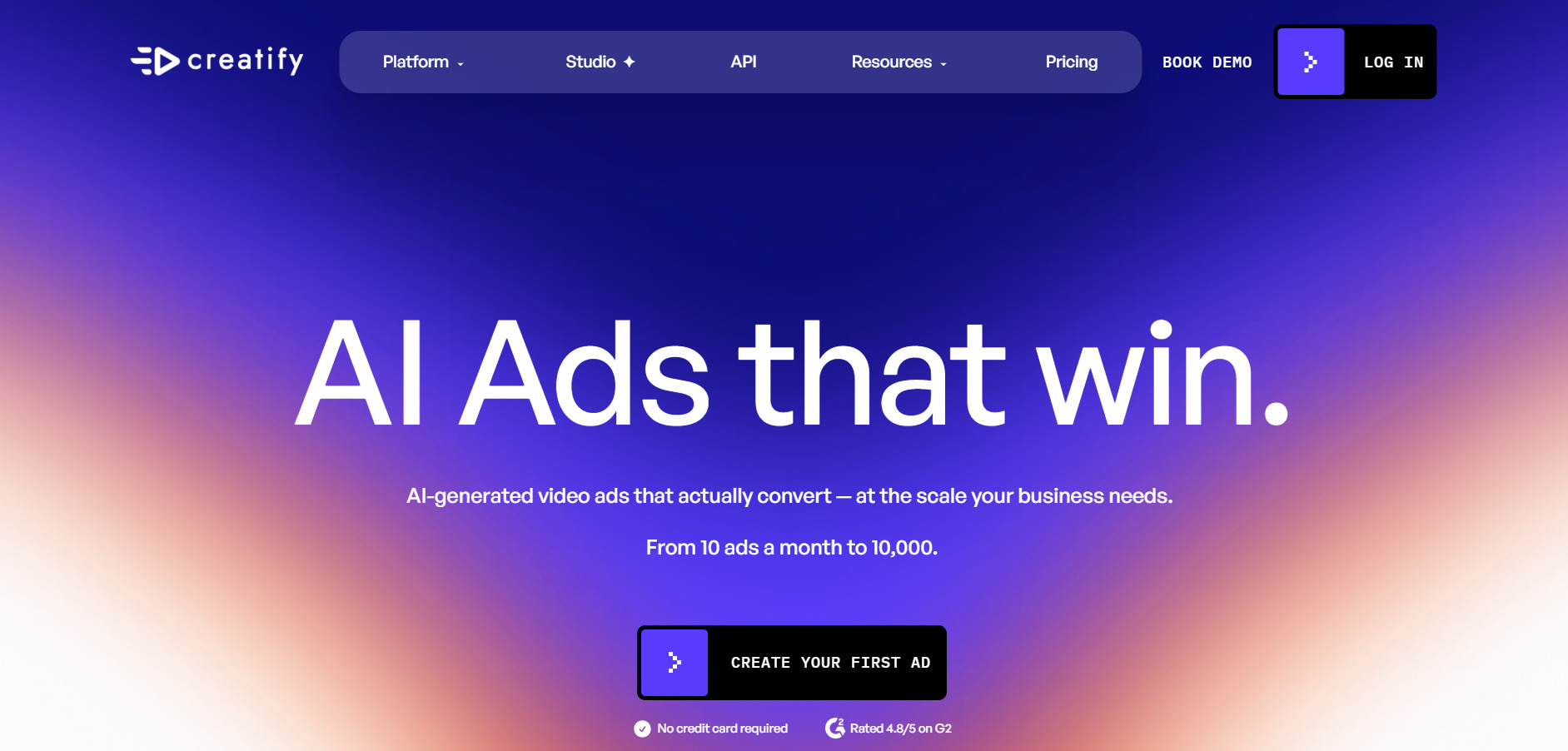
Creatify AI provides a Free plan with 10 monthly credits (watermarked, 9:16 only) plus a no-credit-card trial on some listings. Paid plans begin at $19–39/month for Starter and rise to $49/month for Pro, with custom Enterprise pricing for agencies needing API access and team seats.
Creatify turns product URLs into UGC-style video ads using AI avatars, script generation, and voiceovers in 75+ languages. It’s popular among e-commerce sellers and marketers who need fast, testable ad variations, though the credit-based system can feel restrictive for high-volume users producing daily content.
- Converts product links directly into ad-ready videos
- Large avatar library with custom avatar creation on Pro
- Supports 75+ languages for global campaigns
- Free plan is very limited and watermarked
- Credits expire every two months on some plans
- Avatar lip-sync can look inconsistent at times
3. AKOOL

AKOOL offers a Free Basic plan with 100 credits plus a 3-day free trial on Pro and Pro Max tiers. Paid plans run from roughly $15–30/month for Pro to $29.5/month for Pro Max (annual pricing), with Business and custom Enterprise tiers for larger teams and API access.
AKOOL bundles face swap, streaming and talking avatars, video translation, and background changing into one AI video suite. It’s aimed at brands and agencies that need multiple visual AI tools without juggling separate subscriptions, and its 30% annual discount makes long-term use more affordable.
- Combines face swap, avatars, and translation in one platform
- 30% discount on annual billing
- Education program offers a free 3-month trial for students
- Credit system can be confusing to estimate in advance
- Free plan includes watermarks on exports
- Higher tiers get pricey for small businesses
4. Mango AI
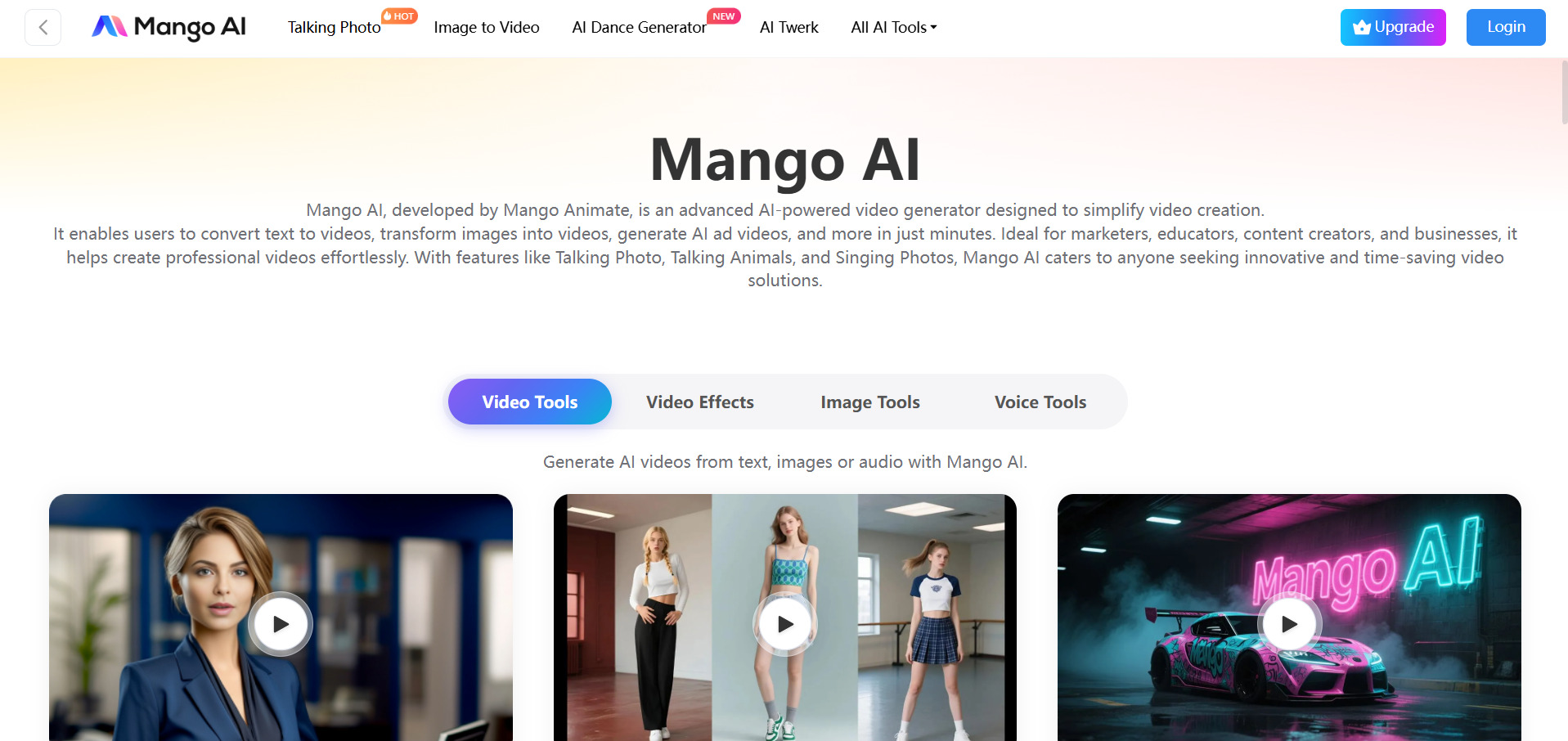
Mango AI runs on a freemium model with a Free plan limited to short, watermarked 720p videos. Paid tiers start at roughly $7.9–12.9/month for Starter, $10.9/month for Pro, and reach $49.9/month for the Enterprise tier aimed at heavier business use.
Mango Animate’s Mango AI focuses on talking photos, avatar videos, face swaps, and voice locations, making it approachable for educators, marketers, and casual creators. Its low entry price and simple three-step workflow appeal to beginners, though free-tier limitations on length and resolution push serious users toward paid plans quickly.
- Very affordable entry-level pricing
- Simple three-step video creation workflow
- Wide range of talking photo and avatar tools
- Free plan caps videos at 3 minutes and 720p
- Output quality can vary between generations
- Fewer advanced cinematic features than premium rivals
5. CapCut AI
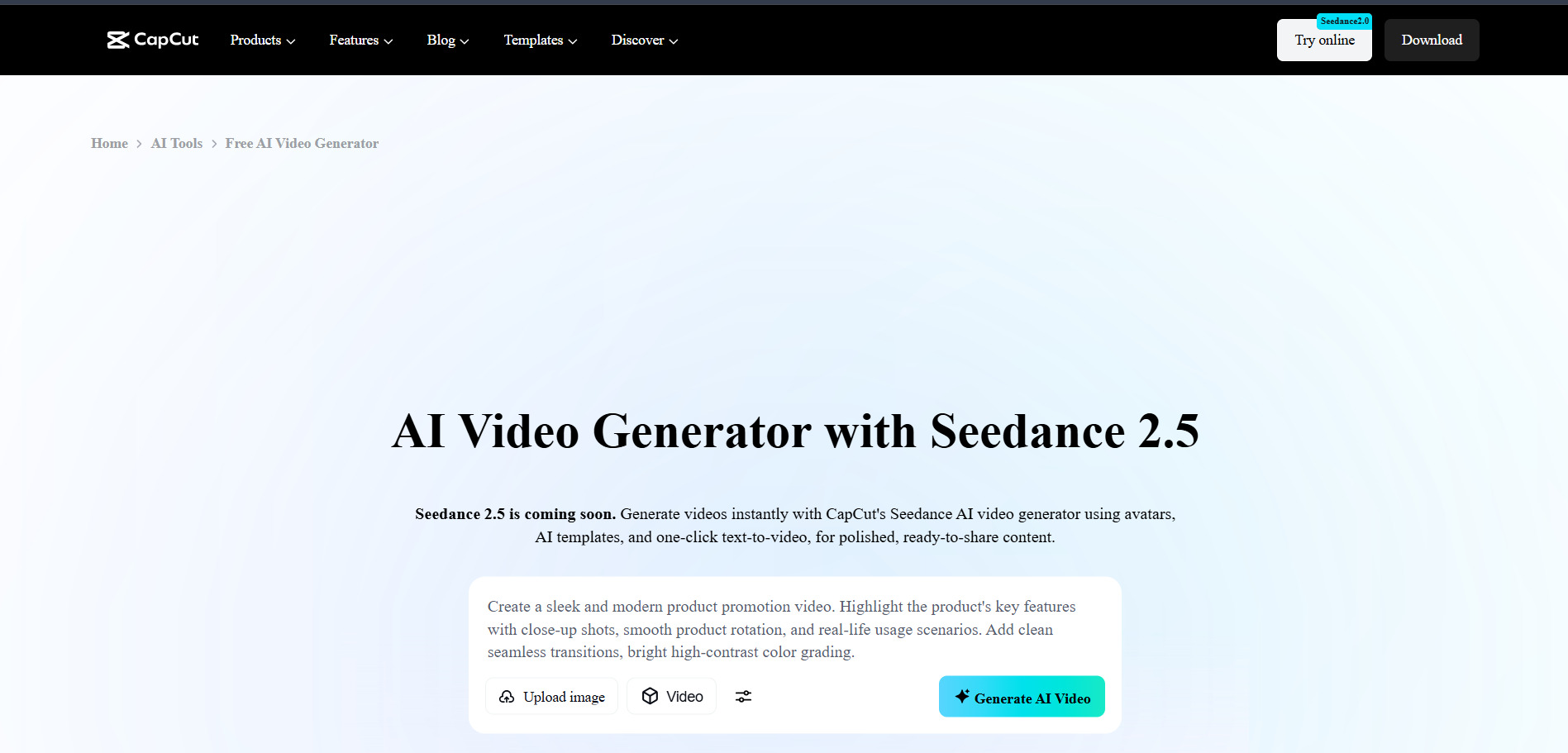
CapCut AI‘s Free plan is genuinely capable, including AI captions and basic effects without a mandatory watermark. Paid tiers include Standard at $9.99/month and Pro at $19.99/month (or $179.99/year), with a Team plan around $24.99/month per user for agencies.
CapCut combines a full editing timeline with AI tools like auto-captions, background removal, voice cloning, and text-to-video generation. It’s especially strong for short-form social content creators, though its 2026 price restructuring pushed advanced AI features and 4K export behind the pricier Pro tier.
- Free tier is unusually full-featured for social creators
- Combines traditional editing with AI generation tools
- Cross-platform: desktop, web, and mobile apps
- 2026 price hike moved key AI tools to the $19.99 tier
- App store subscriptions cost more than the website
- Some users report cancellation and billing friction
6. Pictory AI

Pictory AI offers a 14-day free trial (3 video projects, no credit card) rather than a permanent free plan. Paid tiers include Starter at $25–29/month, Professional at $35–59/month, and Teams at $119/month, with custom Enterprise pricing available.
Pictory converts scripts, blogs, and long-form text into videos using stock footage from Shutterstock and Getty Images plus AI voiceovers. It’s a strong pick for content marketers and YouTubers repurposing written content, though it relies on stock visuals rather than generating original AI video scenes.
- Access to premium Shutterstock and Getty stock libraries
- Great for turning blog posts and scripts into videos fast
- 29 languages supported on Professional and Teams plans
- No permanent free plan, only a limited trial
- No AI-generated video scenes, stock footage only
- Video-per-month caps can force early upgrades
7. Wan 2.6

Wan 2.6 offers free daily credits on the official platform for light testing. Membership plans run from $5/month (Pro, 300 credits, billed yearly) to $20/month (Premium, 1,200 credits), while API access through third-party platforms costs roughly $0.07–0.12 per second of generated video.
Developed by Alibaba’s Tongyi Lab, Wan 2.6 specializes in multi-shot, cinematic video generation with native audio, lip sync, and reference-to-video technology. It supports up to 15-second clips at 1080p, making it a budget-friendly option for teams that want near-premium quality without Sora- or Veo-level API costs.
- Very low per-second API cost compared to rivals
- Supports up to 15-second multi-shot cinematic clips
- Native audio and lip-sync included
- Official Alibaba console is not English-first
- Visual style differs noticeably from Western models
- Pricing varies significantly across third-party resellers
8. Luma Ray3

Luma Ray3 is billed as the first reasoning video model with native HDR output, offering cinematic camera moves, Draft Mode previews, and access to third-party models like Veo and Kling in one workspace. It’s aimed squarely at filmmakers and agencies who value output quality over rock-bottom pricing.
- Industry-leading HDR and cinematic quality
- Draft Mode lets you preview cheaply before full renders
- Bundles third-party models like Veo and Kling in one plan
- Pricing sits well above the category average
- Free and Lite tiers are non-commercial only
- Credits don’t roll over between billing cycles
9. Artlist AI
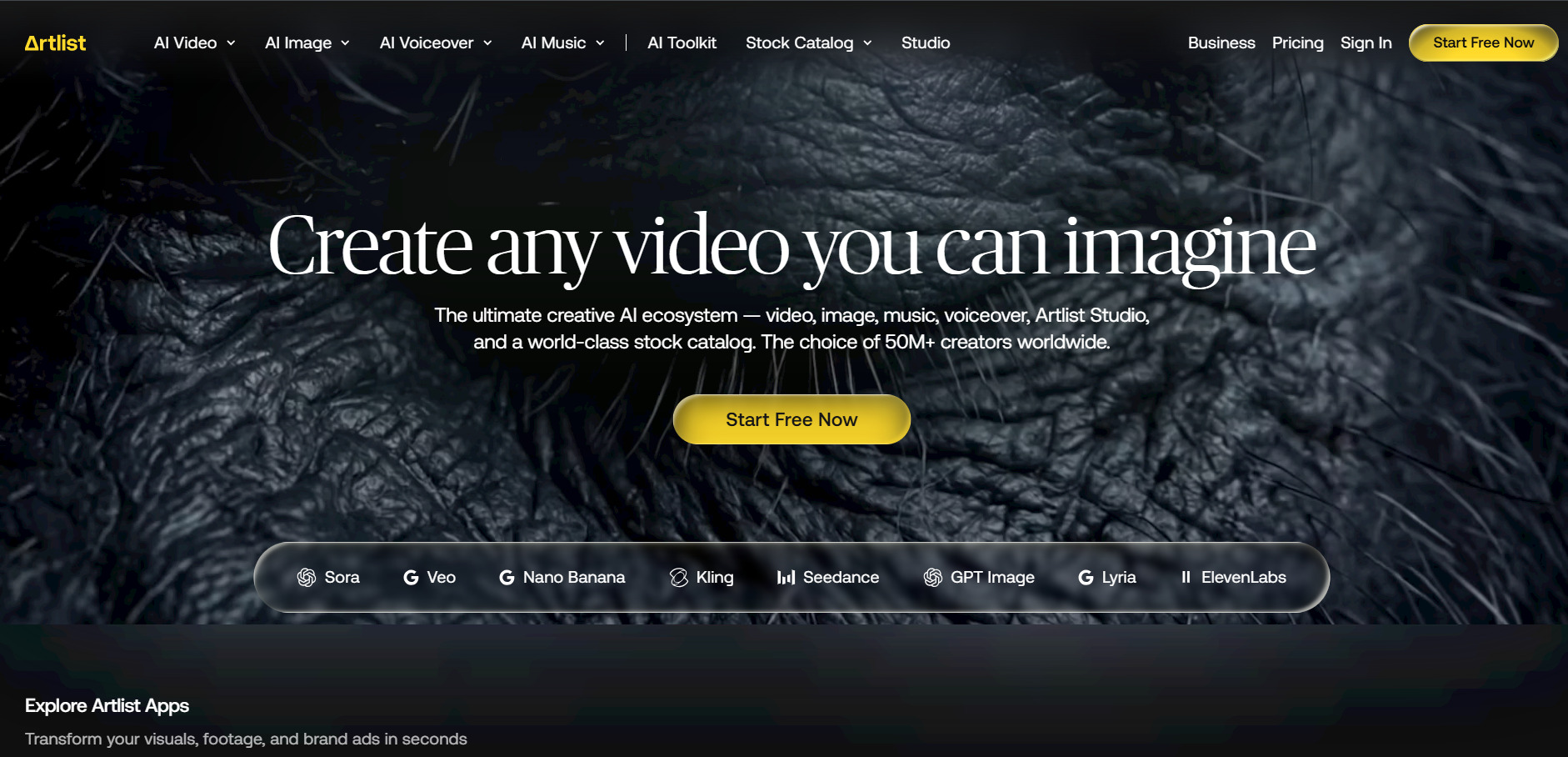
Artlist AI does not offer a free trial as of 2026, so budgeting matters from day one. AI Starter begins at $9.99–13.99/month, AI Professional runs $89.99–149.99/month, and the all-in-one Max plan sits around $39.99/month, with Max Business and Enterprise tiers for larger teams.
Artlist combines AI video, image, voiceover, and music generation with its extensive stock music and footage library under a single credit pool. It suits creators who already use Artlist for music licensing and want AI tools bundled in, though heavy AI generation pushes costs toward the pricier Professional tier.
- Single credit pool works across all AI models and stock assets
- Bundles music, SFX, footage, and AI tools in one subscription
- Annual billing saves up to 40%
- No free trial on any plan
- Heavy AI use requires the expensive Professional tier
- Studio features are largely orchestration, not proprietary tech
10. Wan 2.2
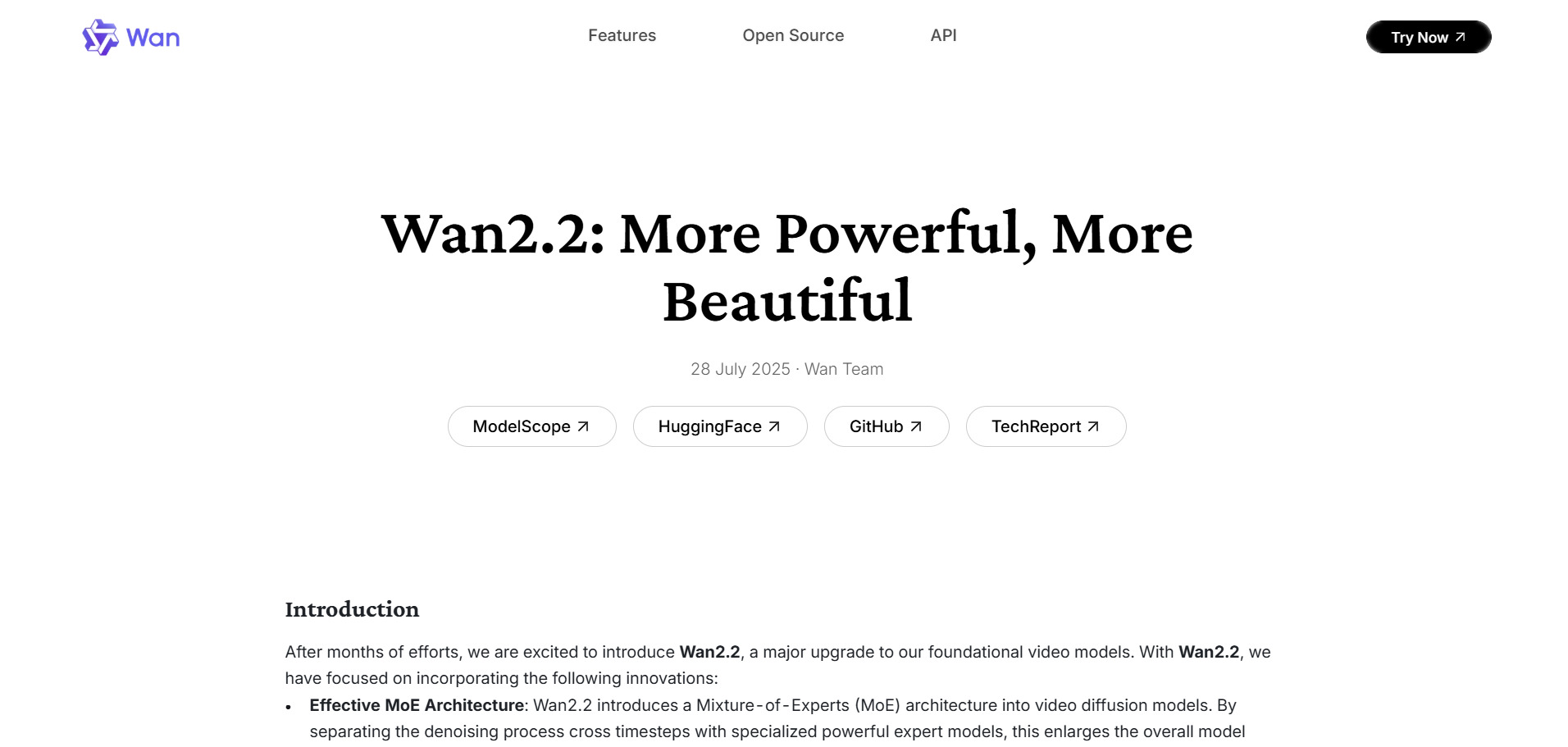
As an earlier release in Alibaba’s Wan 2.2 family, Wan 2.2 focuses on basic animation and motion transfer for short 5-second clips at 720p. It’s a solid budget pick for social content and quick experimentation, though it lacks the native audio and multi-shot features found in Wan 2.5 and 2.6.
- Lower cost per video than newer Wan models
- Good for quick social clips and motion transfer
- Flexible one-time credit packs with no subscription needed
- Limited to 5-second clips at 720p
- No native audio generation
- Superseded in quality by Wan 2.5, 2.6, and 2.7
11. Vidu Q3
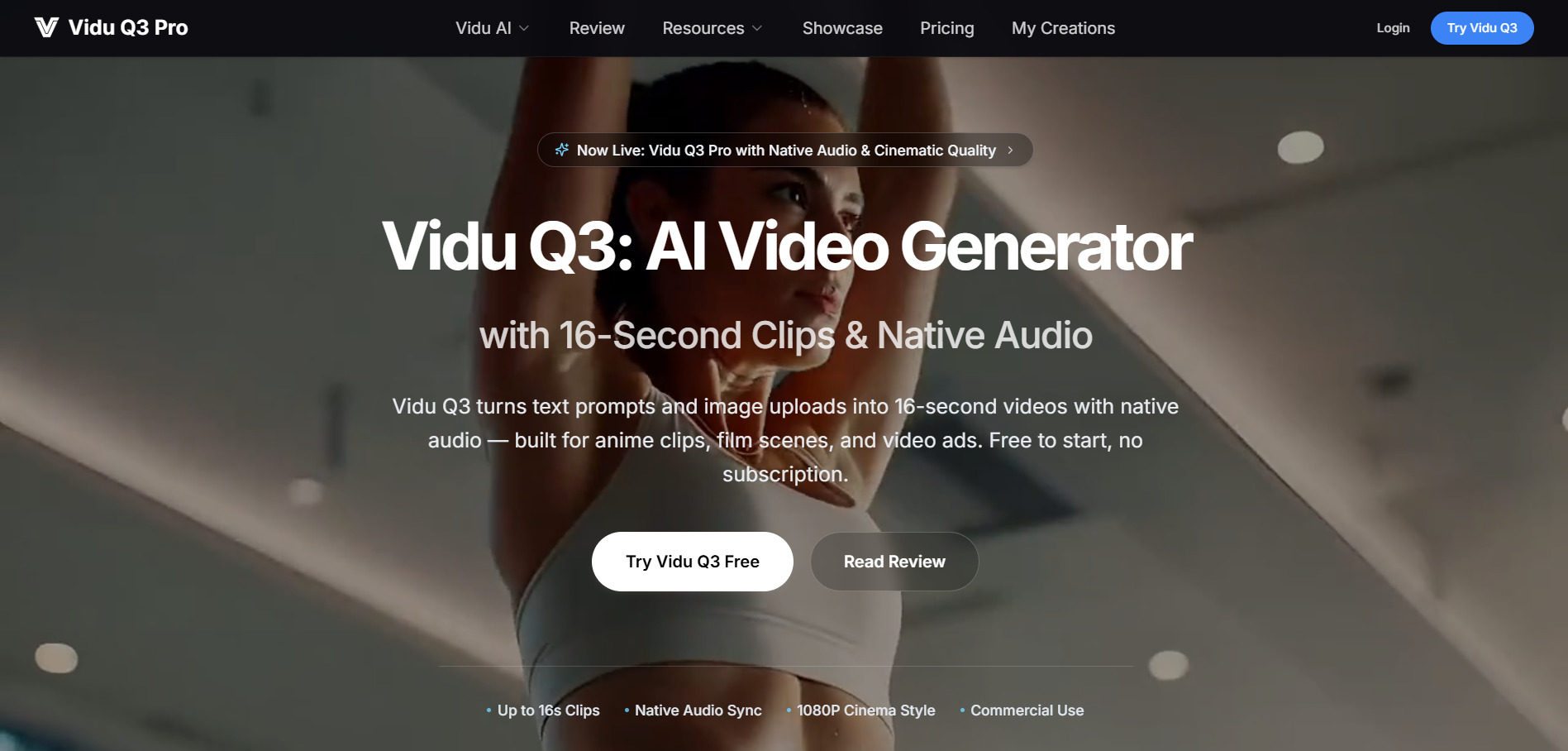
Vidu Q3 stands out for generating audio and video together in a single 16-second clip, including synchronized dialogue and lip movement. It also supports multi-reference consistency across up to seven images, making it a strong choice for anime-style and character-driven storytelling content.
- Native audio-video sync in a single generation
- Multi-reference consistency for recurring characters
- Flexible pay-as-you-go credit packs with no expiry
- Credit consumption varies by settings, making budgeting tricky
- Off-peak mode savings only help batch, non-urgent workflows
- Strongest for anime and stylized content, less so realism
12. Google Veo 3
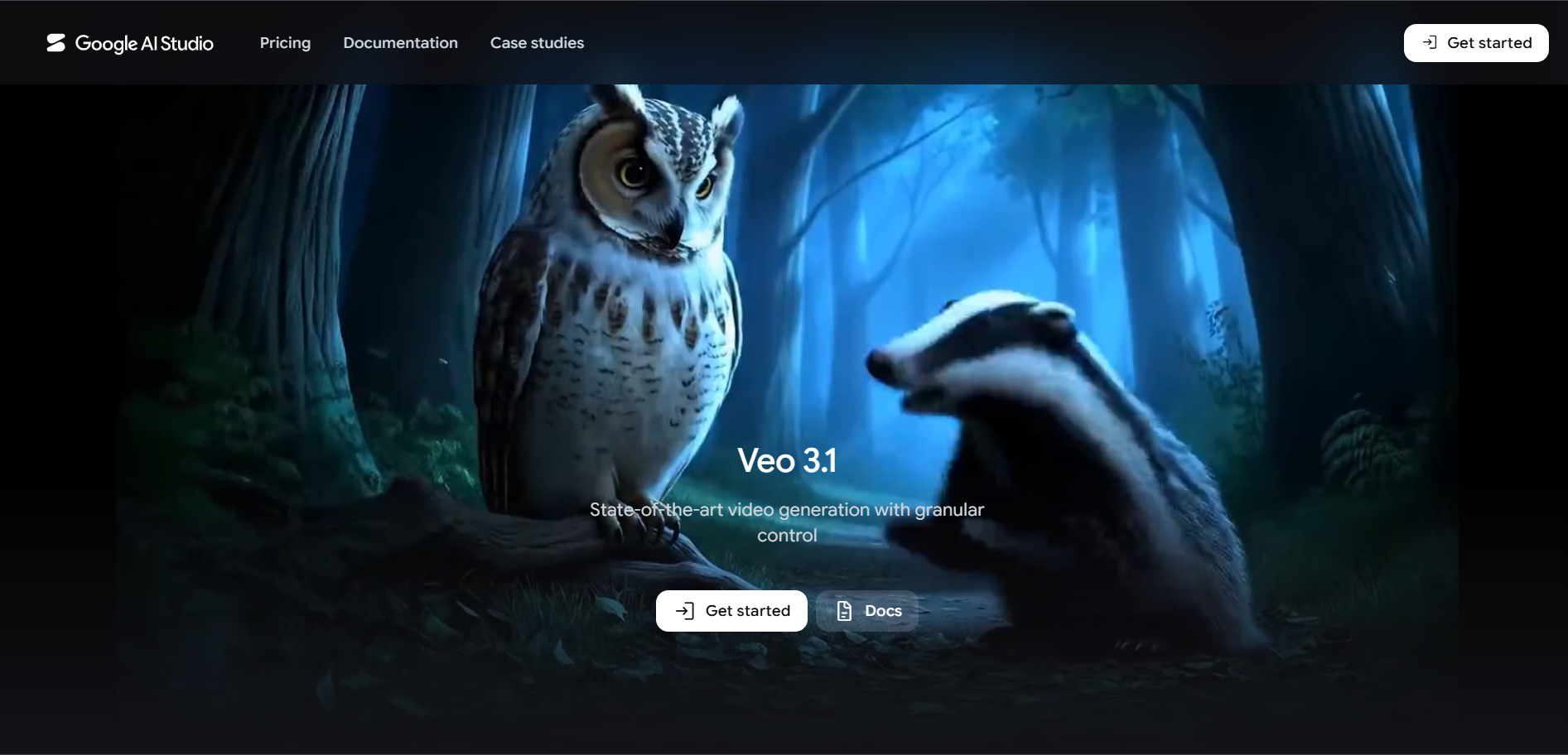
Google Veo 3 delivers Google’s most advanced text-to-video generation with native audio, strong physics accuracy, and cinematic color grading. It’s widely regarded as a quality benchmark for AI video, though full unrestricted access requires the costly Ultra tier or careful budgeting on the pay-per-second API.
- Best-in-class visual quality and native audio
- Deep integration with Gemini, Flow, and Google Workspace
- Free limited access available to every Google account
- Full access requires an expensive Ultra subscription
- API billing has no free tier and charges per second
- Each generation is capped at 8 seconds, requiring chaining
13. Wireflow
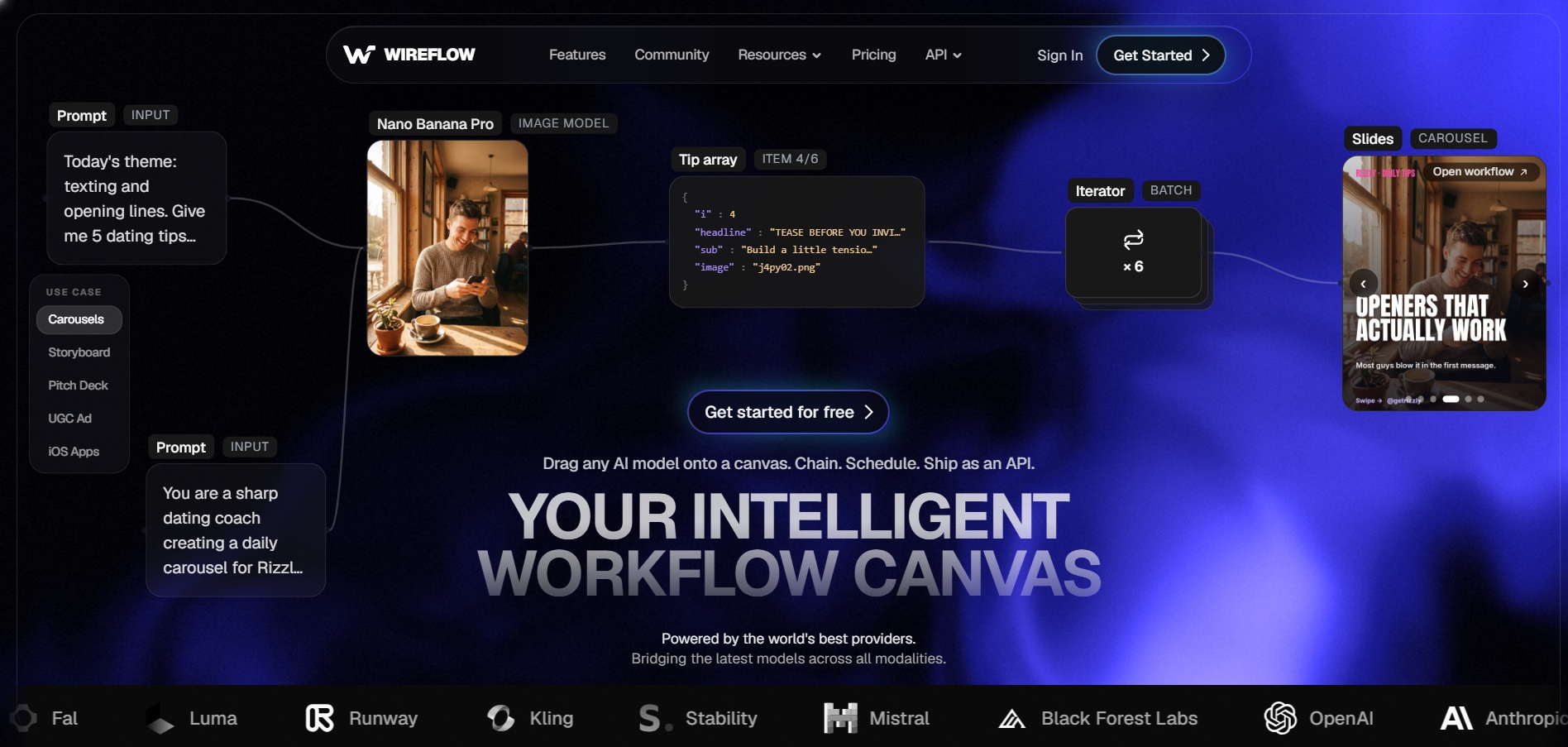
Wireflow is a visual, node-based canvas that chains multiple AI video models like Veo, Kling, Sora, Luma, and Seedance into one automated pipeline. It’s ideal for teams that want to compare models side-by-side or automate multi-step video production without juggling separate subscriptions and interfaces.
- Access to 27+ video models under one credit system
- Visual node canvas simplifies complex multi-model pipelines
- Ships workflows as a REST API or MCP tool
- Free plan cannot actually generate content
- Learning curve for building node-based workflows
- Team plan pricing is steep for smaller studios
14. Hedra
Hedra Character-3 model turns a single photo into a talking, expressive character with accurate lip-sync, natural micro-expressions, and full-body animation. It also grants access to Kling, Veo, and other video models in one credit pool, making it a flexible pick for character-driven and faceless content creators.
- Best-in-class lip-sync and expression accuracy
- Multi-model access under a single credit balance
- Real-time Live Avatar streaming at $0.05/minute
- Character-3 caps out at 720p resolution
- Monthly credits do not roll over
- Lower Trustpilot score tied to billing and support issues
15. PixVerse V6
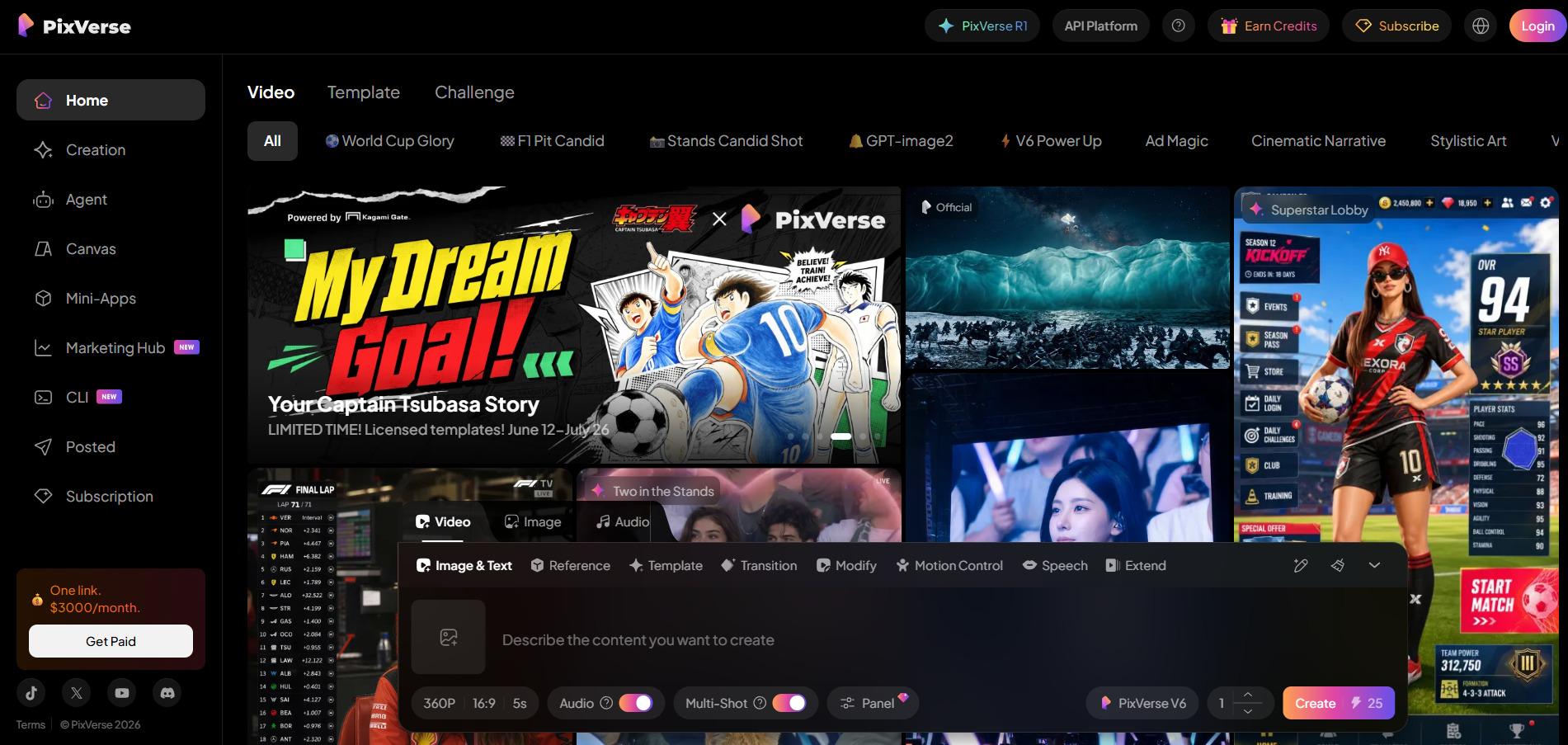
PixVerse gives new accounts 90 signup credits plus 60 daily free credits, enough for roughly one video a day. Paid plans include Standard at $10/month, Pro at $30/month, and Ultra up to $149–199/month, with API access separately priced from $100/month for developers.
PixVerse V6 adds native audio, 20+ cinematic camera controls, and supports text-to-video, image-to-video, and reference-to-video generation up to 1080p. It’s a fast, budget-conscious choice for social and stylized content, though realistic outputs often need multiple retries to get right.
- Genuinely usable daily free credits
- Native audio and strong camera control options
- Fast generation speed compared to many competitors
- Standard plan caps out at 720p resolution
- Outputs are not fully deterministic, requiring retries
- Monthly credits expire with no rollover
16. Digen AI Agent
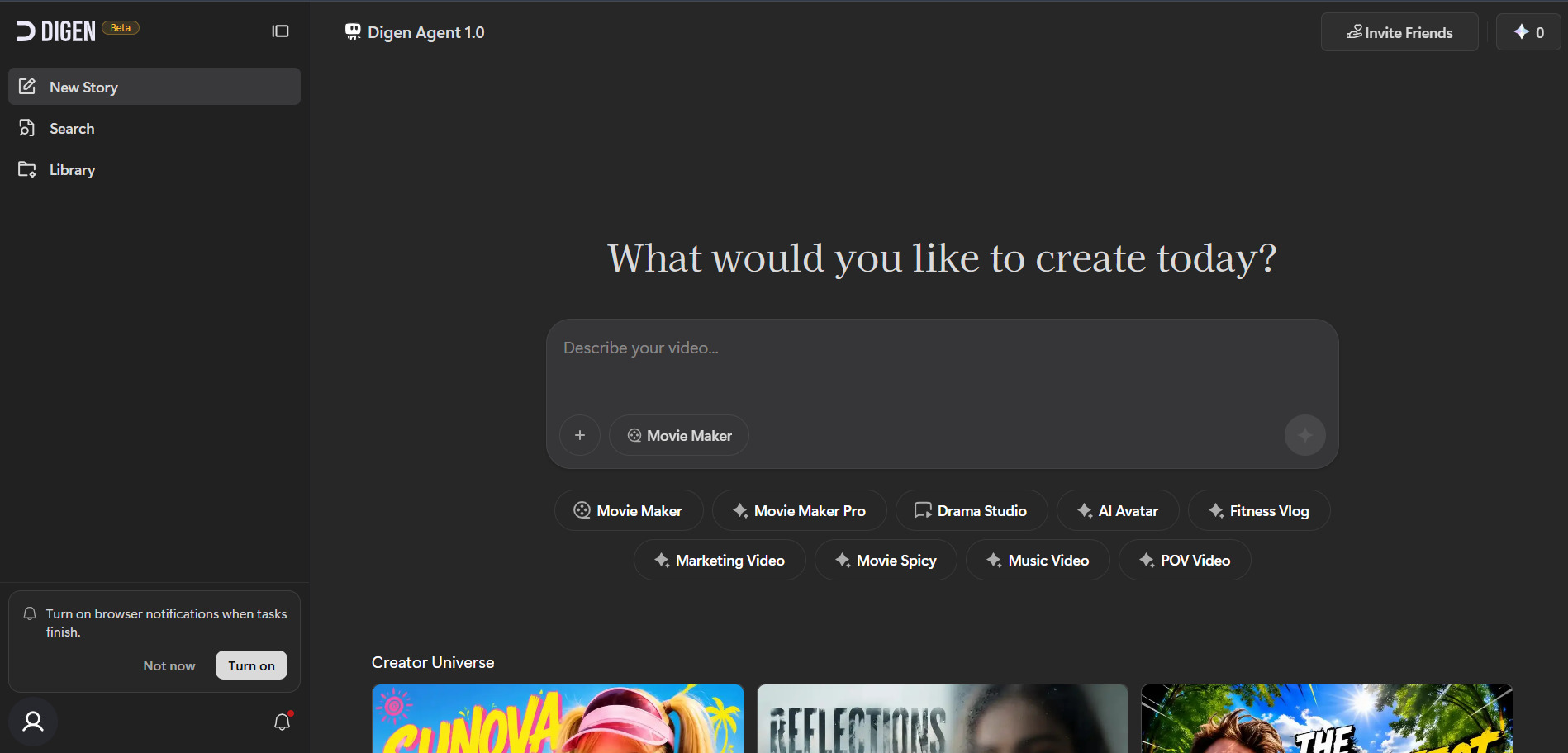
Digen AI Agent turns static images into lifelike talking videos with realistic lip-sync and multilingual support, and its Agent mode specializes in maintaining character consistency across longer, multi-scene videos. It’s a flexible option for marketers wanting access to multiple flagship models under one roof.
- Access to multiple flagship models like Sora 2 and Veo 3.1
- Strong character and scene consistency across longer videos
- Unlimited standalone packs available per model
- User feedback flags billing and cancellation issues
- Standalone unlimited packs get expensive per model
- Free tier is heavily watermarked and credit-limited
| Alternative | Description |
|---|---|
| Manus AI Video | A general-purpose autonomous AI agent that can research, build apps, and generate video and multimedia content from a single prompt. |
| Creatify AI | Turns product URLs into UGC-style AI avatar video ads for e-commerce and social media marketing. |
| AKOOL | An AI video suite combining face swap, streaming avatars, video translation, and background editing tools. |
| Mango AI | An affordable talking photo and avatar video generator with face swap and voice cloning features. |
| CapCut AI | A full video editor with built-in AI captioning, background removal, voice cloning, and text-to-video tools. |
| Pictory AI | Converts scripts and blog posts into videos using licensed stock footage and AI voiceovers. |
| Wan 2.6 | Alibaba’s advanced multi-shot AI video model with native audio and reference-to-video technology. |
| Luma Ray3 | A reasoning-based cinematic AI video model with native HDR output and Draft Mode previews. |
| Artlist AI | An all-in-one AI content suite bundling video, image, voiceover, and music generation with a stock library. |
| Wan 2.2 | An earlier, budget-friendly Alibaba video model for short clips and basic motion transfer. |
| Vidu Q3 | Generates synchronized audio and video in a single 16-second clip with strong character consistency. |
| Google Veo 3 | Google’s flagship AI video model offering cinematic quality, native audio, and Gemini integration. |
| Wireflow | A visual, node-based canvas that chains multiple AI video models into automated production pipelines. |
| Hedra | An AI platform that animates a single photo into an expressive, lip-synced talking character. |
| PixVerse V6 | A fast AI video generator with native audio, cinematic camera controls, and multiple generation modes. |
| Digen AI Agent | Turns static images into talking videos and maintains character consistency across longer, multi-scene content. |
Conclusion
Seedance 2.0 may lead the headlines, but the 16 alternatives above prove there’s no shortage of capable AI video tools for every budget and use case. Budget-conscious creators can lean on Wan 2.2, Mango AI, or PixVerse’s free daily credits, while agencies chasing cinematic quality should look at Luma Ray3 or Google Veo 3. Character-focused creators will find Hedra and Digen AI Agent especially useful, and teams juggling multiple models may prefer VideoProc AI or Kapwing AI, while others choose Lumen5. Always test free trials and free tiers first, compare credit-based costs against your real production volume, and confirm current pricing on each provider’s official website before subscribing, since AI video pricing tends to shift often.


