
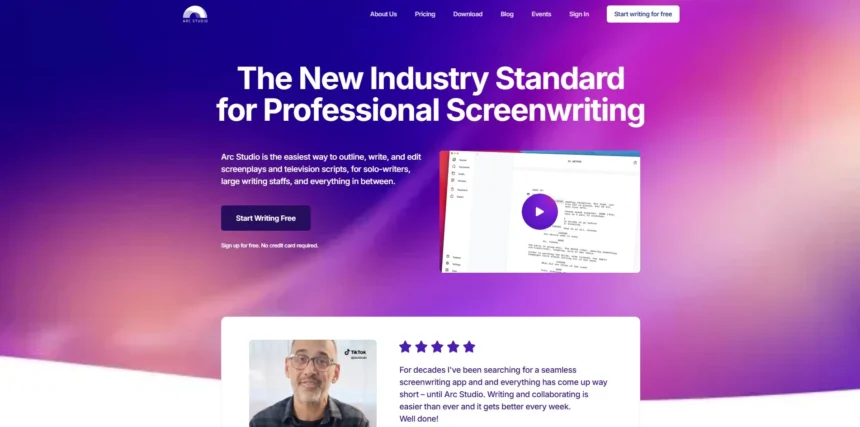
Arc Studio Pro has long been a favorite among screenwriters for its clean formatting and collaborative story-boarding tools, but it isn’t the only option out there. Whether you want a full AI writing partner, a plotting tool, or a lightweight Mac-only app, plenty of alternatives now offer comparable or even more flexible features. Below, we break down 12 Best Arc Studio Pro Alternatives, covering their trials, pricing, and what makes each one worth considering for your next writing project.
1. Google Gemini

Google Gemini offers a generous free plan for everyday chat and writing tasks, so screenwriters can test its capabilities before paying anything. Paid tiers include Google AI Pro ~$19.99/mo Google AI Ultra ~$99.99–$249.99/mo, both unlocking longer context windows, Deep Research, and advanced Gemini models for serious writing work.
As an Arc Studio Pro alternative, Gemini excels at brainstorming loglines, rewriting dialogue, and generating story beats through natural conversation rather than rigid templates. It integrates tightly with Google Docs and Workspace, making collaborative outlining simple. While it lacks dedicated screenplay formatting, writers pair it with Fountain-based editors for a flexible, budget-friendly scriptwriting workflow overall.
Pros
- Strong free tier for casual brainstorming
- Deep integration with Google Docs and Sheets
- Large context window for long scripts
- Fast, conversational idea generation
Cons
- No native screenplay formatting
- Higher tiers can get pricey
- Not built specifically for screenwriters
- Limited offline access
2. Studiovity
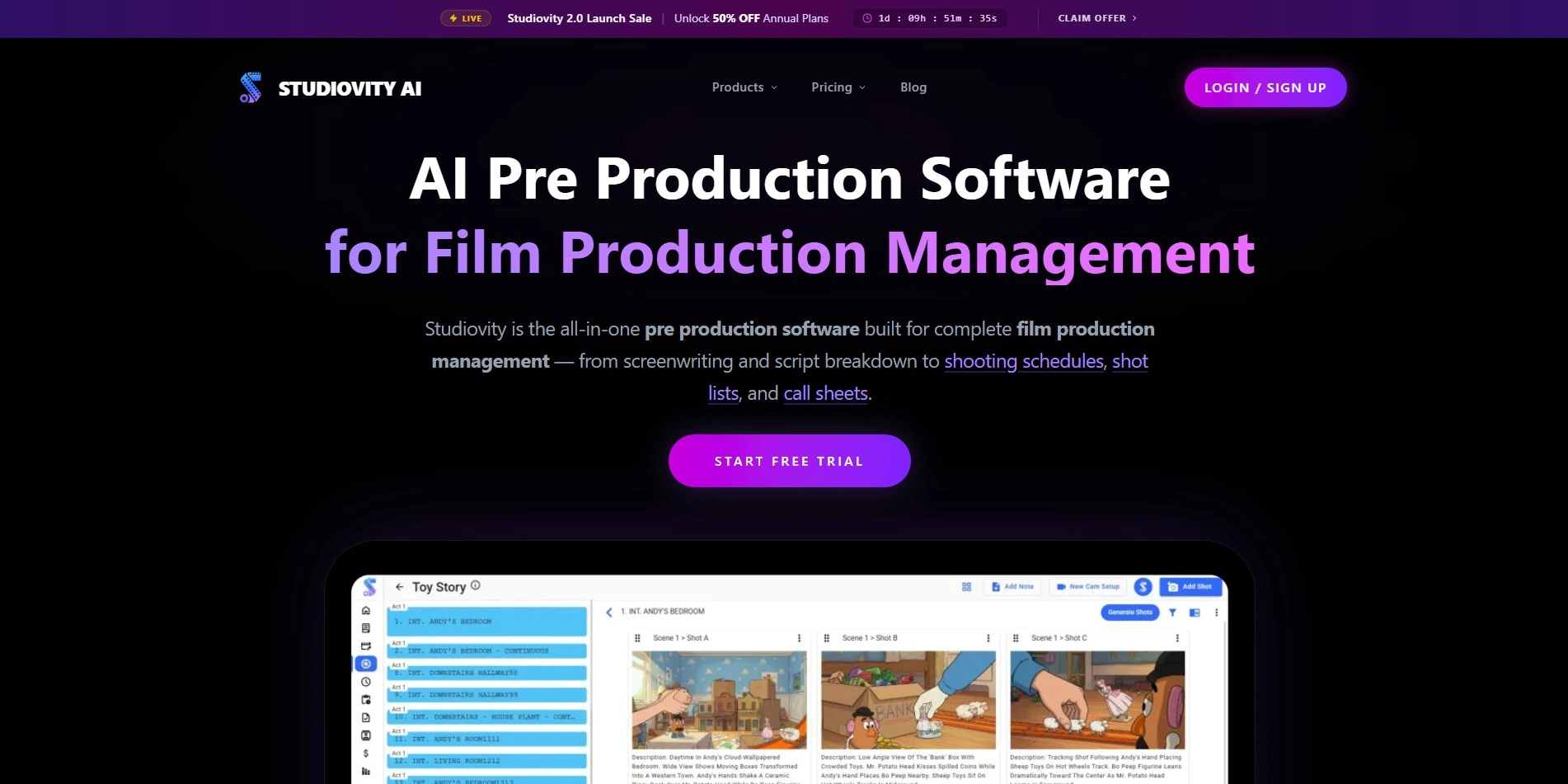
Studiovity keeps entry costs low with a free version and free trial, letting new users explore before committing. The Screenwriting plan runs $2.50/mo billed monthly or $1.88/mo billed annually, while its Pre-Production module costs $24/mo or $18/user/yr for scheduling and budgeting tools.
Studiovity is built specifically for filmmakers, offering an Act Structure Beat Board, index cards, and character relationship mapping alongside standard screenplay formatting. It supports Final Draft, PDF, and Fountain import/export, plus real-time collaboration for writing rooms. Its affordability and film-specific toolset make it one of the closest direct competitors to Arc Studio Pro available today.
Pros
- Extremely affordable pricing
- Act Structure Beat Board for outlining
- Supports 385+ regional languages
- Real-time collaboration for writing teams
Cons
- Pre-production tools cost extra
- Smaller user community than rivals
- Mobile app less polished than desktop
- Limited advanced AI features
3. Claude
Claude offers a capable free tier for drafting scenes and outlines without any signup cost. Paid options include Claude Pro at $20/mo, Claude Max at $100 or $200/mo, plus Team and Enterprise plans, giving writers scalable access as their projects grow in complexity.
Claude is prized by screenwriters for nuanced dialogue, character consistency, and long-document handling across full scripts. Its large context window lets it review entire screenplays in one pass, catching continuity issues other tools miss. Combined with strong reasoning and a thoughtful writing style, Claude is a genuinely capable substitute for Arc Studio Pro’s AI-assisted drafting features.
Pros
- Excellent long-form context handling
- Natural, nuanced dialogue generation
- Strong reasoning for plot consistency
- Usable free tier
Cons
- No dedicated screenplay formatting
- Higher tiers can be costly for teams
- No built-in storyboard or beat board
- Requires pairing with a formatting tool
4. Powtoon AI Script Writer

Powtoon lets users start free before upgrading to paid tiers built for animated video scripting. Plans range from Lite ~$15–49/mo to Pro/Pro+ up to $89–99/mo, with Agency/Business up to $197–228/mo billed annually depending on export and storage needs.
Powtoon’s AI Script Writer is designed for explainer videos and marketing content rather than feature screenplays, generating short scripts tied directly to its animation templates. Writers who need visuals alongside text benefit from its drag-and-drop scene builder. It’s a solid Arc Studio Pro alternative for creators blending scriptwriting with animated video production.
Pros
- Script and animation in one platform
- Large template and character library
- Good for marketing and explainer videos
- Free plan to test features
Cons
- Not suited for feature-length screenplays
- Higher tiers get expensive fast
- Watermarks on free exports
- Credit-based AI usage can run out
5. Jasper AI
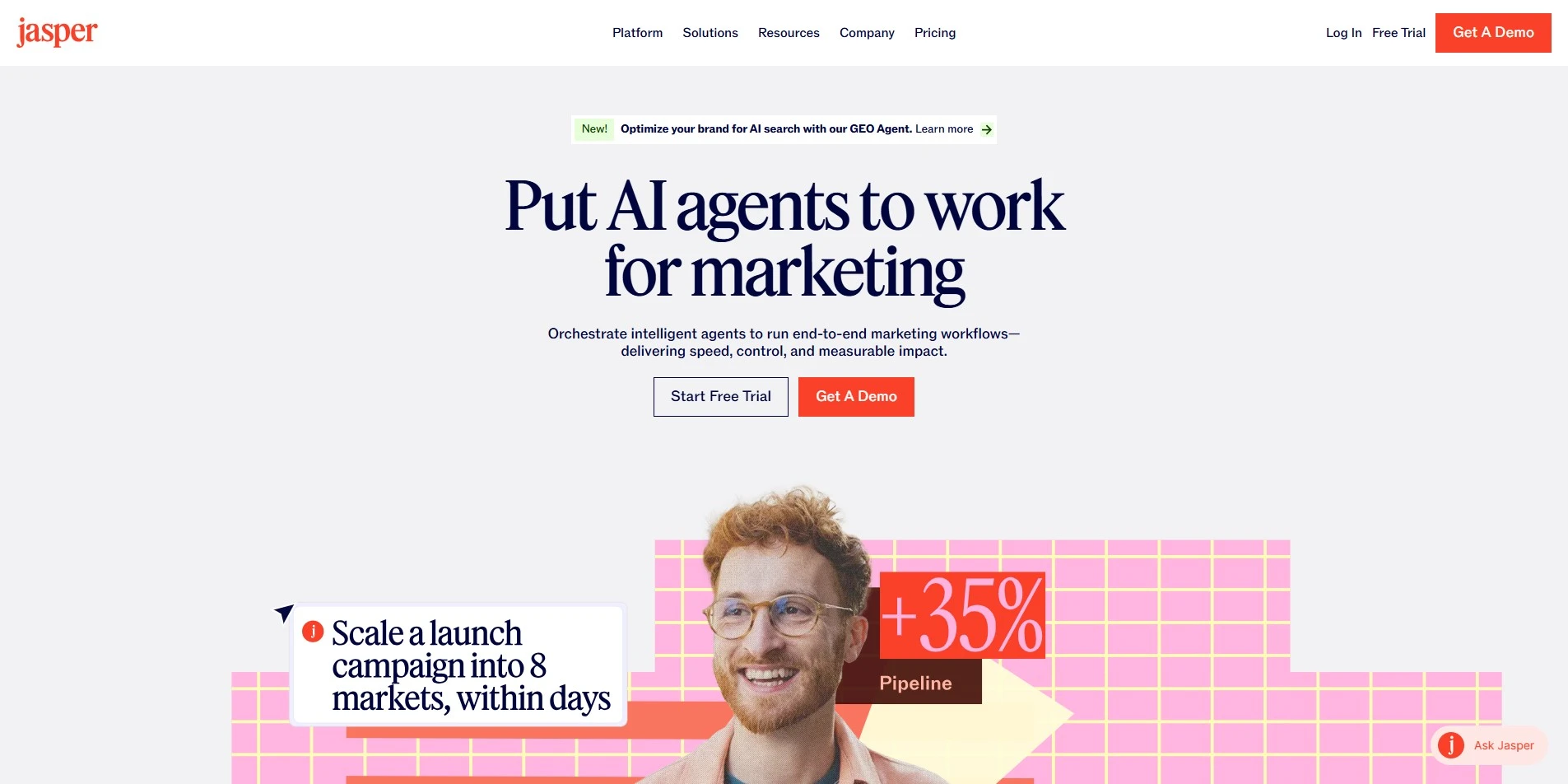
Jasper AI offers a 7-day free trial across its plans. The Creator plan starts at $39/mo billed annually ($49 monthly), Pro runs $59/mo annually ($69 monthly), and larger teams can request a custom-priced Business plan with added integrations.
Jasper is built for marketing and long-form content rather than screenplays, but its brand voice and template system help writers maintain consistent tone across scenes, taglines, and treatments. It works well for writers producing pitch decks or promotional copy alongside scripts. As an Arc Studio Pro alternative, it suits hybrid content-and-script workflows best.
Pros
- Strong brand voice consistency tools
- Useful for pitch and marketing copy
- Free trial on Creator and Pro
- Browser extension for writing anywhere
Cons
- Not designed for screenplay formatting
- Premium priced versus other AI writers
- Business pricing not publicly listed
- Learning curve for templates
6. ChatGPT

ChatGPT’s free tier covers basic scriptwriting help with usage limits. Paid options include Go at $8/mo, Plus at $20/mo, Pro at $100 or $200/mo, and Business at roughly $20–25 per seat for writing teams needing shared workspaces.
ChatGPT is a flexible brainstorming partner for outlining plots, writing dialogue passes, and generating alternate scene versions quickly. Its custom GPTs let writers build reusable screenplay assistants tailored to genre or format. While it doesn’t replace dedicated screenwriting software, its affordability and versatility make it a popular Arc Studio Pro alternative for early drafting.
Pros
- Affordable entry-level pricing
- Custom GPTs for screenwriting workflows
- Fast iteration on scenes and dialogue
- Widely supported and updated often
Cons
- No native script formatting tools
- Message limits on lower tiers
- Pro tier pricing is steep
- Requires external export formatting
7. Vimeo AI Script Writer
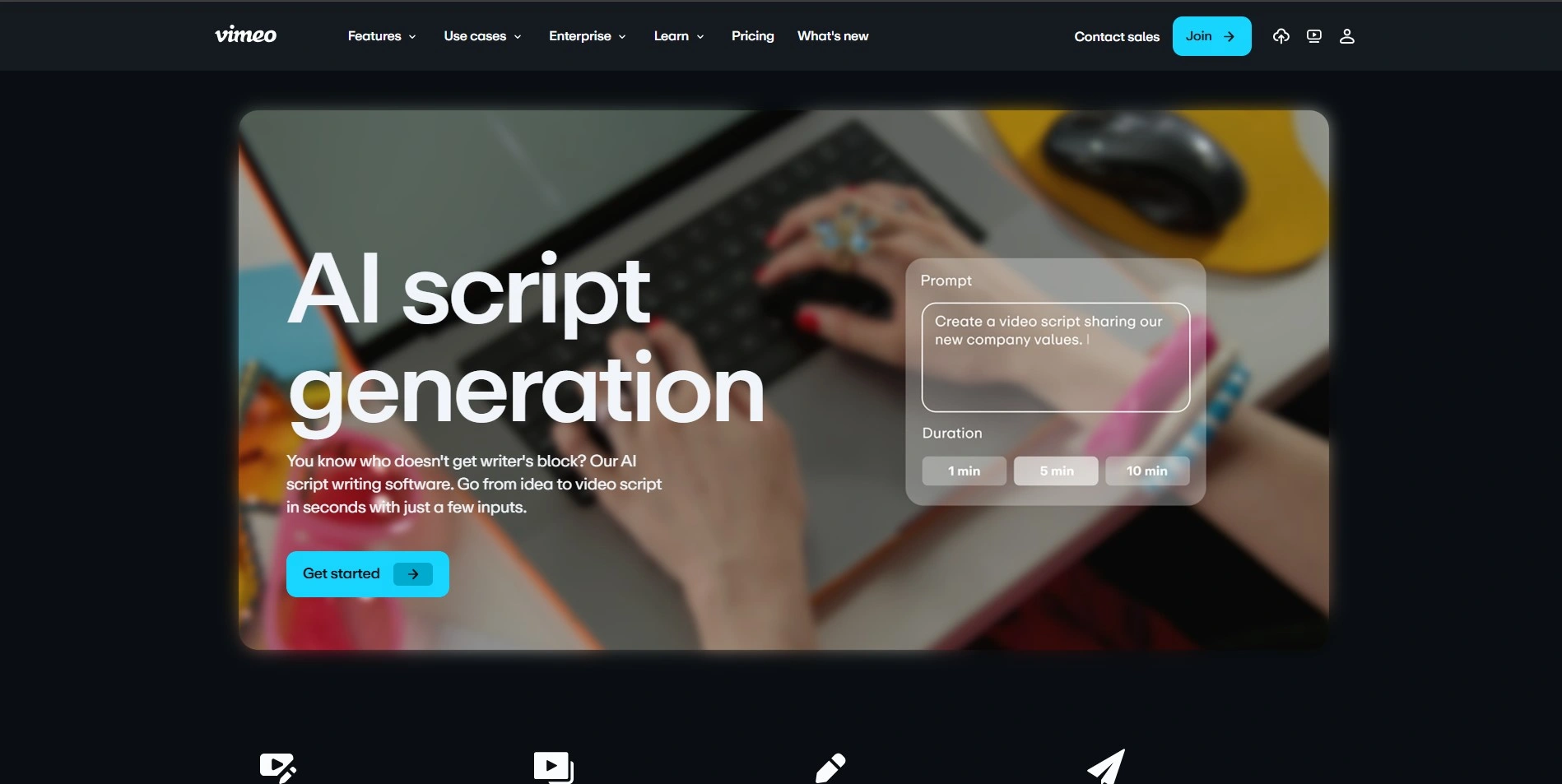
Vimeo AI Script Writer comes bundled with paid Create plans, with a 7-day free trial available. Pricing runs Plus at $108/yr, Pro at $300/yr (includes the AI script generator), and Business at $720/yr for larger teams and storage needs.
Vimeo’s tool generates quick video scripts from a short topic description, pairing them with a built-in teleprompter for recording. It’s aimed at marketers and creators producing short-form video rather than feature scripts. For writers needing a script-to-camera pipeline, Vimeo offers a practical Arc Studio Pro alternative focused on speed and delivery.
Pros
- Script generator plus teleprompter in one
- Text-based video editing feature
- Good for short marketing videos
- 7-day trial to test AI tools
Cons
- AI scripting locked behind paid tiers
- Not built for long-form screenplays
- Annual billing required for best value
- Limited creative story-structuring tools
8. Highland 2
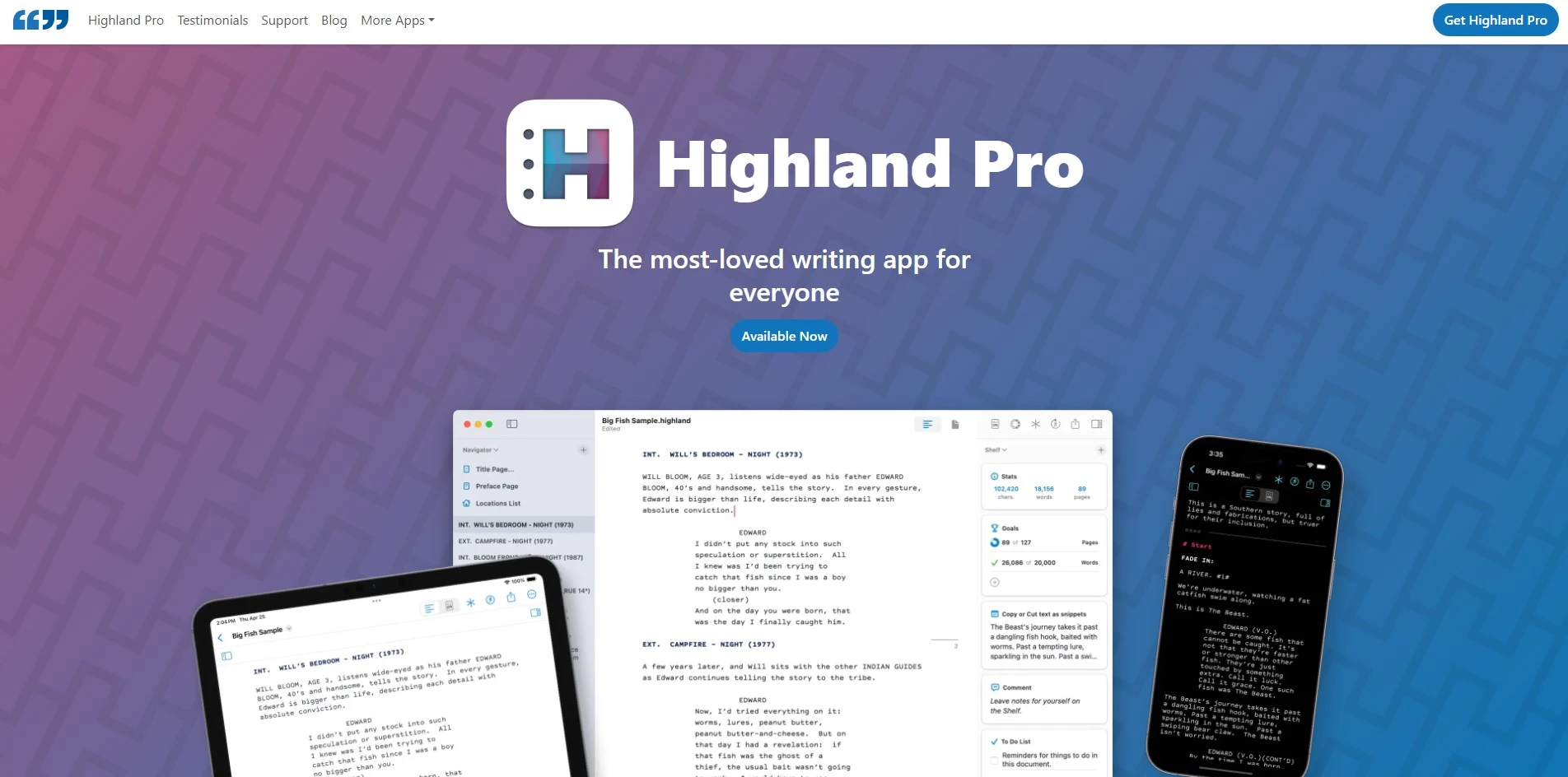
Highland 2 is free to write and read in, with export unlocked through a one-time purchase historically priced around $39–49.99. The line has shifted toward Highland Pro, subscribed at $4.99/mo annually or $9.99/mo monthly.
Highland 2 uses the plain-text Fountain format, letting writers focus purely on prose while the app formats scenes automatically on export. It’s Mac-only but beloved for its minimalist, distraction-free interface. For screenwriters who dislike bloated software and want a lightweight Arc Studio Pro alternative, Highland 2 remains a trusted, no-fuss choice.
Pros
- Minimalist, distraction-free writing experience
- Plain-text Fountain format keeps scripts portable
- One-time purchase option available
- Built-in sprint timer and revision mode
Cons
- Mac-only, no Windows version
- No real-time collaboration features
- Limited storyboard or beat-board tools
- Line shifting toward subscription model
9. Storyflow
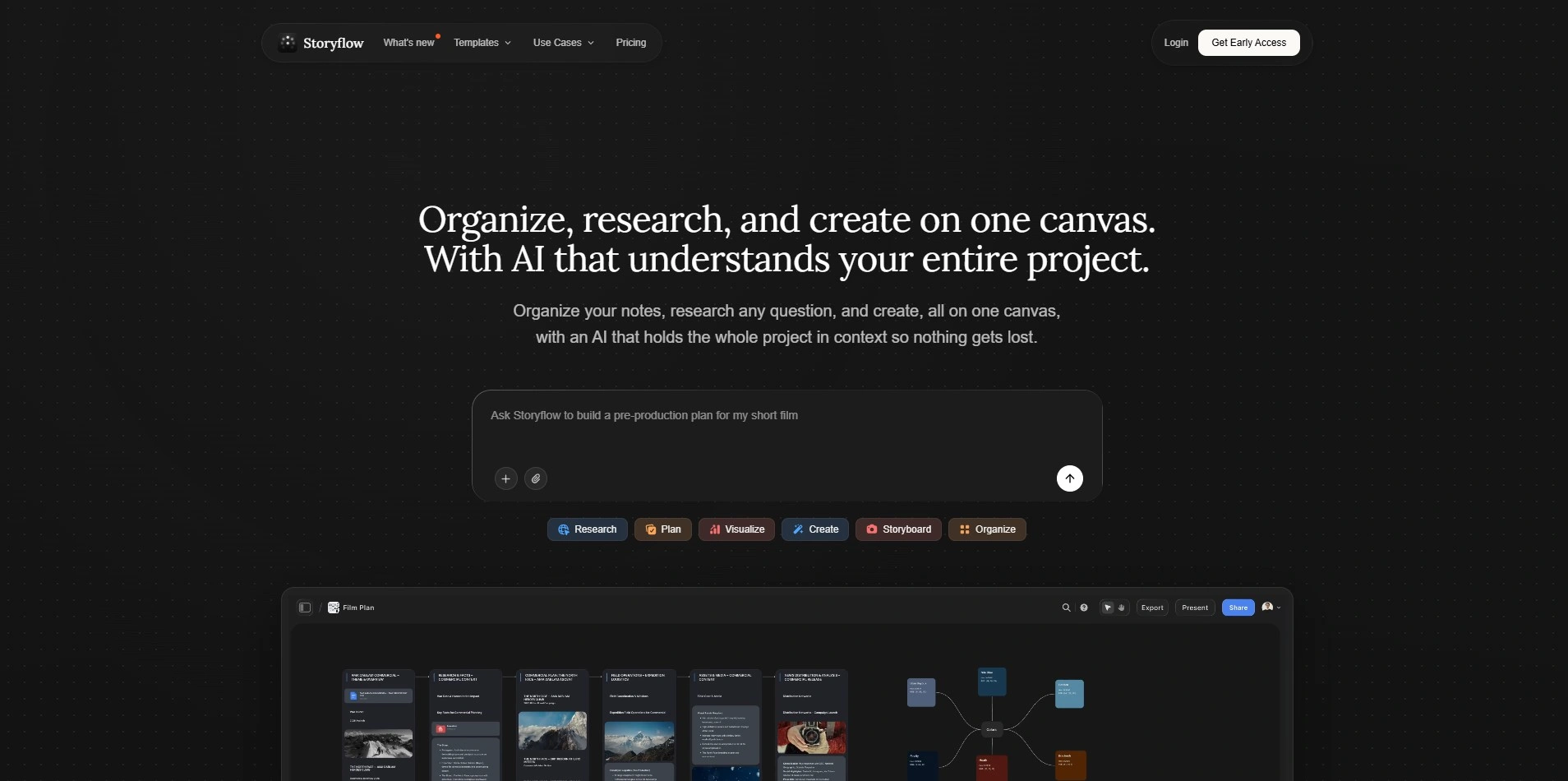
Storyflow offers a genuinely free-forever plan with basic AI usage and templates included. Paid tiers scale from Plus at $9.99/mo ($7.99 annual) to Pro at $14/mo, topping out at Max at $39/mo for unlimited AI and team workspaces.
Storyflow combines a visual moodboard-style canvas with built-in story frameworks like the Hero’s Journey and Five-Act Structure. Writers can plan, draft, and generate visuals in one workspace rather than juggling separate apps. Its blend of planning boards and AI assistance makes it a creative, budget-conscious Arc Studio Pro alternative for early-stage development.
Pros
- Generous free-forever plan
- 200+ built-in story frameworks
- Visual board-style planning canvas
- Cheaper than comparable AI writing bundles
Cons
- Not a dedicated screenplay editor
- AI usage capped on lower tiers
- Newer platform with a smaller community
- Best features locked behind Pro or Max
10. Squibler
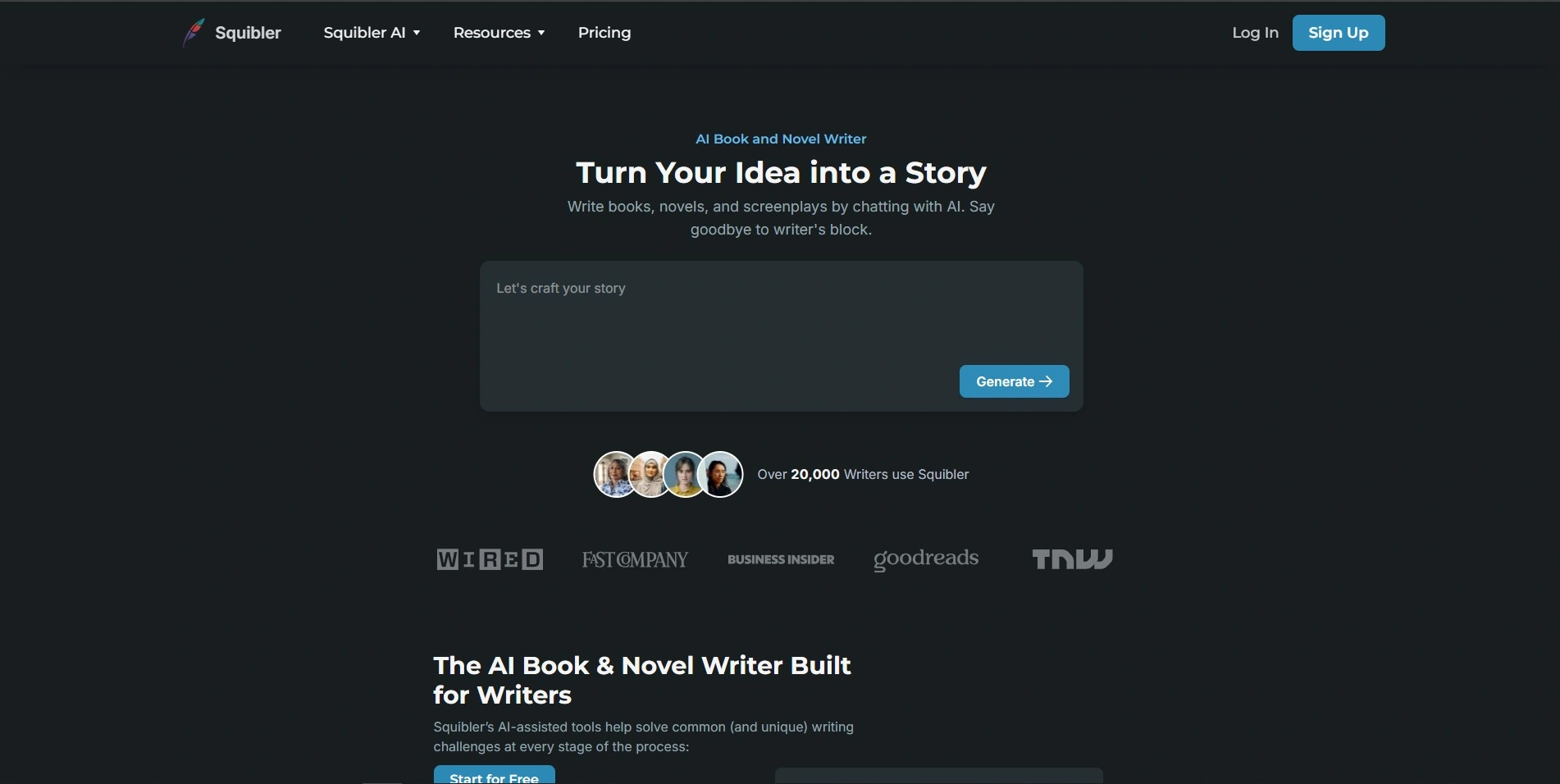
Squibler’s Limited plan is free indefinitely, giving new writers room to explore. Paid plans include Plus at $29.99/mo ($15.83–16 annual) and Pro at $89.99/mo ($49/mo annual) with unlimited AI credits for heavy users.
Squibler combines a novel and screenplay editor with an AI Smart Writer that generates chapters, scenes, or full outlines from prompts. Its Elements feature keeps characters, locations, and notes organized in one story bible. For writers who want AI generation paired with manuscript-style organization, Squibler is a strong Arc Studio Pro alternative, especially for prose-to-script projects.
Pros
- AI Smart Writer for drafts and outlines
- Story bible with Elements organization
- Works for both novels and screenplays
- Free plan with no time limit
Cons
- Pro plan is pricier than competitors
- Credit-based AI limits on Plus tier
- No mobile app currently
- Free tier restricted to one project
11. Plottr
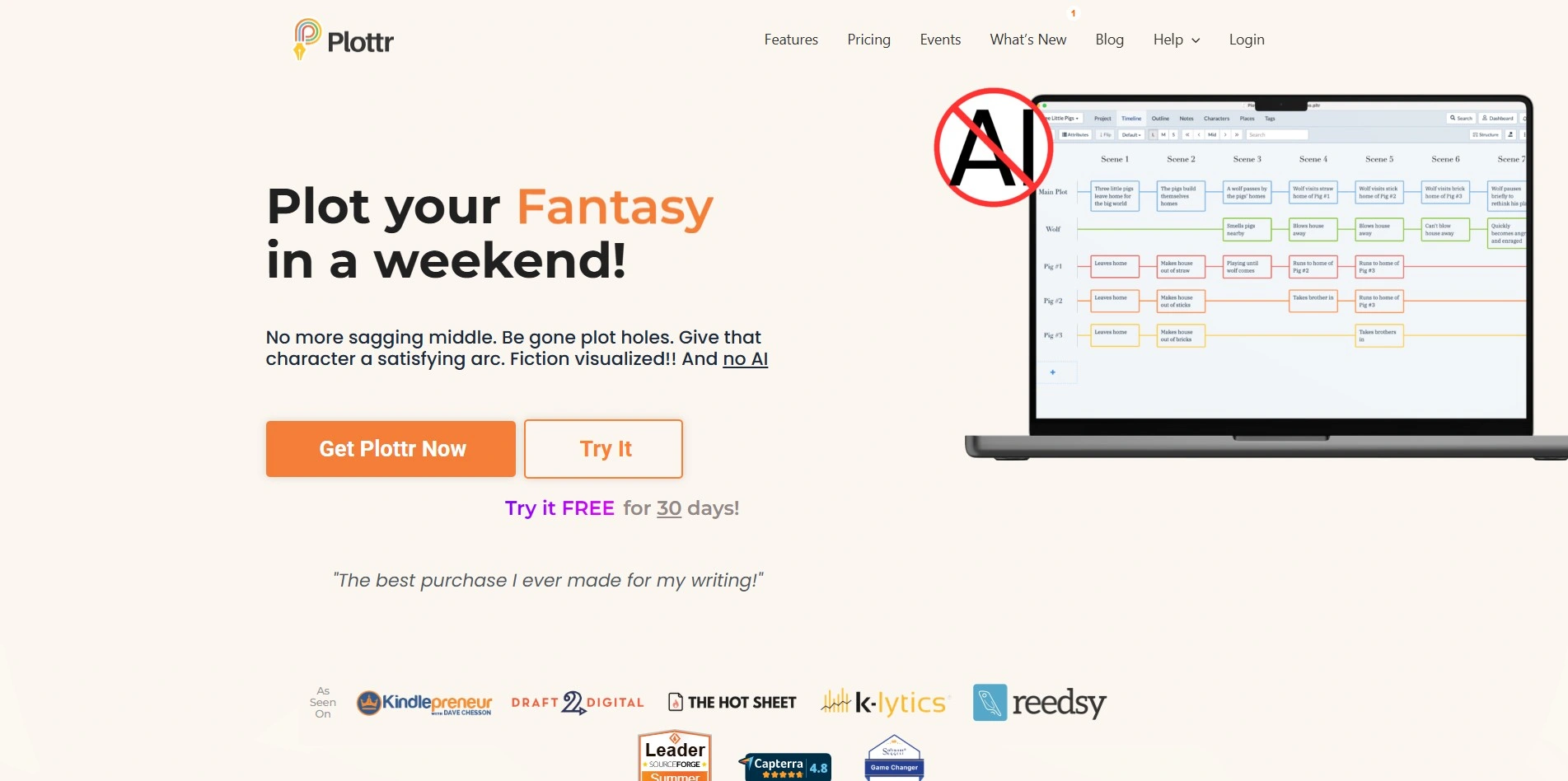
Plottr offers a generous 14 to 30-day free trial with full features unlocked. Options include Pro Monthly around $15–25/mo, annual discounts, a Pro + Education plan at $27/mo or $270/yr, and a Lifetime license at $199 one-time.
Plottr focuses purely on visual outlining, letting writers map timelines, character arcs, and plot threads with drag-and-drop cards. It integrates with Scrivener and Word for a smooth handoff into drafting. Writers who plan extensively before writing will find Plottr’s structure-first approach a refreshing Arc Studio Pro alternative for the outlining stage.
Pros
- Lifetime license avoids ongoing subscriptions
- Visual timeline and corkboard views
- Integrates with Scrivener and Word
- Long free trial period
Cons
- No AI writing assistance built in
- Outlining only, not a full script editor
- Learning curve for complex templates
- Mobile access can require extra cost
12. Beemgee
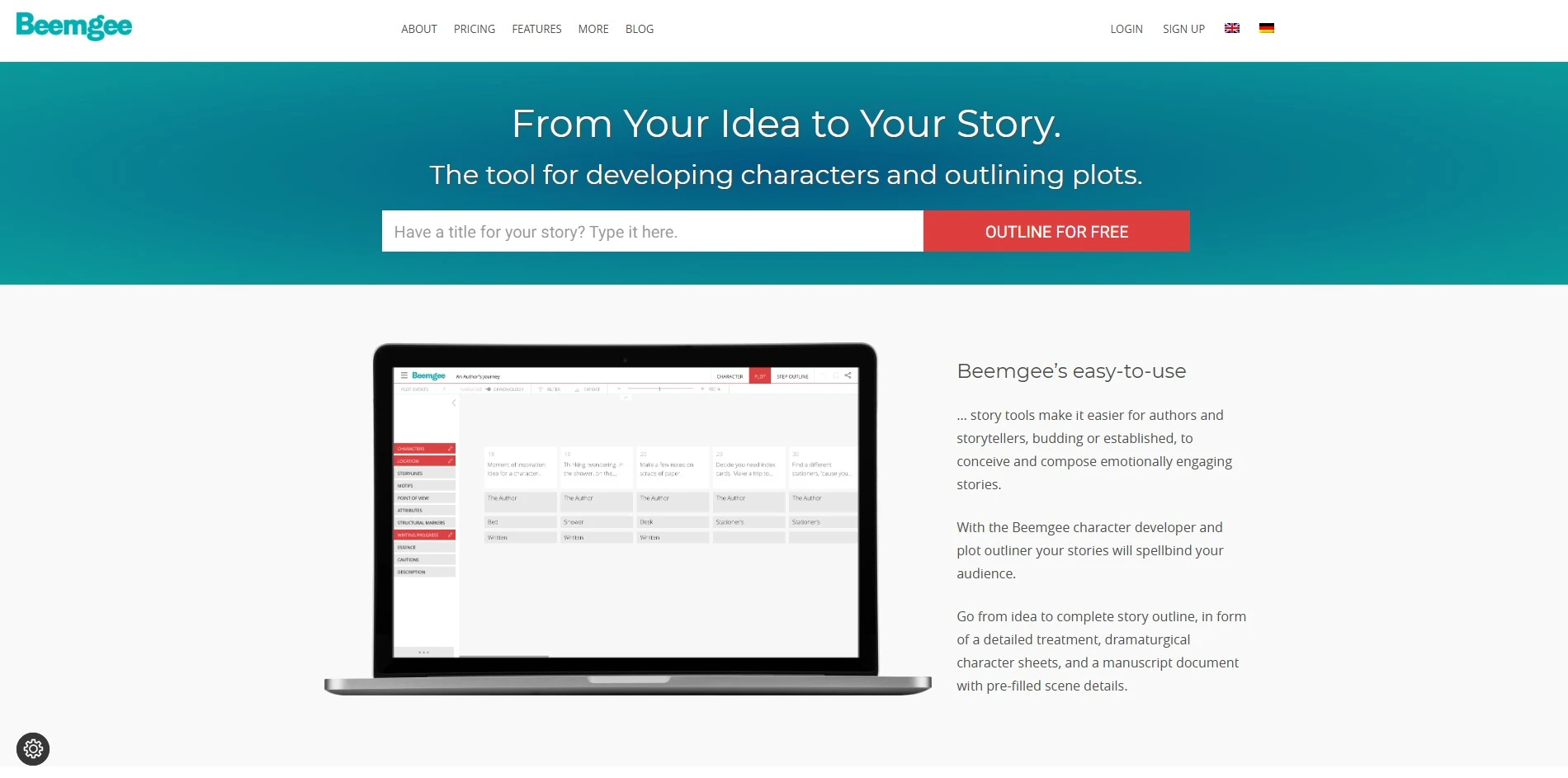
Beemgee offers a free version with limited export options for testing its character-first plotting tools. The Premium plan costs €96/year (about $8/month), unlocking full plot attributes, export, and dozens of character-development fields for serious writers.
Beemgee stands out by prioritizing character development before plot, helping writers understand motivation and dramatic function first. Its timeline and corkboard views let writers tag scenes with point of view, location, and structural markers. For screenwriters and novelists who want character-driven planning, Beemgee is a thoughtful Arc Studio Pro alternative worth trying.
Pros
- Deep character development framework
- Affordable annual Premium pricing
- Timeline and corkboard plotting views
- Good for both novels and screenplays
Cons
- Free version can’t export projects
- No AI-assisted writing features
- Smaller, less mainstream user base
- Interface feels dated compared to rivals
Quick Comparison Table
| Alternative | Description |
|---|---|
| Google Gemini | A conversational AI great for brainstorming, dialogue, and outlining, with free and paid Google AI tiers. |
| Studiovity | Affordable, film-specific screenwriting software with beat boards, collaboration, and multi-language support. |
| Claude | An AI assistant known for long-context reasoning, natural dialogue, and consistent character handling across scripts. |
| Powtoon AI Script Writer | Generates short scripts tied to animated video templates, best for explainer and marketing content. |
| Jasper AI | A marketing-focused AI writer with brand voice tools, useful for pitch decks and promotional copy. |
| ChatGPT | A flexible, affordable AI chatbot for brainstorming, drafting, and building custom screenwriting assistants. |
| Vimeo AI Script Writer | Generates short video scripts paired with a teleprompter, ideal for marketing and short-form video. |
| Highland 2 | A minimalist Mac-only screenwriting app using plain-text Fountain formatting for distraction-free writing. |
| Storyflow | A visual planning canvas combining AI writing, moodboards, and built-in story structure templates. |
| Squibler | An AI-powered novel and screenplay editor with a story bible and Smart Writer generation tools. |
| Plottr | A visual outlining tool for mapping timelines, characters, and plots before drafting begins. |
| Beemgee | A character-first story development tool emphasizing motivation, dramatic function, and plot structure. |
Conclusion
Arc Studio Pro has plenty of capable rivals, each serving a slightly different stage of the writing process. AI chatbots like Gemini, Claude, and ChatGPT are excellent for brainstorming and dialogue, while Studiovity and Highland 2 offer dedicated screenplay formatting. Outlining tools like Plottr and Beemgee shine before drafting begins, and platforms like Squibler and Storyflow blend AI generation with story organization. Whichever alternative you choose, matching the tool to your actual workflow, whether that’s outlining, drafting, or polishing, will get you the best results for your next script.


