
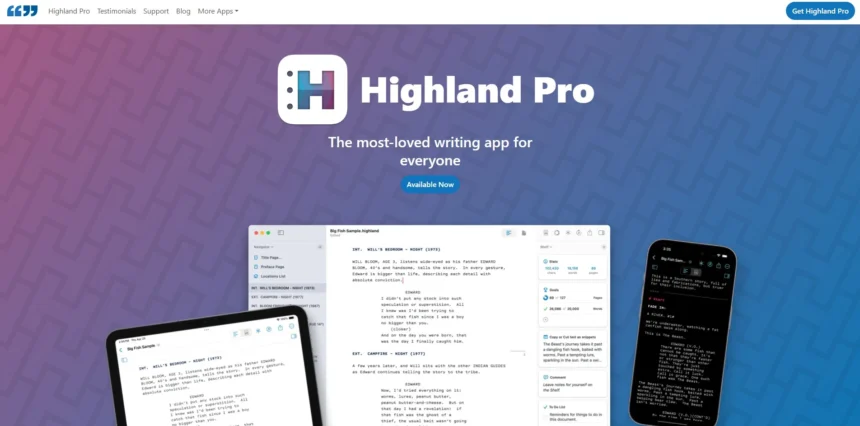
Highland 2 has long been a favorite among screenwriters for its clean, distraction-free formatting, but it isn’t the right fit for everyone. Some writers want AI-assisted drafting, others need cloud collaboration, and some are working on novels or video scripts rather than film screenplays. This guide rounds up 13 Highland 2 Alternatives, covering everything from industry-standard screenwriting suites to AI writing assistants, complete with trial details, official pricing, and honest pros and cons for each.
1. Final Draft
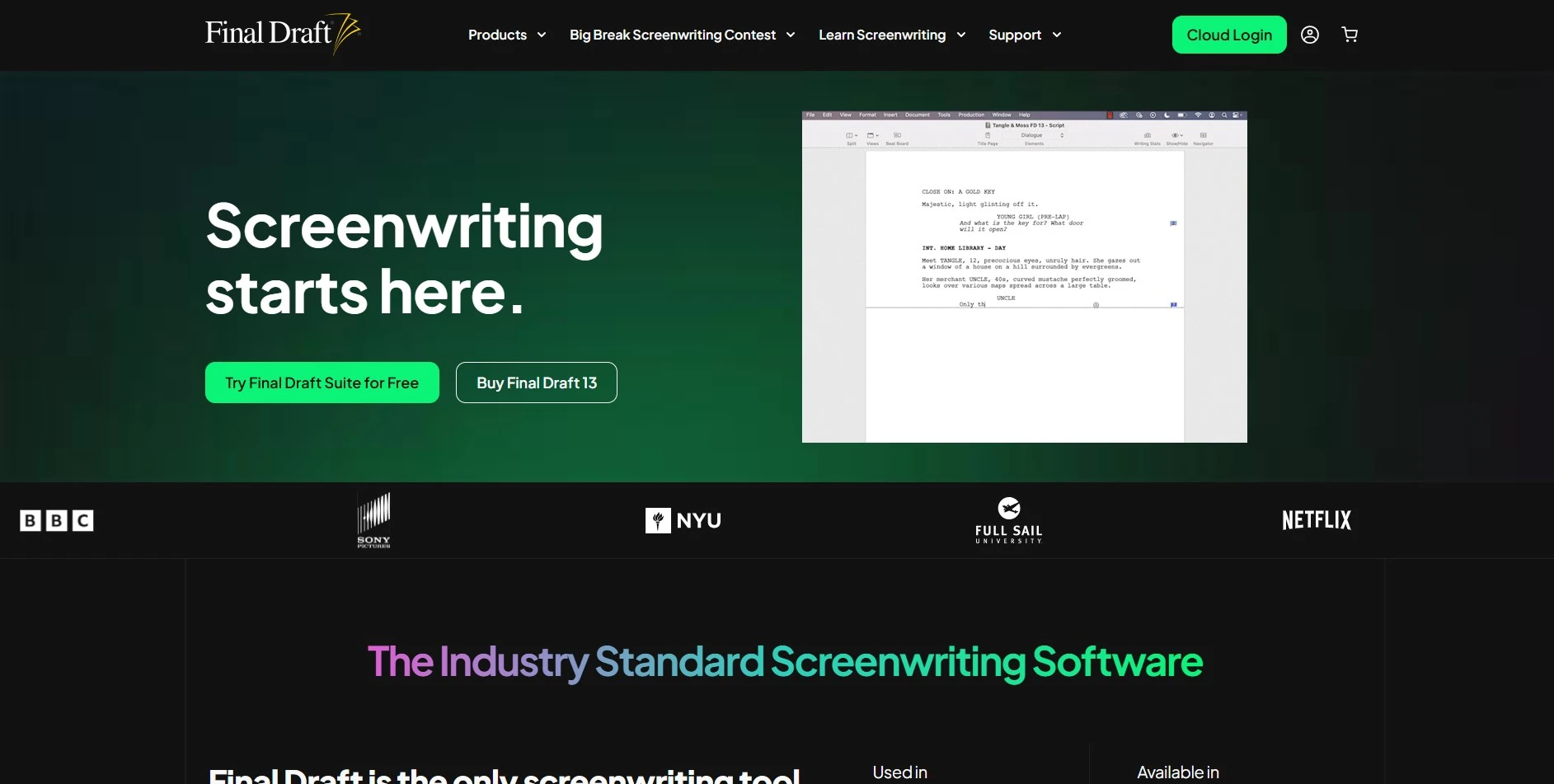
Final Draft offers a 5-day free trial through Final Draft Suite before you commit. Pricing includes the Suite subscription from $8.33/mo billed yearly, the desktop Final Draft 13 one-time license at $199.99 (was $249.99), a discounted $99.99 Student Edition, and custom Studio & Education licensing for teams.
As the long-standing industry standard, Final Draft gives screenwriters SmartType, Beat Board outlining, ScriptNotes, and real-time collaboration in one desktop package. It’s the closest like-for-like alternative to Highland 2 for anyone who wants deep production features, industry-standard formatting recognized by studios, and the flexibility to work offline without depending on a cloud connection.
Pros
- Industry-standard formatting used by most studios
- Powerful outlining and Beat Board tools
- Works offline as a one-time purchase
Cons
- Higher upfront cost than most alternatives
- Interface feels dated next to newer tools
- Cloud features require a separate subscription
2. Vimeo AI Script Writer
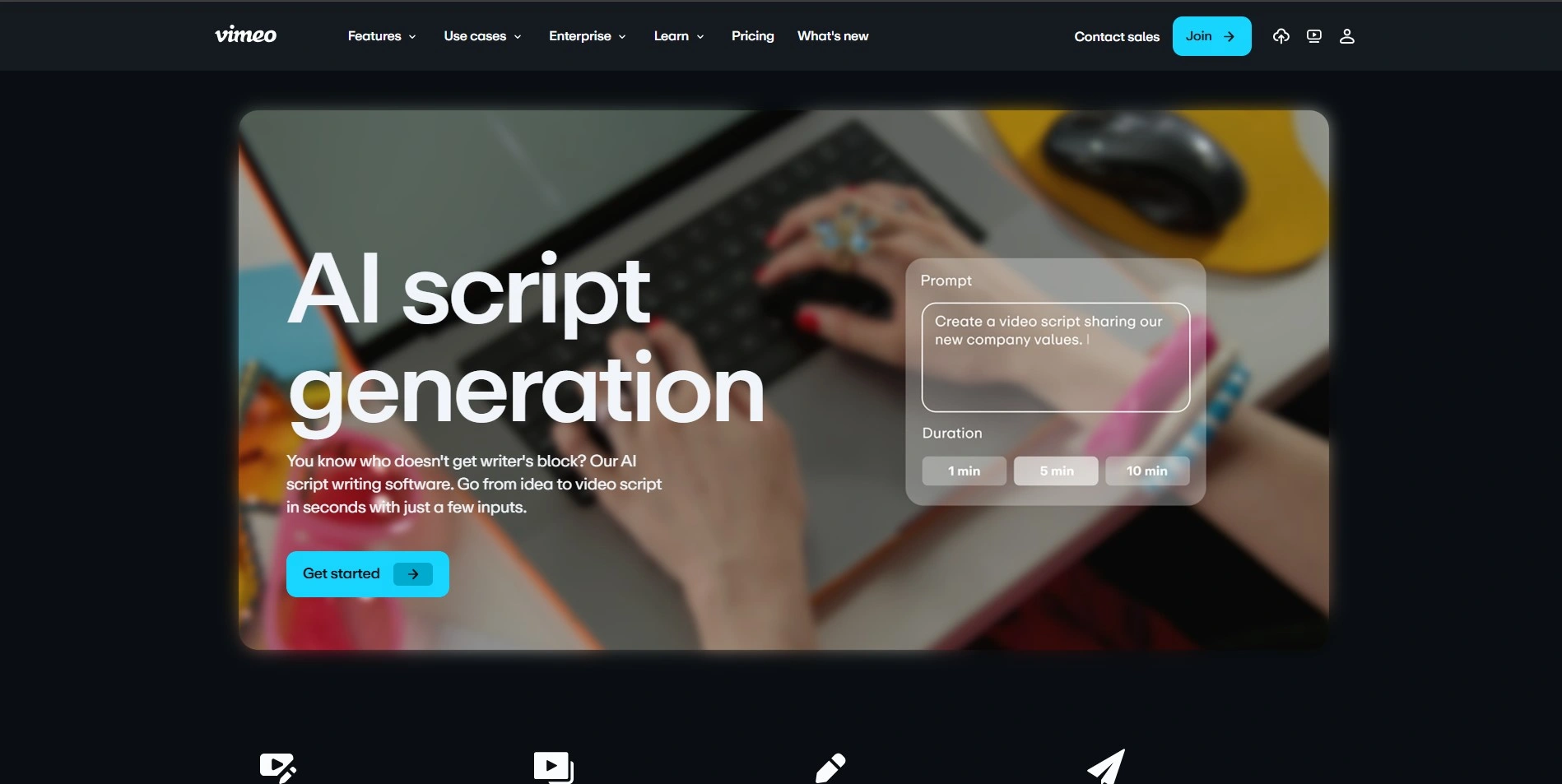
Vimeo lets you start on its Free plan or explore a free trial before upgrading. AI scriptwriting tools require a paid tier: Starter at $20/mo, Standard at $33/mo (unlocks the AI script generator and teleprompter), and Advanced at $108/mo for larger teams and analytics.
Rather than screenplay formatting, Vimeo’s AI Script Writer targets video creators who need a fast draft for marketing clips, social content, or explainer videos. Type a short description, choose a tone and length, and the AI produces a script you can read straight off its built-in teleprompter while recording, then edit the video simply by editing the text.
Pros
- Generates a usable script in seconds from a short prompt
- Built-in teleprompter and text-based video editing
- Good for social and marketing videos, not just film
Cons
- Not designed for screenplay-format writing
- AI features locked behind the Standard tier or higher
- Free plan is too limited for real production work
3. Claude
Claude, built by Anthropic, is free to try with no credit card at Free – $0. Paid tiers include Pro at $20/mo ($17/mo billed annually), Max 5x at $100/mo, Max 20x at $200/mo, and Team from $25/seat, Enterprise custom.
As a general-purpose AI assistant rather than dedicated screenwriting software, Claude works well for brainstorming plot ideas, drafting dialogue, restructuring scenes, or getting feedback on tone and pacing. Writers who don’t need Highland’s formatting tools but want a flexible, conversational co-writer for outlining and rewriting often turn to Claude as a lightweight companion tool.
Pros
- Strong at brainstorming, rewriting, and dialogue polishing
- Usable free with no credit card required
- Flexible for scripts, novels, or any writing format
Cons
- No dedicated screenplay formatting or production tools
- No index cards, beat boards, or script-specific outlining
- Usage limits apply on the Free and Pro tiers
4. DialogueGenie
DialogueGenie is positioned as a lightweight AI dialogue generator rather than a full screenwriting suite, and like many niche tools in this space, it typically offers limited free generations to test the output before any paid tier applies. It does not publish a fixed public pricing card, so plan costs are generally shown only after sign-up.
Its narrow focus is exactly the appeal: instead of managing formatting, outlining, and production tools, writers feed in a scene, characters, and tone, and the tool returns natural-sounding back-and-forth conversation. That makes it a quick supplement for screenwriters, novelists, or game writers who are specifically stuck on how two characters should talk to each other.
Pros
- Fast, focused on generating natural character dialogue
- Useful for breaking through dialogue-specific writer’s block
- Simple to use without learning a full software suite
Cons
- No screenplay formatting or production features
- Pricing isn’t transparently listed before sign-up
- Limited for full-script structural or outlining work
5. Copy.ai
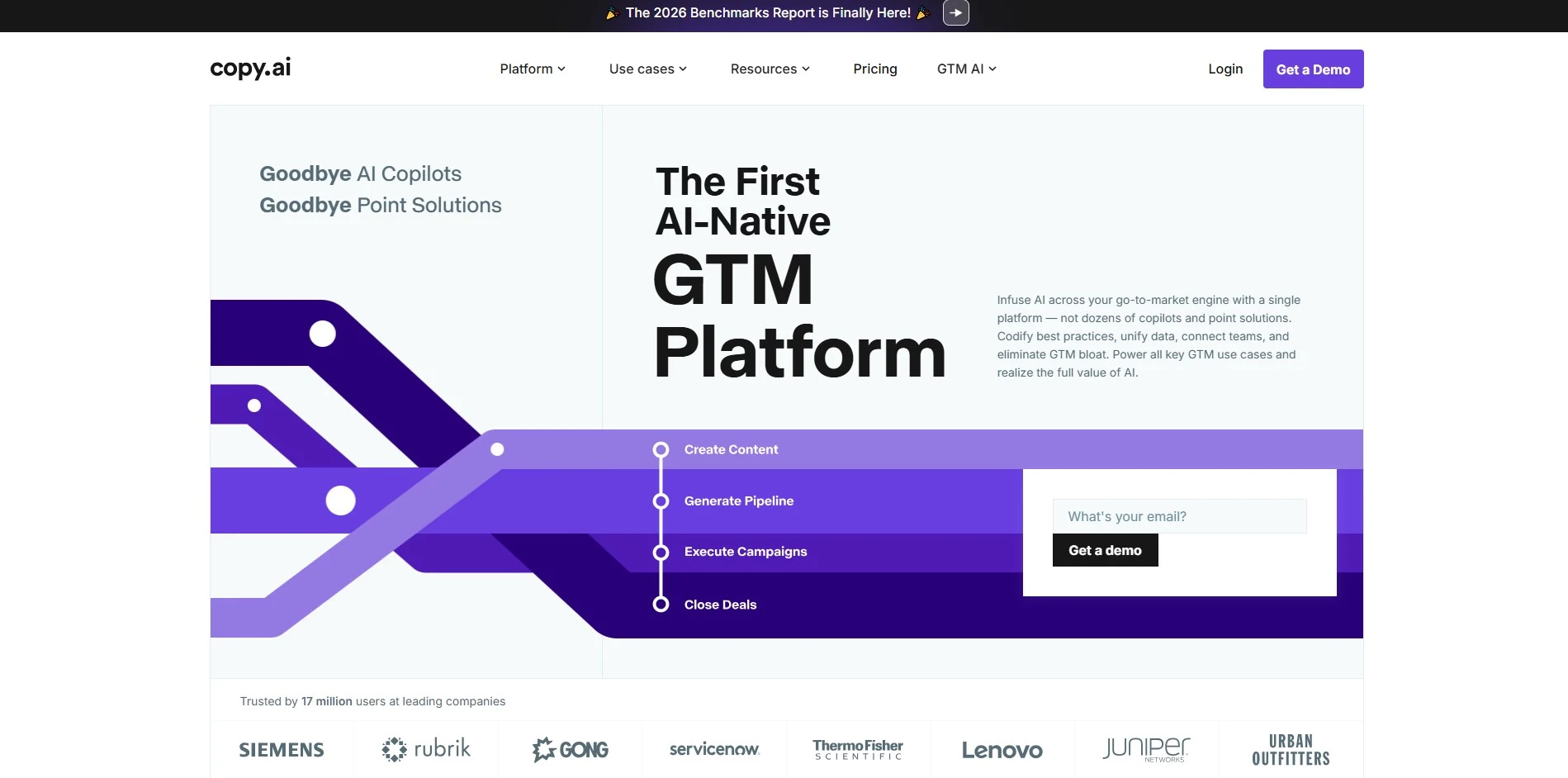
Copy.ai has a permanent Free plan – $0 (2,000 words/month, no credit card needed), plus Chat at $29/mo ($24/mo annual, 5 seats), Growth from $1,000/mo, and custom Enterprise pricing for larger go-to-market teams.
Copy.ai started as a copywriting tool and has since grown into a broader AI content platform with workflow automation. For scriptwriters, it’s most useful for generating outlines, taglines, ad scripts, and short-form video copy rather than full-length screenplays, making it a better fit for marketing-adjacent script work than for feature films.
Pros
- Genuinely usable free tier with no time limit
- Fast for short-form scripts, ads, and social copy
- Workflow automation saves time on repetitive content
Cons
- Steep jump in price above the entry-level plan
- Not built for feature-length screenplay structure
- No screenplay-specific formatting or export
6. ScriptAI Pro
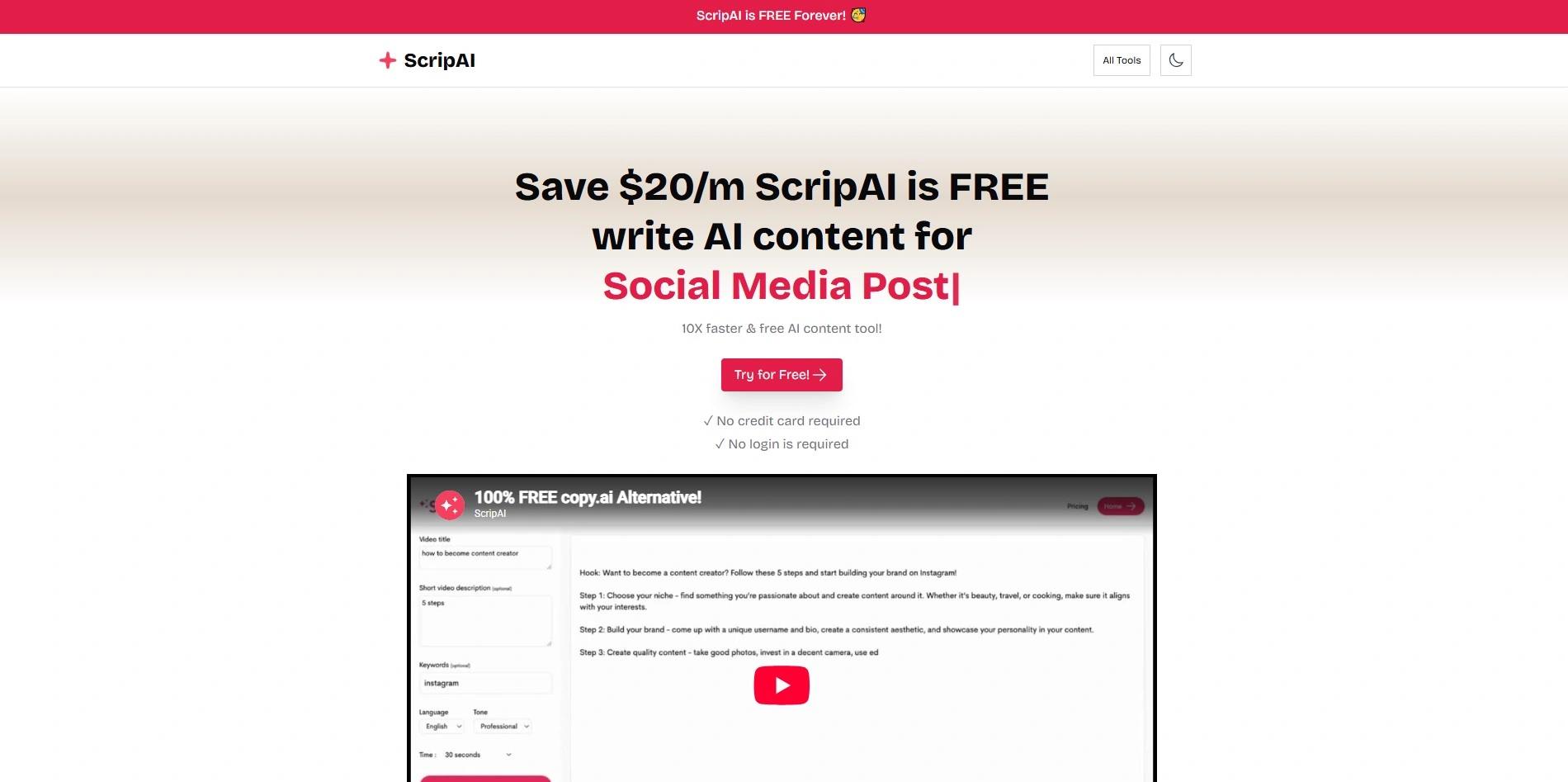
ScriptAI Pro is marketed as a professional-leaning AI scriptwriting assistant focused on scene development and character arcs, but it does not maintain a widely published, fixed pricing page the way larger platforms do. Most listings note limited free usage to sample outputs, with paid access quoted directly through the provider.
Its strength is generating detailed character bios and structurally aware dialogue that adapts to a story’s tone, which appeals to writers who want an AI collaborator for deep scene-level development rather than basic formatting. It’s best treated as a drafting aid alongside dedicated formatting software like Final Draft or Highland 2.
Pros
- Focuses on scene depth and character arc suggestions
- Generates detailed character bios automatically
- Useful as a creative supplement to formatting tools
Cons
- No clearly published, fixed pricing structure
- Lacks native industry-standard screenplay formatting
- Smaller user base than established competitors
7. Powtoon AI Script Writer

Powtoon offers a Free plan with watermarked, capped exports to test the workflow. Paid plans run Lite at $49/mo, Professional at $99/mo, Advanced at $199/mo, and custom Corporate pricing for larger organizations.
Powtoon’s AI script writer turns a short brief into a ready-to-use script for animated explainer videos, training material, or marketing content, then feeds it directly into its video and teleprompter tools. It’s a strong pick for teams producing corporate or educational video content rather than screenwriters drafting a feature film.
Pros
- Turns a brief into a usable script very quickly
- Integrates directly with animation and video tools
- Good for training, marketing, and explainer content
Cons
- Free tier adds watermarks and blocks MP4 downloads
- Pricing climbs quickly for advanced features
- Not suited to screenplay or long-form script formatting
8. Dabble

Dabble gives new users a 14-day free trial, no credit card required. Plans include Basic at $9/mo, Standard at $19/mo (adds Plot Grid and Focus Mode), Premium at $29/mo (grammar checking, co-authoring), and a one-time Lifetime license at $699.
Dabble is built primarily for novelists rather than screenwriters, offering a clean drafting space alongside a visual Plot Grid for organizing story beats. Writers who use Highland 2 for prose-style scripts or treatments, or who split time between screenwriting and novel writing, may appreciate Dabble’s cloud sync and goal-tracking features.
Pros
- Clean, distraction-free writing environment
- Visual Plot Grid for organizing story structure
- Cloud sync across devices with generous trial
Cons
- No permanent free tier, only a timed trial
- Not built for industry-standard screenplay formatting
- Subscription cost adds up compared to one-time tools
9. Mugafi

Mugafi’s flagship tool, VED, is currently invite-only, so writers can request access via “Try VED” rather than sign up directly. Mugafi generates revenue through user subscription fees, but it does not publish a fixed public pricing card, so exact costs are shared once access is granted.
VED acts as a creative co-pilot built around Indian and South Asian storytelling conventions, helping writers research, rewrite scenes, expand dialogue, and score script readiness. It’s a strong option for creators targeting OTT platforms and regional production houses across India, Southeast Asia, and the Middle East rather than Western film markets.
Pros
- Deep focus on South Asian and regional storytelling
- Script readiness scoring and collaboration tools
- Backed by real production house partnerships
Cons
- Invite-only access limits immediate availability
- No transparent, publicly listed pricing
- Less relevant for writers outside its target regions
10. Plottr
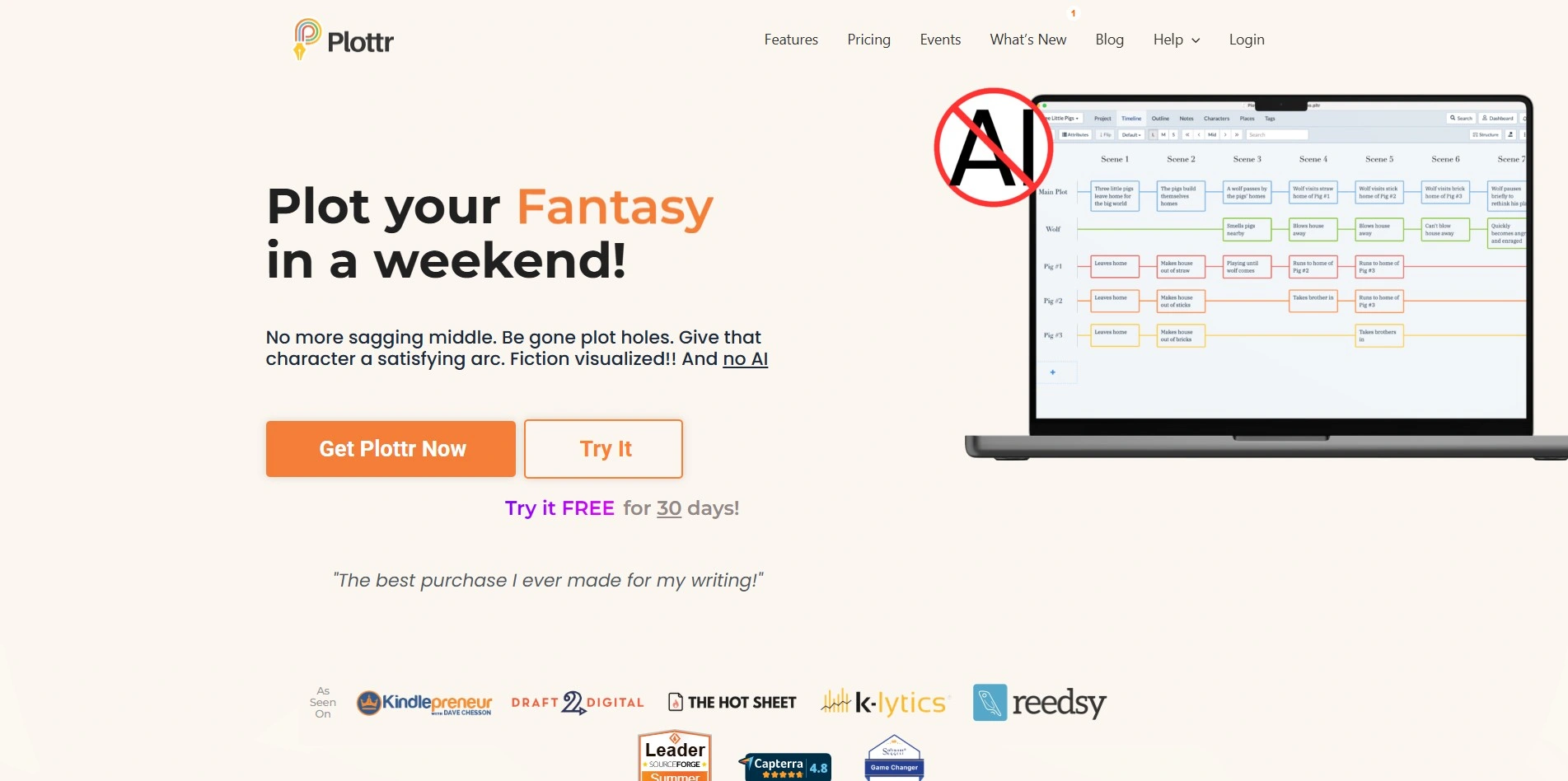
Plottr offers a free trial before purchase. Pricing includes Pro Monthly at $15/mo, Pro + Community at $27/mo (or $270/year), and a one-time Lifetime license at $199 that never expires and includes unlimited household devices.
Plottr is a visual outlining tool built around timelines, character arcs, and drag-and-drop story cards rather than screenplay formatting itself. Writers using Highland 2 mainly for outlining before drafting may prefer pairing it with Plottr’s visual planning boards, then exporting the outline into a dedicated formatting tool for the final script.
Pros
- Strong visual outlining with drag-and-drop story cards
- One-time Lifetime option avoids ongoing subscriptions
- Integrates with Scrivener, Word, and other writing tools
Cons
- No monthly-only plan; pricing feels a bit rigid
- Not a screenplay formatting tool on its own
- Learning curve for writers new to visual plotting
11. Studiovity
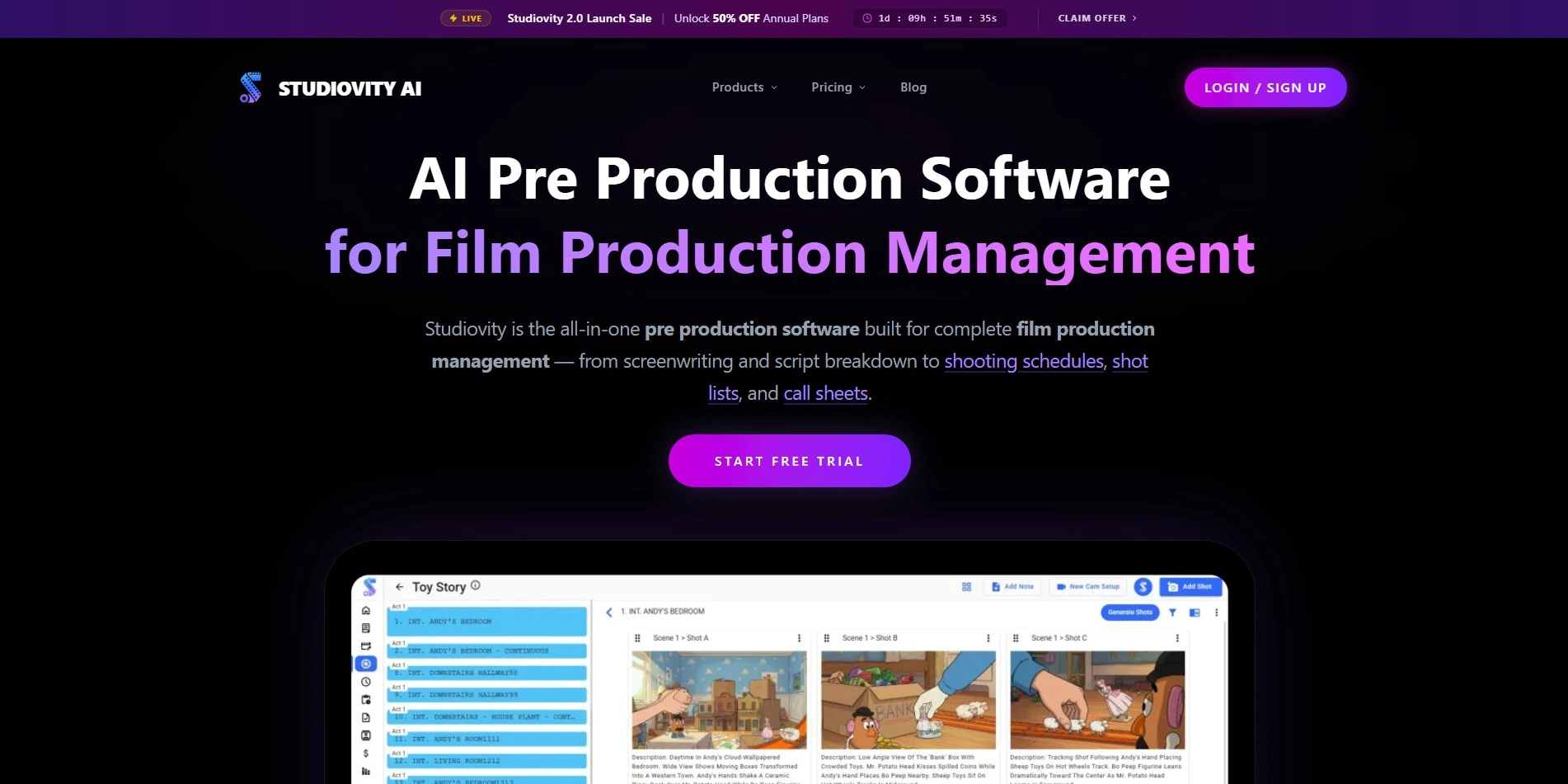
Studiovity offers a free trial with no credit card required, alongside a free version for basic use. Pricing is notably affordable at roughly $1.88 to $2.50 per user, per month, with monthly and annual billing options listed directly on its official site.
Built specifically for screenwriters, Studiovity includes an Act Structure Beat Board, index cards, real-time collaboration, and import/export support for Final Draft FDX, PDF, and Fountain formats. Its support for 385+ regional languages makes it a particularly strong Highland 2 alternative for international writers and non-English-language productions.
Pros
- Extremely affordable compared to most competitors
- Supports 385+ regional languages
- Real-time collaboration and Final Draft-compatible export
Cons
- Smaller brand recognition than Final Draft or Highland
- Interface feels less polished than premium alternatives
- Fewer third-party integrations than larger platforms
12. Sudowrite

Sudowrite gives new users roughly 10,000 free credits, no credit card required. Paid tiers include Hobby & Student at $10/mo annual ($19 monthly), Professional at $22/mo annual ($29 monthly), Max at $44/mo annual ($59 monthly), and custom Enterprise pricing.
Sudowrite is purpose-built for fiction writers, with tools like Describe, Rewrite, Brainstorm, and the Story Bible for maintaining character and plot consistency. While it’s not a screenplay formatter, writers who use Highland 2 for treatments, prose adaptations, or novelizations may find its fiction-specific AI tools genuinely useful for expanding scenes.
Pros
- Generous no-card free trial with real usage credits
- Fiction-specific tools like Story Bible and Describe
- Multiple AI models available under one subscription
Cons
- Not designed for screenplay formatting
- Credit-based system can run out faster than expected
- Heavy editing still needed after AI-generated drafts
13. Jasper AI
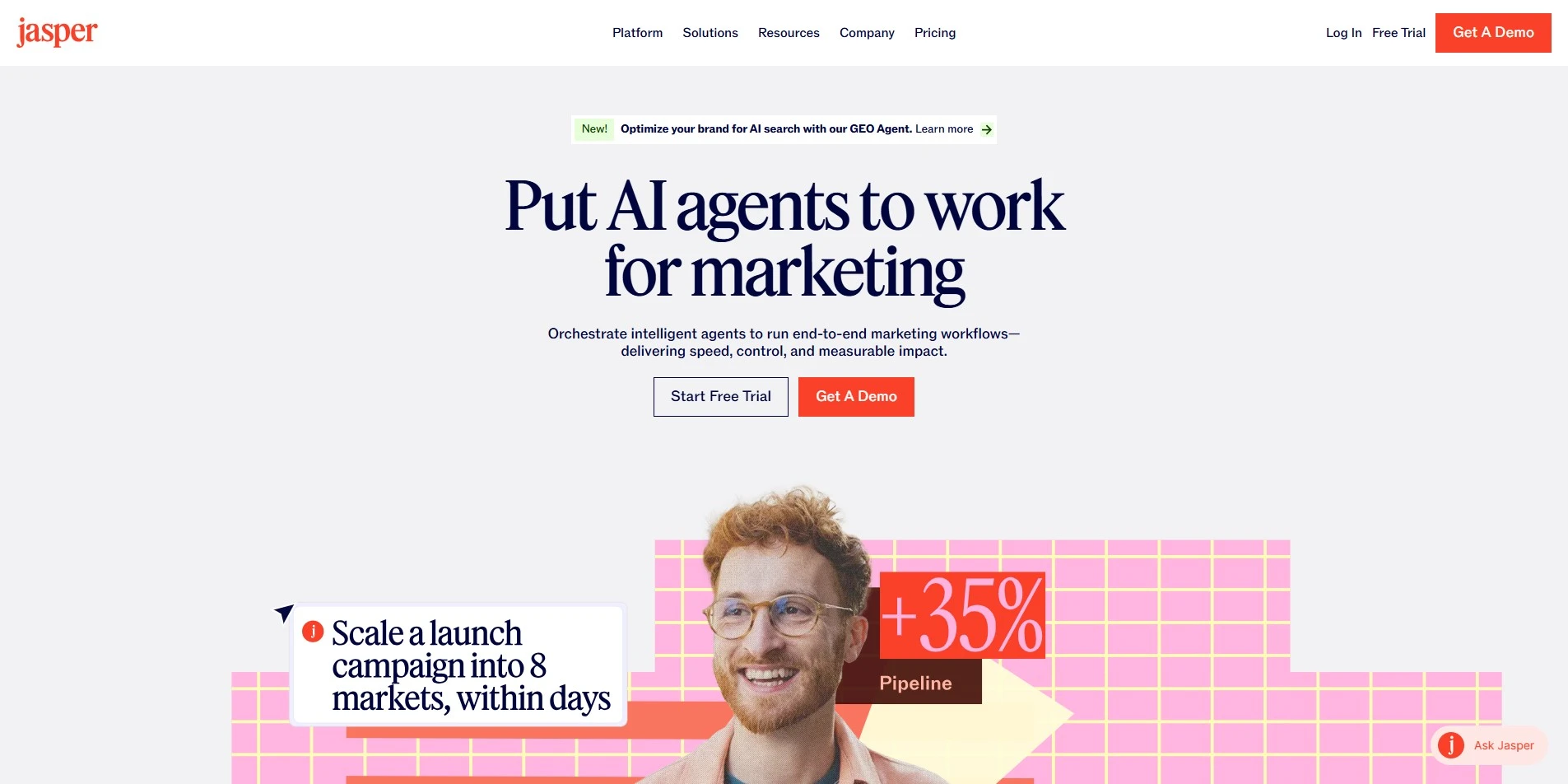
Jasper AI includes a 7-day free trial on its paid plans. Pricing centers on Pro at $69/mo ($59/mo billed annually) for a single seat, and Business with custom, quote-based pricing for teams and agencies needing collaboration features.
Jasper is primarily a marketing-focused AI writing platform, but its Canvas editor, Brand Voice, and Chat features can help draft video scripts, ad copy, and promotional narration. It works well alongside Highland 2 for writers who need fast marketing or trailer-style scripts rather than full feature screenplays.
Pros
- Strong for marketing scripts, ads, and promotional copy
- Brand Voice keeps tone consistent across projects
- 7-day trial lets you test Pro features risk-free
Cons
- No permanent free plan, only a timed trial
- Not built for screenplay formatting or production tools
- Single-seat Pro plan limits team collaboration
Comparison Table: Highland 2 Alternatives at a Glance
| Alternative | Description |
|---|---|
| Final Draft | Industry-standard desktop screenwriting software with SmartType, Beat Board outlining, and studio-recognized formatting. |
| Vimeo AI Script Writer | AI-powered script generator built into Vimeo for quick marketing and social video scripts, paired with a teleprompter. |
| Claude | Anthropic’s general-purpose AI assistant, useful for brainstorming, rewriting scenes, and polishing dialogue. |
| DialogueGenie | A focused AI tool for generating natural, character-driven dialogue for scripts, novels, or games. |
| Copy.ai | AI content and workflow platform strongest for short-form scripts, ad copy, and marketing narration. |
| ScriptAI Pro | AI scriptwriting assistant focused on scene development, character arcs, and detailed character bios. |
| Powtoon AI Script Writer | Converts a brief into a ready-to-use script for animated explainer and training videos, tied to Powtoon’s editor. |
| Dabble | Cloud-based novel writing software with a visual Plot Grid, Focus Mode, and goal-tracking tools. |
| Mugafi | Invite-only AI writing co-pilot (VED) built around South Asian storytelling and production-house collaboration. |
| Plottr | Visual story outlining tool with drag-and-drop timelines, character arcs, and a one-time lifetime license option. |
| Studiovity | Affordable, multilingual screenwriting software with real-time collaboration and Final Draft-compatible export. |
| Sudowrite | Fiction-focused AI writing assistant with Story Bible, Describe, and Brainstorm tools for novelists. |
| Jasper AI | Marketing-oriented AI writing platform useful for ad scripts, promotional narration, and brand-consistent copy. |
Conclusion
Screenwriters chasing industry-standard formatting will lean toward Final Draft or Studiovity, novelists will find more value in Dabble, Plottr, or Sudowrite, and anyone leaning on AI assistance for drafting, dialogue, or marketing scripts has strong options in Claude, Copy.ai, Jasper AI, DialogueGenie, and ScriptAI Pro. Video-first creators are better served by Vimeo’s AI Script Writer or Powtoon, while Mugafi stands out for regional storytelling. Try the free trials and free tiers listed above before committing to a paid plan, since pricing and features change often.


