
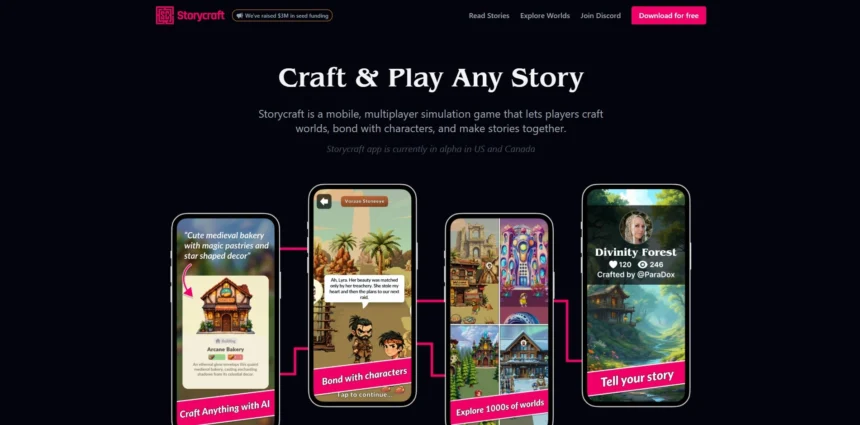
StoryCraft AI has become a popular pick for writers who want AI assistance while outlining or drafting scripts and stories, but it isn’t the only option on the market. Whether you are a novelist, screenwriter, or video content creator, there is a growing ecosystem of tools built specifically for narrative structure, dialogue generation, and script formatting. Below, we break down 13 of the best StoryCraft AI Alternatives, covering their trials, pricing, strengths, and weaknesses, so you can choose the one that best matches your creative workflow and budget.
1. Highland 2
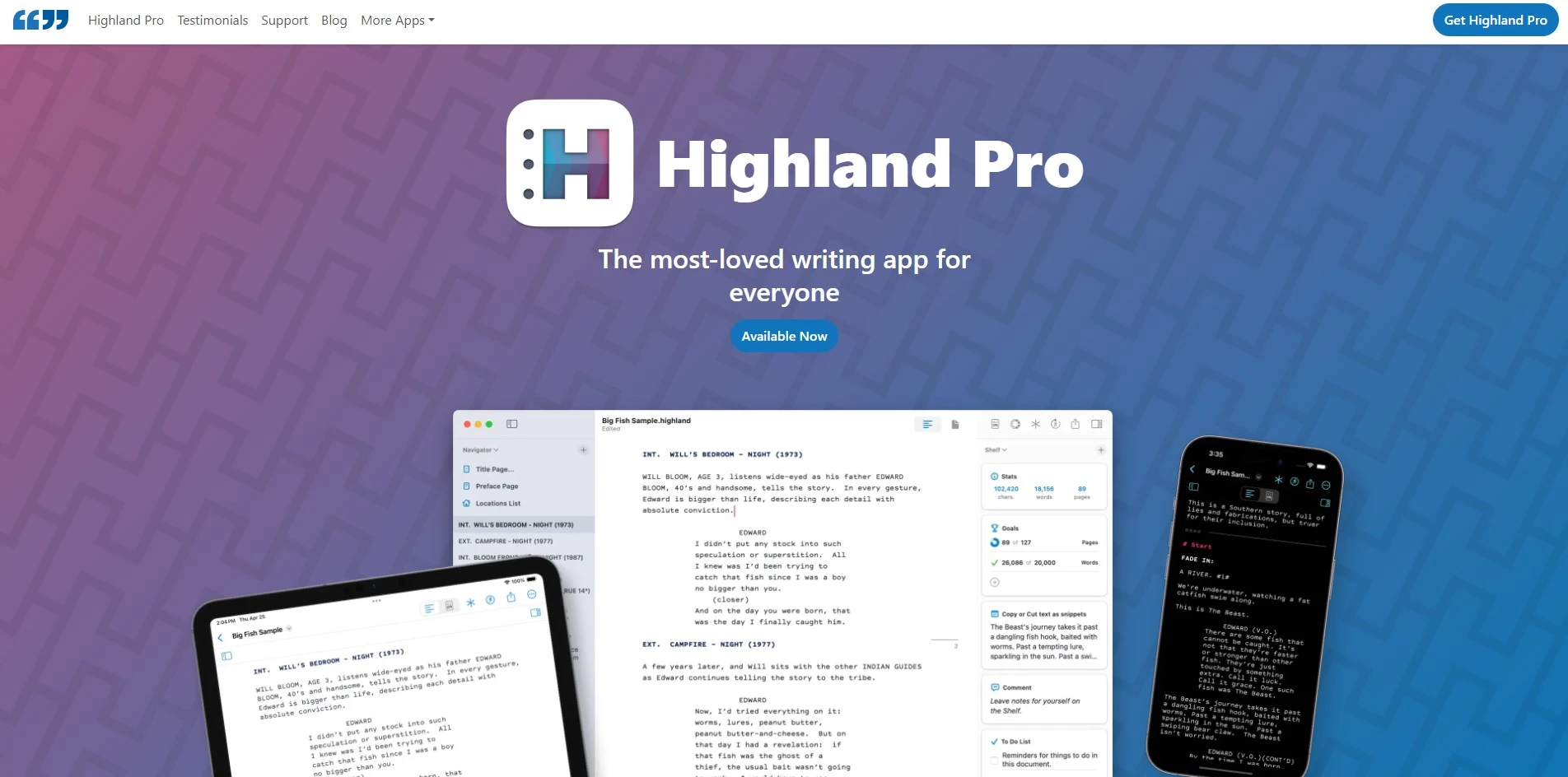
Free TrialFree Core AppPro: $49.99 One-Time Highland 2 lets you write full screenplays for free with no time limit, though PDF exports carry a watermark. Paying a one-time $49.99 fee removes the watermark and unlocks extra templates. The newer Highland Pro subscription line runs roughly $4.99 to $9.99 per month for those who prefer an ongoing plan instead of a single purchase.
Highland 2 is a Mac-native screenwriting app built around the plain-text Fountain format, so scripts stay readable outside proprietary software. It automatically formats scene headings, dialogue, and transitions as you type, while offering revision tracking, gender analysis of speaking roles, and a distraction-free interface favored by working screenwriters and novelists alike.
Pros
- Generous free version with no time limit
- Clean, distraction-free writing interface
- Uses portable Fountain plain-text format
Cons
- Mac-only, no native Windows version
- Lacks a visual corkboard for scene rearranging
- Limited character-building tools compared to rivals
2. Claude
Free PlanPro: $20/MonthMax: $100–$200/Month Claude offers a genuinely usable free tier for testing story ideas before committing to a subscription. The Pro plan costs $20 per month and significantly raises usage limits, while the two Max tiers cost $100 and $200 per month for heavy daily use. Team plans start around $25 per seat monthly for collaborative writing rooms.
Claude, built by Anthropic, is a general-purpose AI assistant that excels at long-form narrative reasoning, character consistency, and collaborative brainstorming across extended documents. Writers use it to outline plots, refine dialogue, and analyze lengthy manuscripts thanks to its large context window, making it a flexible substitute for dedicated story-planning software.
Pros
- Handles very long manuscripts in one session
- Strong at maintaining character and plot consistency
- Usable free tier with no credit card required
Cons
- Not purpose-built with screenplay formatting tools
- No dedicated corkboard or beat-sheet visualizer
- Higher usage tiers can get expensive for teams
3. Beemgee
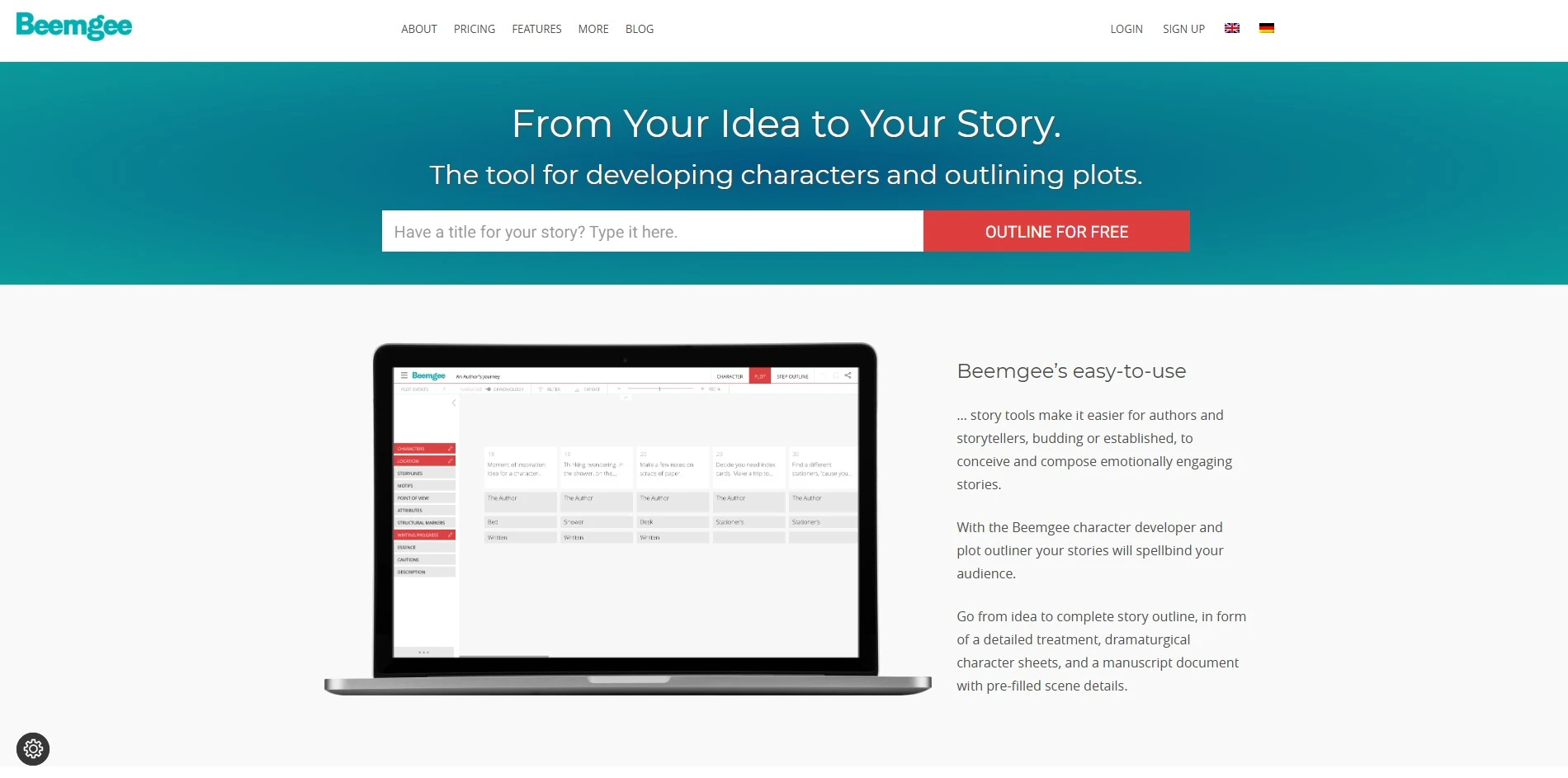
Free VersionPremium: ~€96/Year Beemgee‘s basic plotting and character tools are free to use, but exporting your finished outline requires a Premium subscription. Premium costs about €96 per year, which works out to roughly €8 (around $8-9) per month, unlocking additional character attributes, timeline views, and full export options for your story documents.
Beemgee is a pre-writing tool focused on dramaturgy rather than drafting, helping authors compose plots and build motivated characters before they start typing prose. It offers timeline and corkboard views, scene tagging by point-of-view and structural markers, and detailed character sheets designed to strengthen narrative clarity ahead of the writing stage.
Pros
- Deep focus on character motivation and arcs
- Flexible timeline and corkboard visualization
- Useful for both plotters and pantsers
Cons
- Free version cannot export finished work
- Not a text editor, so writing happens elsewhere
- Interface can feel dense for total beginners
4. Studiovity
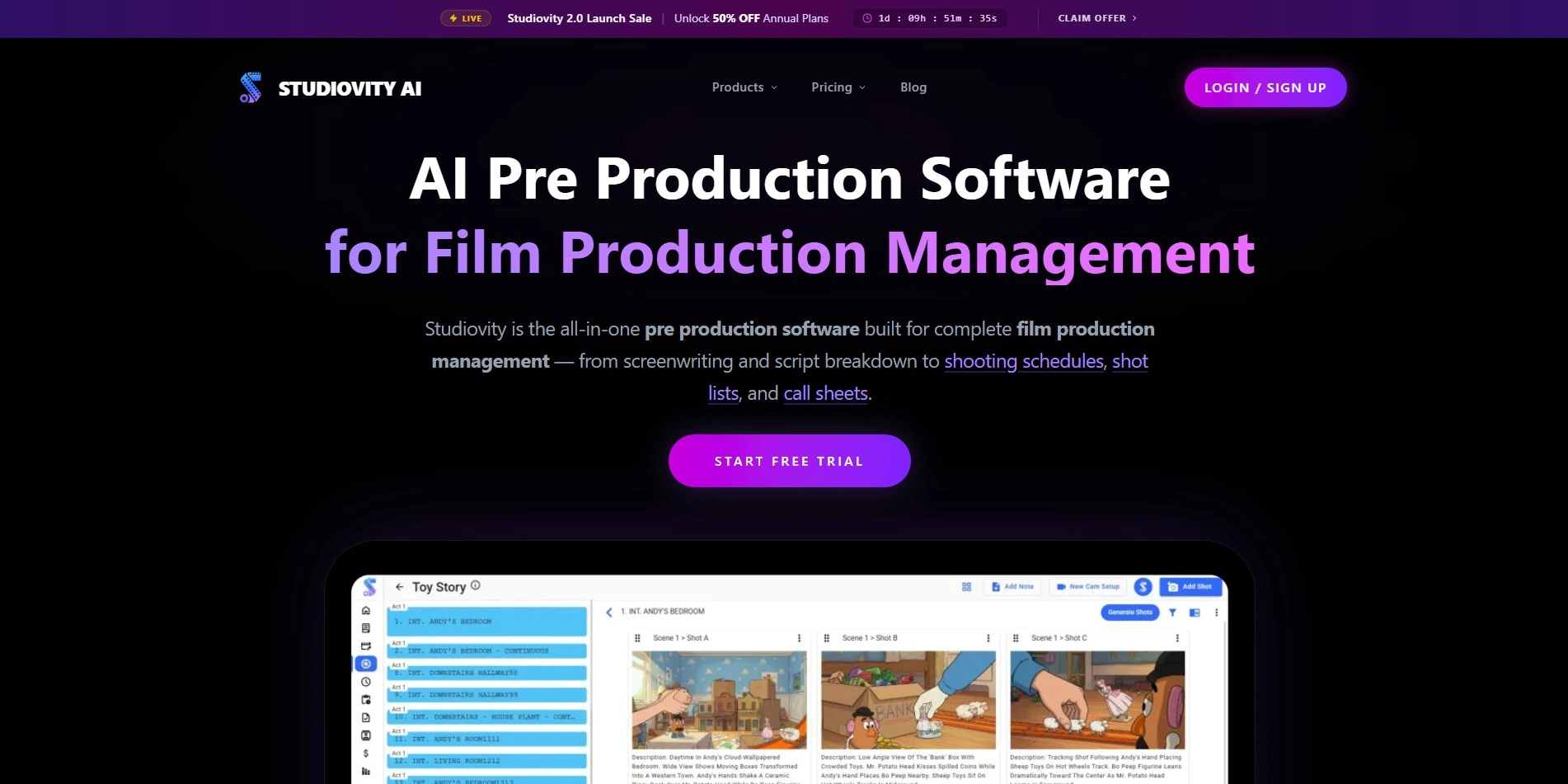
Free TrialFrom $1.88–$2/Month Studiovity offers a free trial with no credit card required, letting you test its screenplay editor before paying. Paid plans start remarkably low, around $1.88 to $2 per month, making it one of the most affordable cloud-based screenwriting platforms currently available to independent writers.
Studiovity is a cloud-based screenwriting and pre-production suite supporting film, television, and multi-column formats. It includes an Act Structure Beat Board, index cards for scene organization, real-time collaboration, and character relationship mapping, plus AI-powered script breakdown tools that carry projects from first draft into scheduling and budgeting workflows.
Pros
- Extremely affordable entry pricing
- Real-time collaboration for writing teams
- Supports 385+ languages for scripts
Cons
- No permanent free version
- Some advanced features locked to higher tiers
- Interface less polished than premium rivals
5. Vimeo AI Script Writer
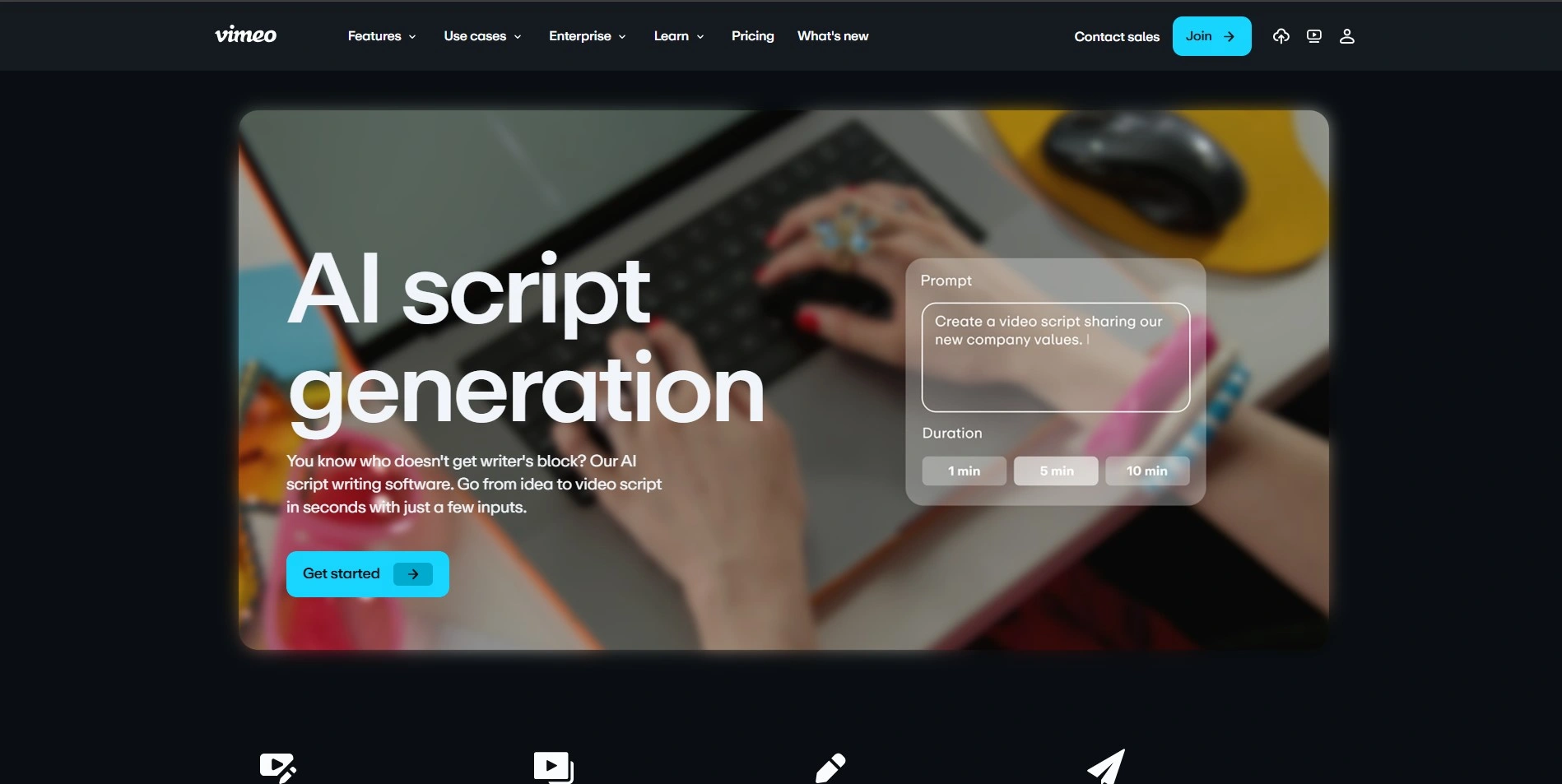
Free PlanStandard: $20/Month Vimeo AI Script Writer offers a free plan with basic video tools, but the AI script generator and teleprompter features are bundled into the Standard subscription, priced at $20 per month when billed annually. Business and Enterprise tiers cost more and add storage, security, and team collaboration features.
Vimeo’s AI Script Writer turns short prompts or bullet points into ready-to-use video scripts within seconds, tailored by tone and length for platforms like TikTok, Instagram, or internal presentations. It pairs directly with a built-in teleprompter and text-based video editor, streamlining the path from script to recorded footage.
Pros
- Seamless handoff from script to recording
- Fast generation from minimal prompts
- Built into a full video hosting platform
Cons
- AI script tools require a paid Standard plan
- Built for short video, not long-form scripts
- Less depth for narrative or screenplay structure
6. ScriptAI Pro
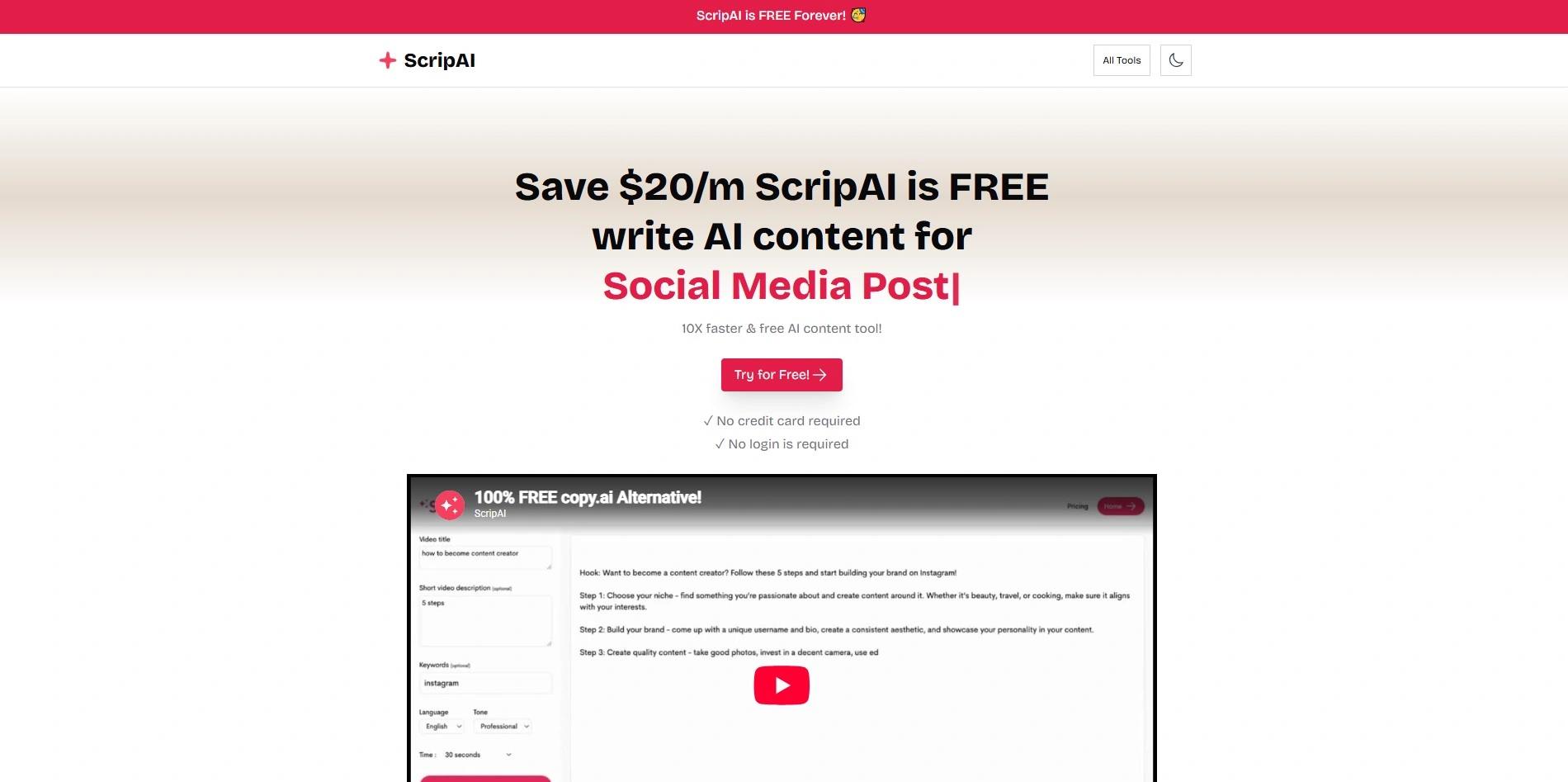
Free TrialSubscription Tiers Vary ScriptAI Pro typically follows the industry pattern of offering a free trial before requiring a paid subscription, with premium plans generally landing in the mid-range bracket seen across dedicated script-generation tools. As pricing can change, always confirm current tiers directly on the official ScriptAI Pro website before subscribing.
ScriptAI Pro is aimed at professional screenwriters who need deep scene development support and character arc suggestions. It specializes in generating detailed character bios and natural-sounding dialogue, positioning itself as a tool for refining mid-draft scripts rather than just producing a rough first pass from scratch.
Pros
- Strong focus on character arc development
- Generates naturalistic, character-specific dialogue
- Useful for refining existing drafts
Cons
- Less brand recognition than established rivals
- Pricing details less transparent publicly
- Fewer production or formatting extras
7. Squibler
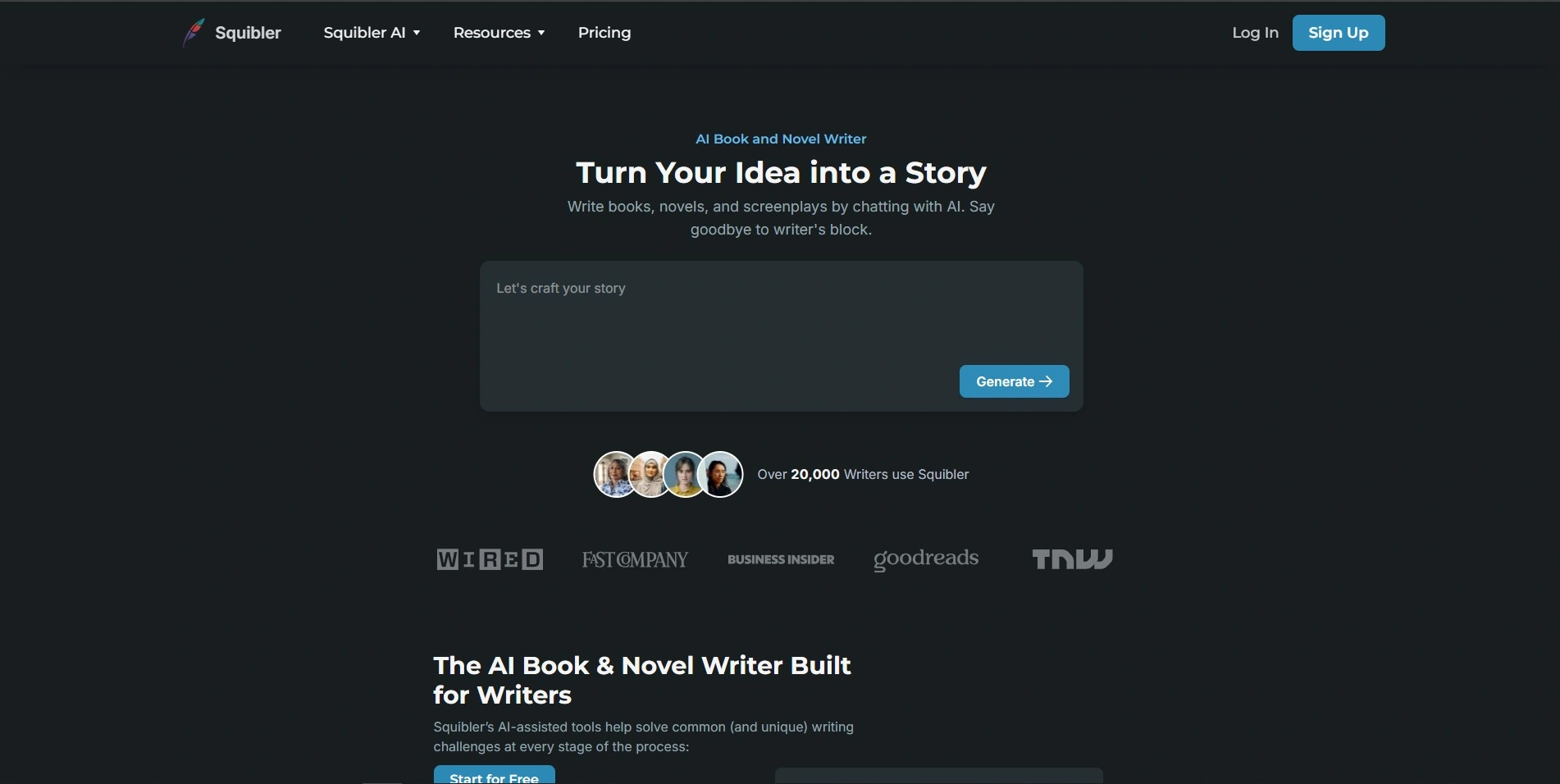
Free PlanPlus: $29.99/Month ($15.83 Annual)Pro: $89.99/Month Squibler‘s free plan includes 1,000 AI credits monthly to test the platform. The Plus plan costs $29.99 monthly, dropping to about $15.83 when billed annually, while Pro runs $89.99 monthly (around $49.17 annually) and unlocks unlimited AI credits for heavy users.
Squibler is an AI-powered writing platform built for novels, screenplays, and long-form content, offering drag-and-drop outlining, collaborative editing, and automatic industry-standard script formatting. Its AI Smart Writer generates chapters and scenes on demand, while story-bible-style “Elements” let writers track characters, locations, and plot threads in one workspace.
Pros
- Combines drafting space with story-bible organization
- Real-time collaboration for co-writers
- Free tier available to test AI features
Cons
- Premium tiers are pricier than many competitors
- AI credit system can confuse new users
- Unlimited AI use requires the costliest plan
8. Final Draft
Free TrialOne-Time: $199.99–$249.99Cloud: $9.99/Month Final Draft offers a free trial before purchase. The desktop application costs a one-time fee typically listed between $199.99 and $249.99 depending on promotions, with annual upgrades around $99. Final Draft Anywhere, its cloud companion, is available separately for $9.99 per month.
Final Draft is the long-standing industry-standard screenwriting software used by roughly 95% of film and television professionals. It automatically formats scripts to Hollywood standards and includes a Beat Board, Outline Editor, tracked revisions, and built-in commenting, making it the default choice for writers working alongside studios and production teams.
Pros
- Recognized industry standard in Hollywood
- Robust outlining and revision-tracking tools
- One-time purchase avoids ongoing fees
Cons
- High upfront cost versus subscription rivals
- Cloud collaboration costs extra monthly
- Interface feels dated next to newer apps
9. Copy.ai
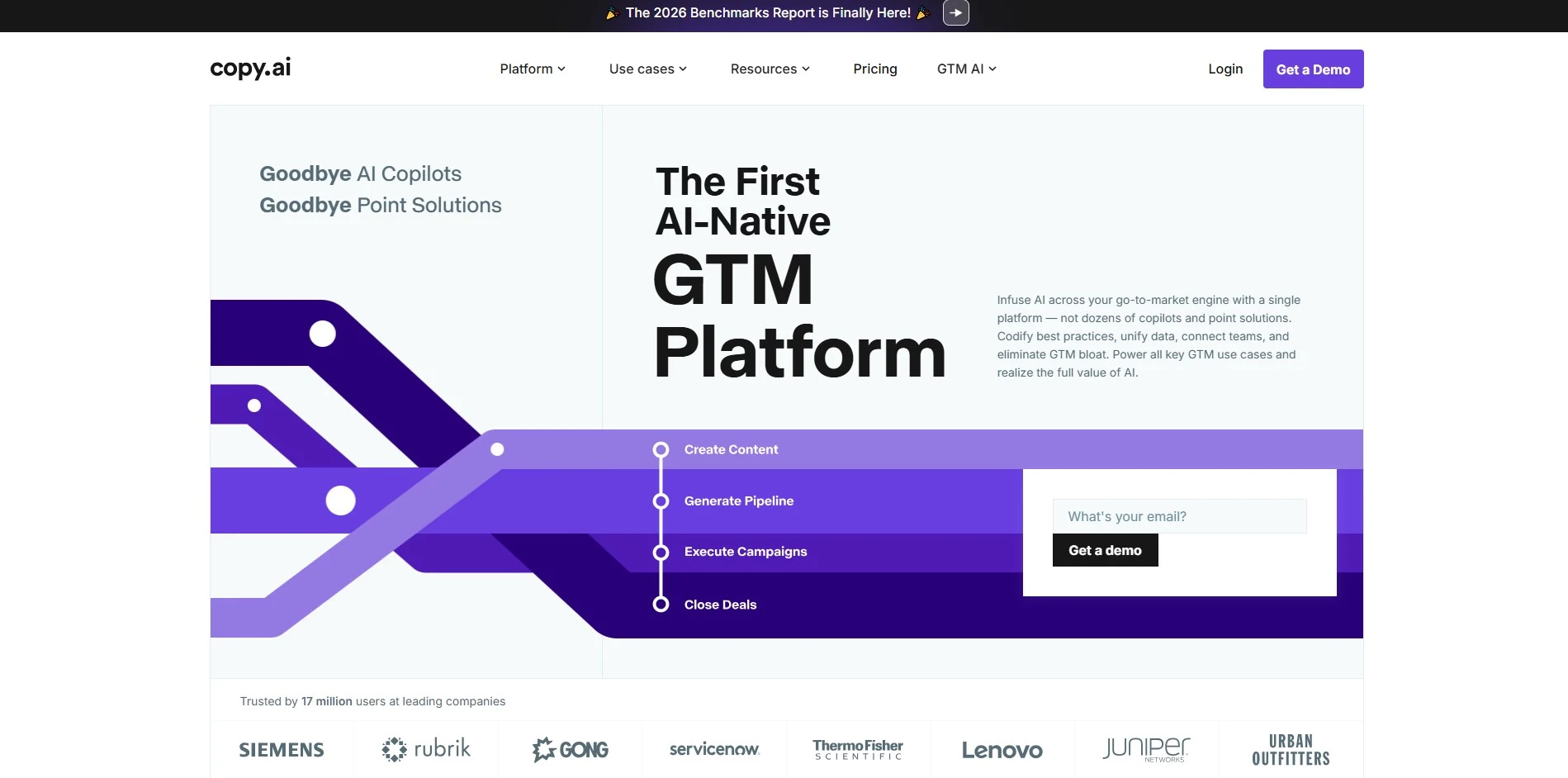
Free PlanChat: $29/Month ($24 Annual)Growth: From $1,000/Month Copy.ai‘s free plan includes 2,000 words monthly with no credit card required. The Chat plan costs $29 monthly, or $24 with annual billing, while Growth and higher enterprise-oriented tiers start at $1,000 per month for larger teams needing workflow automation and higher credit volumes.
Copy.ai is a general AI writing platform originally built for marketing copy, now used by some storytellers for brainstorming loglines, taglines, and short-form scripts. It offers a chat-style interface, 90-plus templates, and brand-voice training, though it leans more toward business content than long-form narrative or screenplay structure.
Pros
- Genuine free tier with no time limit
- Fast for short-form brainstorming tasks
- Brand-voice training available on paid tiers
Cons
- Big pricing gap between Chat and Growth tiers
- Not built specifically for narrative writing
- No screenplay-formatting or plotting tools
10. Plottr
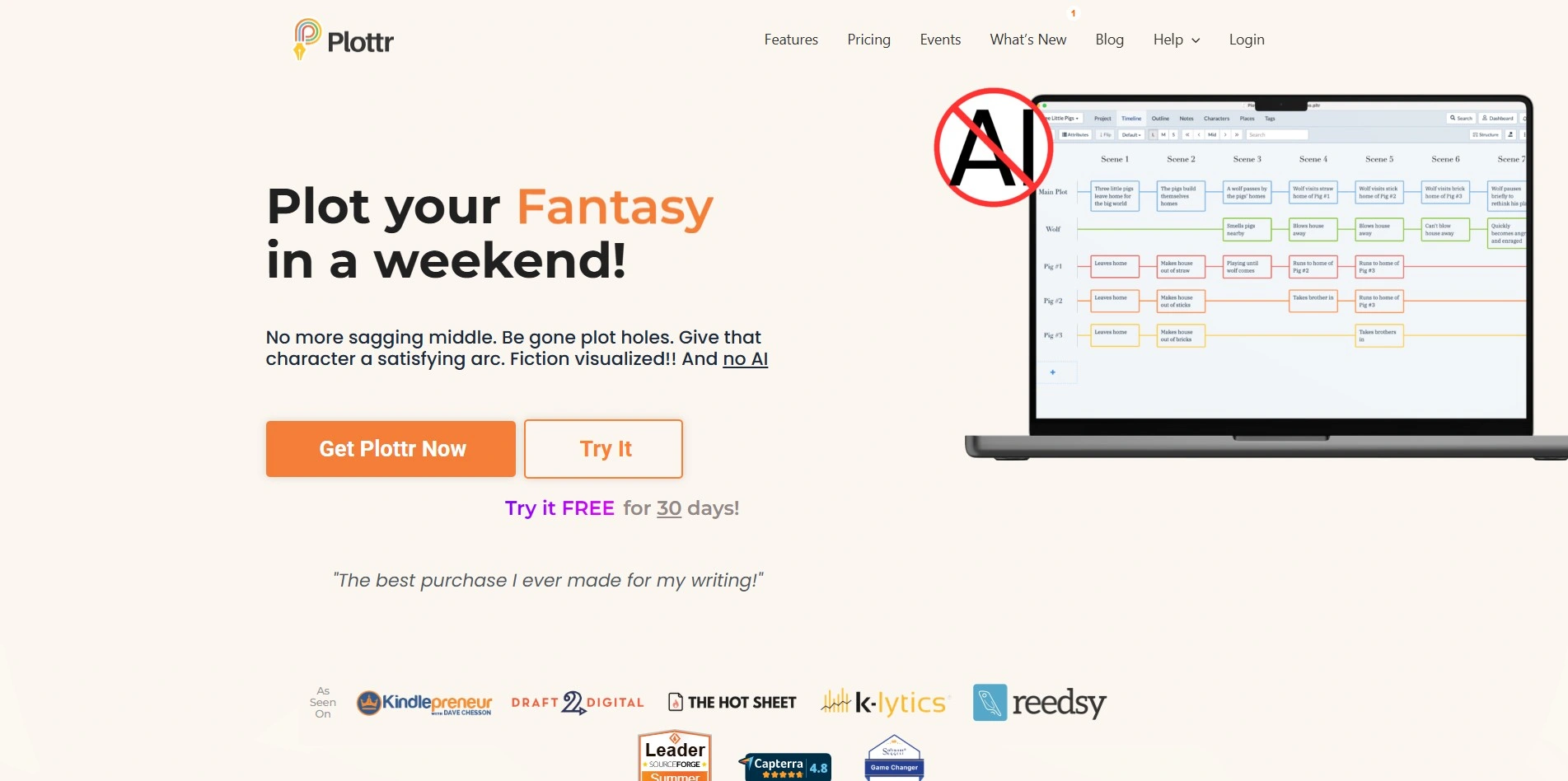
30-Day Free TrialPro: $15–$27/MonthLifetime: $199 Plottr offers a 30-day free trial before you commit. Monthly Pro plans range from about $15 to $27 depending on added community features, while a one-time Lifetime license costs $199 for offline, subscription-free access to all core plotting tools.
Plottr is a visual outlining tool built for organizing plotlines, scenes, and character arcs across single books or entire series. It provides over 30 plot templates, drag-and-drop scene cards, character and location trackers, and direct export to Word or Scrivener, appealing strongly to novelists who plan before they draft.
Pros
- Excellent visual timeline and outlining tools
- Lifetime license avoids recurring subscription costs
- Great for tracking multi-book series
Cons
- Not a full drafting or writing environment
- Pro subscription pricing can add up over time
- Steeper learning curve for pantser-style writers
11. Arc Studio Pro
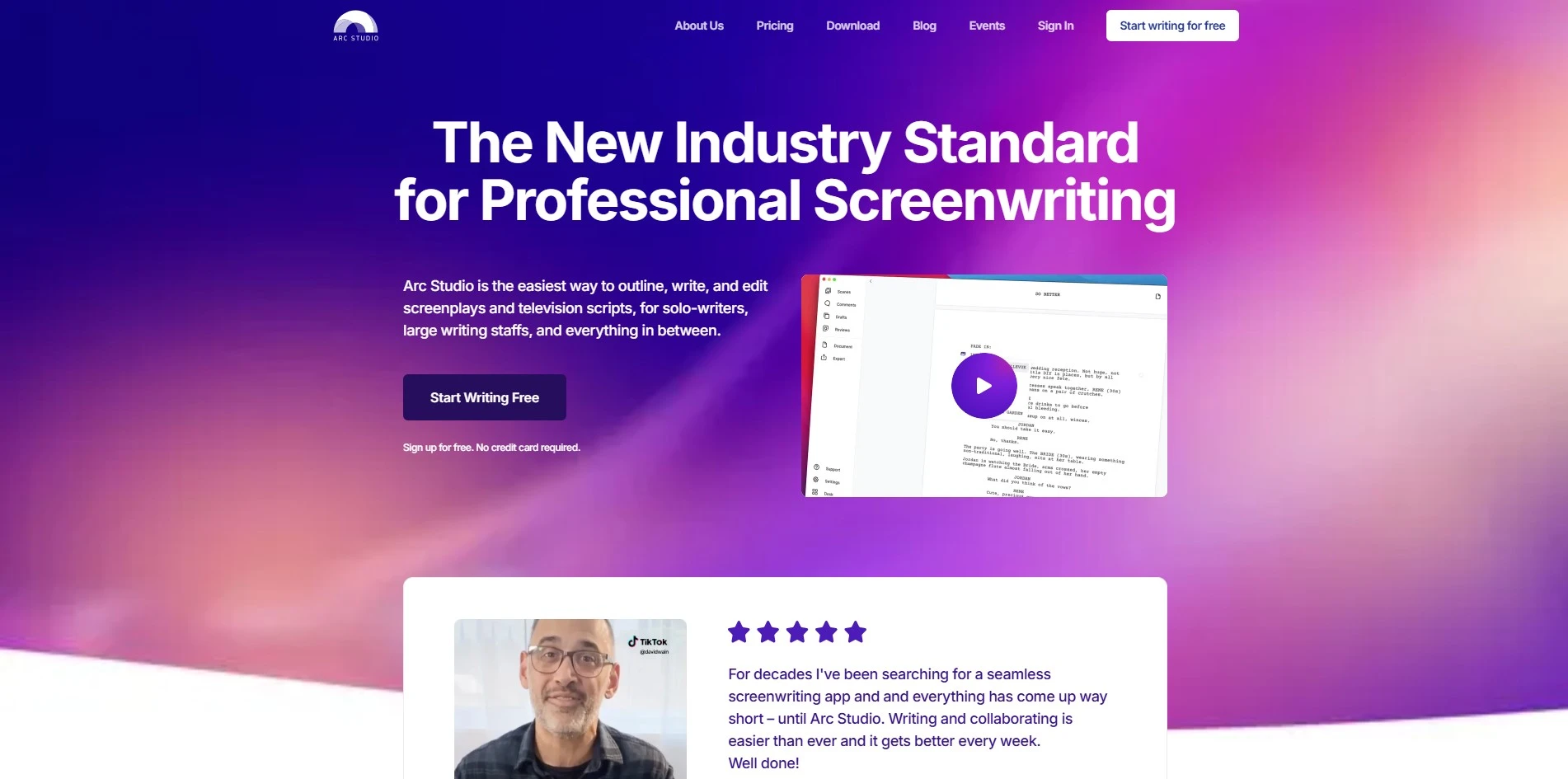
Free Plan7-Day Pro TrialEssentials: $69/YearPro: $99/Year Arc Studio Pro‘s free plan includes core features but adds a watermark to exports. A 7-day free trial of Pro is included. The single-seat Essentials plan costs $69 annually, while the multi-seat Pro plan runs $99 per year, both notably cheaper than legacy desktop software.
Arc Studio Pro is a modern screenwriting app built around real-time, Google Docs-style multiplayer collaboration for film and television writers. It includes industry-standard formatting, a digital whiteboard for organizing storylines and locations, intuitive keyboard shortcuts, and a clean interface designed to keep writers focused during drafting sessions.
Pros
- Real-time multiplayer collaboration like Google Docs
- Very affordable annual pricing
- Clean, modern, distraction-free interface
Cons
- Free plan exports carry a watermark
- Collaborators need their own subscription for advanced tools
- Fewer legacy production integrations than Final Draft
12. Dabble

14-Day Free TrialBasic: $9/MonthPremium: $29/MonthLifetime: $699 Dabble offers a 14-day free trial with no credit card required. Its tiers run from Basic at $9 per month up to Premium at $29 per month, with a Standard tier around $19 in between. A one-time Lifetime license is also available for $699.
Dabble is a cloud-based novel writing app focused on distraction-free drafting alongside visual plotting tools like the Plot Grid and Story Notes. It syncs automatically across Windows, Mac, Linux, iOS, and Android, and Premium subscribers can collaborate with a co-author on the same manuscript in real time.
Pros
- Seamless cloud sync across all devices
- Clean plotting tools alongside the writing space
- Lifetime option for long-term users
Cons
- No permanent free tier
- More expensive long-term than one-time competitors
- Requires internet connection for full functionality
13. Powtoon AI Script Writer

Free PlanLite: $15/MonthAdvanced: $199/Month Powtoon AI Script Writer offers a free plan to start, with Lite priced at $15 monthly on annual billing. The AI script writer feature specifically unlocks on the Advanced plan at $199 per month, though Professional-tier pricing around $40 to $99 monthly is also available depending on promotions and billing cycle.
Powtoon’s AI Script Writer converts short ideas or documents into ready-to-animate video scripts, pairing directly with its animation and avatar creation tools. It’s designed for marketers, educators, and businesses producing explainer videos, training material, and internal communications, turning a rough concept into a polished animated video from a single platform.
Pros
- Script writer integrates directly with animation tools
- Strong for explainer and training video workflows
- Free plan available for casual testing
Cons
- AI script writer locked to a pricier tier
- Credit-based system adds cost complexity
- Built for video scripts, not novels or screenplays
| Alternative | Description |
|---|---|
| Highland 2 | Mac-native, Fountain-based screenwriting app with a generous free version and one-time Pro upgrade. |
| Claude | General-purpose AI assistant strong at long-form plotting, dialogue brainstorming, and manuscript analysis. |
| Beemgee | Pre-writing tool focused on character motivation, plot composition, and dramaturgy before drafting begins. |
| Studiovity | Affordable cloud-based screenwriting and pre-production suite with AI script breakdown tools. |
| Vimeo AI Script Writer | Turns short prompts into video scripts, integrated with teleprompter and video hosting tools. |
| ScriptAI Pro | Screenwriting AI focused on character arcs, scene development, and natural dialogue generation. |
| Squibler | AI writing platform for novels and screenplays with story-bible organization and credit-based AI tiers. |
| Final Draft | Industry-standard screenwriting software used widely across professional film and TV production. |
| Copy.ai | General AI writing tool suited to short-form brainstorming like loglines and marketing copy. |
| Plottr | Visual outlining and series-planning tool with templates, timelines, and character tracking. |
| Arc Studio Pro | Modern, collaborative screenwriting app with real-time multiplayer editing and affordable pricing. |
| Dabble | Cloud-synced novel writing app combining distraction-free drafting with visual plotting tools. |
| Powtoon AI Script Writer | Converts ideas into video scripts paired directly with animation and avatar creation tools. |
Conclusion
Choosing the right StoryCraft AI alternative ultimately depends on what kind of story you’re telling and how you like to work. Screenwriters chasing industry compatibility may lean toward Final Draft or Arc Studio Pro, novelists who love visual planning will likely prefer Plottr or Dabble, and video creators will find more value in Vimeo or Powtoon’s AI script tools. Meanwhile, general AI assistants like Claude offer flexibility for brainstorming and long-form editing across any format. Testing free trials or free tiers before committing to a paid plan remains the smartest way to find the tool that truly fits your creative process.


